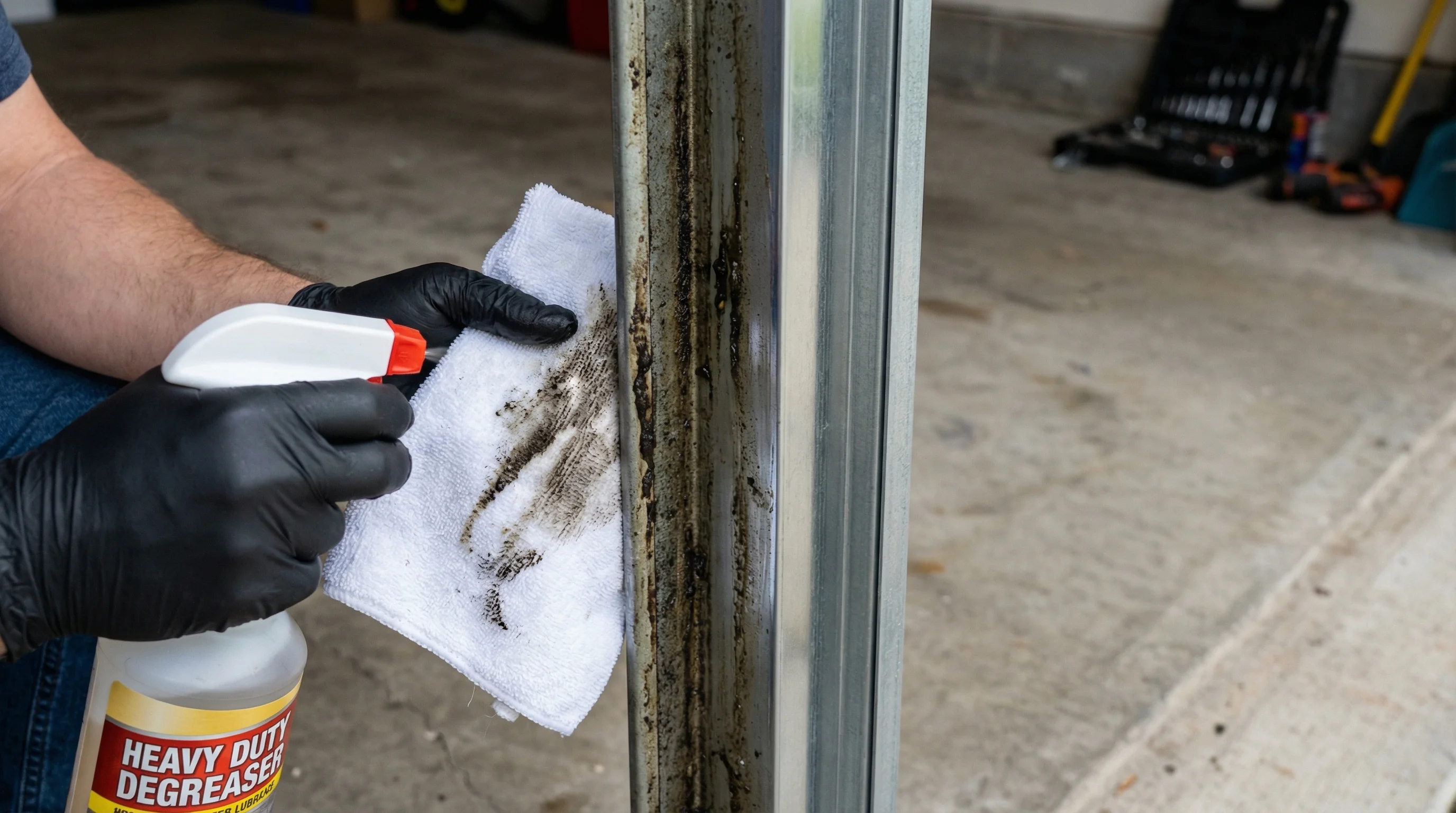
To clean garage door tracks: wipe the inside of the tracks with a degreaser-soaked rag, use a stiff brush for stubborn buildup, then wipe dry with a clean cloth. The most important rule: NEVER put lubricant inside the tracks. Tracks must stay clean and dry. Lubricate the rollers, hinges, springs, and cables instead — not the tracks themselves.
What Are Garage Door Tracks?
Garage door tracks are the metal channels mounted vertically on each side of the door opening and horizontally along the ceiling. The door's rollers ride inside these tracks as the door opens and closes. Tracks must be clean and free of debris to allow smooth roller movement. Unlike virtually every other moving part on a garage door, tracks should never be lubricated — they rely on clean metal-to-roller contact.
The number one thing I tell every Toronto homeowner about track maintenance is this: never put oil in your tracks. It sounds counterintuitive — shouldn't moving things be lubricated? But tracks are different. They're guides, not bearings. Lubricant in tracks attracts grit, turns into sticky sludge, and causes more problems than it solves. Here's the right way to maintain your tracks.
Why Clean Tracks Matter for Garage Door Performance
Your garage door weighs 100-300 lbs and travels up and down multiple times every day. The tracks guide this weight precisely through every cycle. When tracks accumulate debris — dirt, dried lubricant, spider webs, leaves, or metal filings from worn rollers — several problems develop:
- Jerky movement: Debris creates high-friction spots where the rollers catch and release, causing the door to jerk or bounce during travel.
- Noise: Grit in the track scratches against roller surfaces, creating grinding or squealing sounds.
- Premature roller wear: Abrasive debris grinds down the roller surface, creating flat spots that cause more noise and rougher operation.
- Door misalignment: Significant debris buildup can physically push a roller slightly sideways, eventually causing the door to run crooked or come off the track.
- Increased motor strain: On powered doors, dirty tracks mean higher friction, which puts extra load on your opener motor and reduces its lifespan.
In Toronto's climate, tracks accumulate particularly fast because of road dust blown into garages during dry summer months, and because owners often over-lubricate in winter and the excess lubricant drips into the track channels.
What You Need to Clean Garage Door Tracks
- Degreaser: Simple Green All-Purpose Cleaner, Krud Kutter, or WD-40 Multi-Use (spray on a rag and use as a degreaser/cleaner, not directly in the track)
- Clean rags or old towels (you'll use several — they get dirty fast)
- Stiff-bristle brush: An old toothbrush works for corners; a small scrub brush for larger buildup
- Dry cloth: To wipe the tracks completely dry after cleaning
- Optional: Vacuum with a crevice attachment to remove loose debris before wet cleaning
Step-by-Step Track Cleaning Process
- Disconnect the opener and close the doorPull the red emergency release cord to disconnect the trolley from the opener. This lets you move the door manually and ensures the opener won't accidentally activate while you're working. Close the door fully.
- Vacuum loose debrisUse a vacuum with a crevice tool to remove any loose dirt, leaves, or debris from inside the tracks. This prevents you from spreading dry debris around with a wet rag in the next step. Work both the vertical sections (on the sides) and the horizontal sections (along the ceiling).
- Apply degreaser to a ragSpray your degreaser onto a clean rag (not directly into the track where it could drip onto the door panels or floor). Make the rag damp but not soaking. Never use water alone — it won't cut through the grease and oil buildup.
- Wipe the inside of the tracksWorking from top to bottom, wipe the inside surfaces of the vertical track sections — both the back wall and the two flanges (inner lips) that the roller rides on. Apply firm pressure and use multiple clean sections of rag as you work downward. Don't forget the curved section where the track transitions from vertical to horizontal.
- Clean the horizontal sectionsWipe the horizontal tracks (the sections that run along the ceiling toward the back of the garage). Use a brush for any corner buildup at the brackets where the horizontal track connects to the mounting hardware.
- Scrub stubborn buildupFor sections with thick, dried-on grease or grime, use a stiff brush with degreaser. Old lubricant that has dried and attracted dust can be hard to remove — you may need to apply degreaser, let it sit for 2-3 minutes, then scrub before wiping.
- Wipe tracks completely dryUse a fresh, dry cloth to wipe the entire track interior until no moisture remains. This is critical — leaving the tracks wet or damp can promote rust on galvanized steel tracks. Dry tracks are essential for proper roller operation.
- Reconnect the opener and testReconnect the trolley to the opener drive by pulling the emergency release cord toward the door and operating the opener until the trolley re-engages the drive. Run the door through 2-3 complete cycles and listen for any remaining noise. The operation should be noticeably smoother.
The Most Common Mistake: Lubricating the Tracks
Every month I get service calls from North York, Vaughan, and Brampton homeowners who have been maintaining their garage doors diligently — cleaning, lubricating — but who have developed rough operation and noise. Almost every time, the culprit is the same: someone sprayed lubricant inside the tracks.
Why is lubricant in tracks so bad?
- Rollers are designed to roll, not slide: The whole point of a roller is that it rotates and grips the track surface. Lubricant makes the track surface slippery, which can cause the roller to slide instead of roll, creating a dragging sensation and noise.
- Lubricant attracts debris: Oil is like a magnet for dust, metal shavings, and road grit. Lubricated tracks turn into sticky traps that accumulate grime exponentially faster than dry tracks.
- The sludge problem: Over time, the mix of lubricant and accumulated debris turns into a thick, abrasive sludge that is much harder to clean than dry grime and accelerates roller wear.
- Side-loading risk: On vertical track sections, excess lubricant can cause rollers to slip sideways, potentially causing the door to come off the track.
The rule is simple: tracks get cleaned; rollers, hinges, springs, and cables get lubricated.
How Often Should You Clean Garage Door Tracks?
For most Toronto homeowners with average use, clean your tracks once or twice per year. The best timing:
- Early spring (April-May): Clear out the winter accumulation of road salt residue, dried lubricant, and grit that blows in during cold months.
- Late fall (October-November): Clean before winter to ensure smooth operation during cold weather and to remove the summer's accumulation of pollen, dust, and debris.
Clean more frequently (every 3-4 months) if:
- Your garage is attached and you run a wood-working shop or do dusty work inside
- You notice the door becoming louder or jerkier between cleanings
- You see visible grime buildup on the track interior when you look closely
Want a Professional Tune-Up?
Our $100-$120 maintenance service includes track cleaning and alignment, roller inspection, lubrication of all the right components, spring balance check, safety sensor test, and hardware tightening. Most homeowners notice a dramatic improvement in door operation.
Call 437-265-9995 — Book a Tune-Up