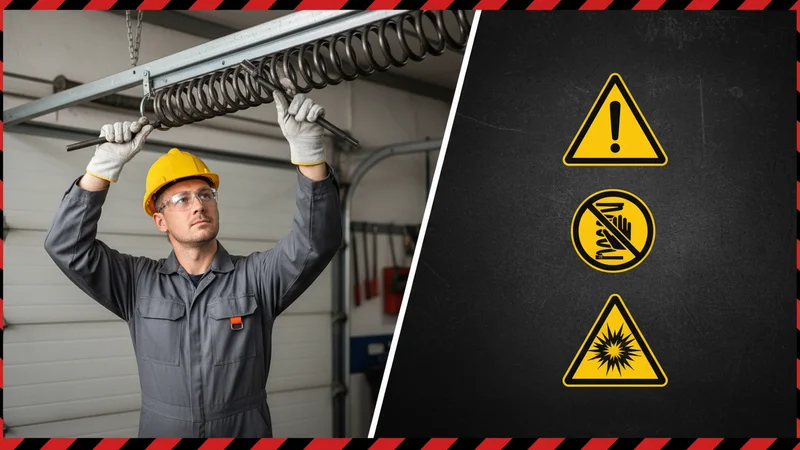
I understand why you're researching DIY spring replacement - the job looks straightforward in YouTube videos, and professional quotes might seem high. But as a technician who's treated this work seriously for 15+ years, I need to be honest with you: garage door springs are genuinely dangerous. I've seen colleagues injured, and I've repaired countless doors damaged by DIY attempts.
The Real Statistics
⚠️ Critical Safety Warning
- Torsion springs can kill. A spring or winding bar released under tension becomes a projectile that has caused fatalities.
- The 400-pound door can fall. Without proper spring tension, the door's full weight can drop suddenly.
- Extension springs can launch. If a cable breaks during extension spring work, the spring can shoot across the garage.
- Improper tension destroys openers. Even a "successful" DIY job with wrong tension burns out opener motors within months.
How Torsion Springs Store Dangerous Energy
To understand why DIY spring replacement is so risky, you need to understand how these springs work. A torsion spring is a tightly wound coil of heavy-gauge steel wire, typically mounted on a solid steel shaft above your garage door. When the door closes, the spring winds tighter, storing potential energy. When you open the door, that stored energy helps lift the heavy panel.
The Physics of Spring Tension
A typical 16x7-foot double garage door weighs 150-250 pounds. The torsion spring must store enough energy to counterbalance most of that weight—effectively making the door feel like it weighs only 8-10 pounds when properly balanced. Use our door balance test guide to check if your springs need attention. This means the spring stores the equivalent of 140-240 pounds of lifting force.
Standard residential torsion springs require 28-34 quarter-turns (7-8.5 full rotations) to achieve proper tension. Each quarter-turn adds more torque. The winding cone—the part you insert winding bars into—has holes 7/16" or 1/2" in diameter. A solid steel bar in that hole acts as a lever arm, and when the spring is fully wound, that lever arm wants to spin with several hundred foot-pounds of force.
The Real Risks of DIY Spring Replacement
Winding Bar Slip
The most common injury occurs when a winding bar slips from the winding cone. The spring's stored energy causes the bar to spin violently, breaking fingers, hands, and arms. Using improvised tools (screwdrivers, rebar) dramatically increases this risk.
Spring Breakage Under Tension
Old or corroded springs can snap during winding. The sudden release sends metal fragments in unpredictable directions. This has caused eye injuries, facial lacerations, and worse.
Door Free-Fall
Without the spring's counterbalance, your 200-400 pound door has nothing holding it up. If you're under or near the door when it falls, serious crushing injuries result.
Incorrect Tension
Even if you avoid injury, incorrect spring tension creates problems: door too light damages the opener, door too heavy won't stay up and strains cables. Fixing improper tension requires the same dangerous process again.
Tools Required (Not Optional)
To even attempt DIY spring replacement safely, you need professional-grade tools - not substitutes:
Winding Bars (2 Required)
18" minimum length, specific diameter for your spring's winding cone. Must be solid steel - hollow or improvised bars can bend or slip.
$40-$80 per setVice Grips / Clamps
Heavy-duty vice grips to lock the door in place and prevent it from moving while you work.
$30-$50Socket Set & Wrenches
Quality socket set for the spring mounting hardware. Various sizes needed.
$40-$100Ladder (Sturdy)
You'll need stable footing at spring height. Wobbly ladders add risk to an already dangerous job.
$100-$200Safety Equipment
Safety glasses, work gloves, and leather apron. Eye protection is absolutely critical.
$30-$50Spring (Correct Size)
You need the exact wire diameter, inside diameter, and length. Wrong spring = wrong tension.
$30-$100Cost Comparison: DIY vs Professional
What You'll Actually Spend
DIY Approach
Professional Service
Professional Spring Replacement Pricing
| Service | Price Range (+ tax) | Includes |
|---|---|---|
| Single Torsion Spring | $160 - $220 | Spring, labor, balance test |
| Double Torsion Springs (both) | $280 - $400 | Both springs, balancing, safety check |
| Extension Spring (pair) | $150 - $220 | Both springs, safety cables, labor |
| Springs + Cables Combo | $350 - $500 | Springs, cables, full inspection |
Why Professional Service Makes More Sense
What You Get With Professional Installation
Let Us Handle the Dangerous Work
Same-day service available. We'll have your door working perfectly while you stay safe.
Call 437-265-9995Frequently Asked Questions
Technically yes, but we strongly advise against it. Torsion springs hold extreme tension (equivalent to 400+ pounds of force) and improper handling causes approximately 30,000 injuries annually. Without proper training, specialized tools, and experience, the risk of serious injury or death is significant.
Torsion springs store massive amounts of tension - enough to lift a 200-400 pound door. When released suddenly, a spring or winding bar can become a projectile traveling at high speed. Improper techniques can cause the spring to snap, winding bars to slip, or the door to fall suddenly.
Professional spring replacement costs $160-$400 depending on spring type and quantity. DIY requires $100-$200 in specialized tools you may never use again, plus the spring cost ($30-$100). When you factor in tools, time (3-4 hours for beginners), and risk, professional installation offers better value and zero injury risk.
Required tools include: two winding bars (18 inches minimum, specific diameter for your spring), a sturdy ladder, vice grips, wrenches, socket set, C-clamps for securing the door, and safety equipment. Professional-grade winding bars alone cost $40-$80. Using substitute tools (like screwdrivers) is extremely dangerous.
Professional technicians complete most spring replacements in 30-45 minutes. This includes removing the old spring, installing the new one, properly tensioning it, lubricating components, and testing door balance.