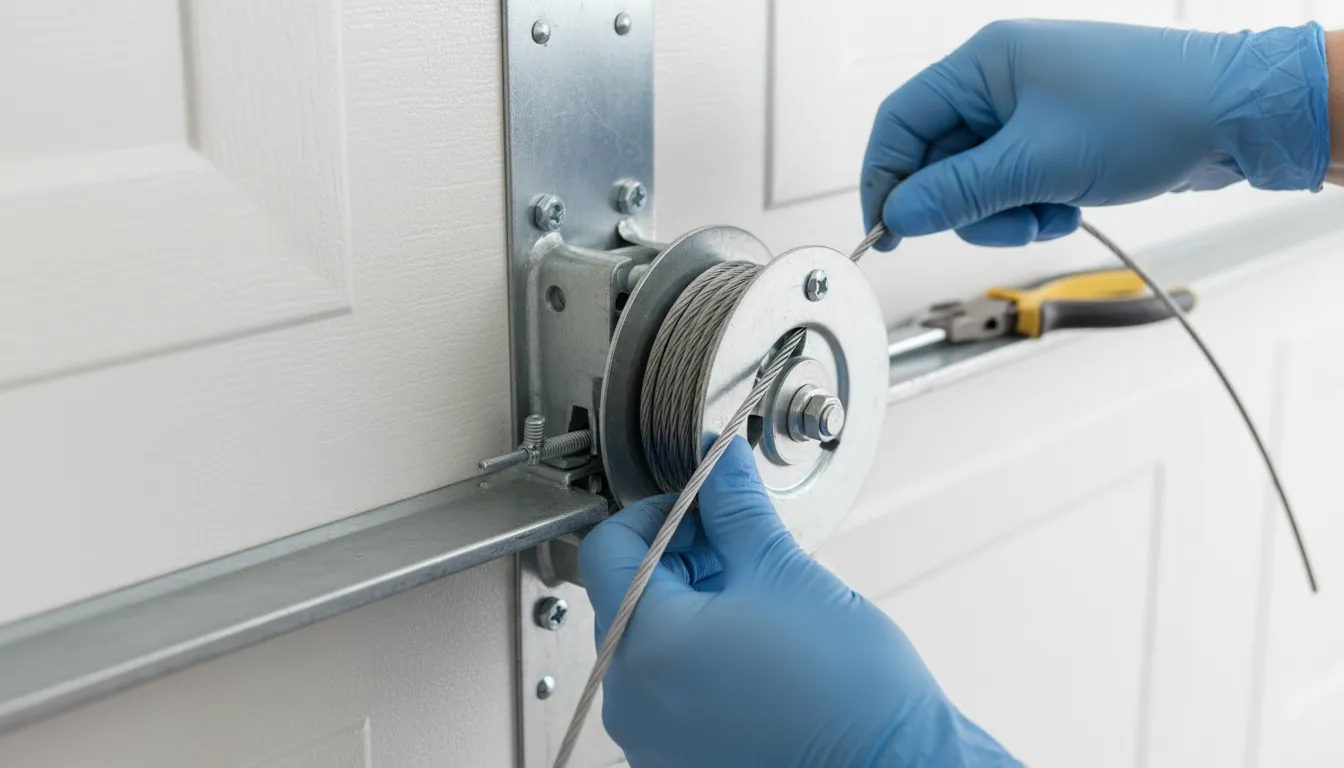
Cable Repair Cost Breakdown
Here's what Toronto & GTA homeowners can expect to pay for garage door cable repair in 2025. All prices include parts, labor, and warranty:
| Service | Price Range (+ tax) | Includes |
|---|---|---|
| Cable Replacement (both sides) | $150 - $220 | Both cables, labor, inspection |
| Cable + Drum Replacement | $200 - $280 | Cables, drums, realignment |
| Cable + Bracket Repair | $180 - $250 | Cables, bracket realignment |
| Cable + Spring Combo | $350 - $500 | Both cables + spring replacement |
| Emergency Cable Repair | $180 - $250 | Same rates, same-day service |
How Garage Door Cables Work
Understanding how cables function helps you recognize problems early. Garage door cables are an essential part of the counterbalance system that makes your heavy door easy to open.
The Cable and Spring Partnership
Your garage door weighs 150-400 pounds, yet feels almost weightless when you open it manually. This is because the springs store energy (when the door is closed) and release it to lift the door. The cables are the critical link that transfers this spring energy to the door.
How Torsion Spring Cables Work
On most modern garage doors with torsion springs (the horizontal spring above the door), cables work like this:
- Each cable attaches to a bracket at the bottom corner of the door
- The cable runs up the side of the door inside the track
- At the top, the cable wraps around a cable drum attached to the spring shaft
- When the door closes, the cables wind around the drums, loading the spring with tension
- When the door opens, the spring unwinds, paying out cable and lifting the door
How Extension Spring Cables Work
Older doors with extension springs (the long springs along the sides) use a slightly different cable system:
- A cable runs from the door bottom, through a pulley at the top, and connects to the spring
- A second safety cable runs through the center of each extension spring
- The safety cables prevent the spring from becoming a projectile if it breaks
Cable Types and Specifications
Not all garage door cables are the same. Using the correct cable specification is critical for safe operation.
Cable Gauge (Thickness)
| Cable Size | Breaking Strength | Best For |
|---|---|---|
| 3/32" (7x7) | ~920 lbs | Light single doors, low cycle |
| 1/8" (7x7) | ~1,700 lbs | Standard residential doors |
| 3/16" (7x19) | ~3,700 lbs | Heavy insulated or double doors |
| 1/4" (7x19) | ~6,100 lbs | Commercial high-cycle doors |
Cable Construction
The numbers like "7x7" refer to cable construction:
- 7x7: 7 groups of 7 strands (49 total wires). Standard for residential use. Less flexible but more wear-resistant.
- 7x19: 7 groups of 19 strands (133 total wires). More flexible, better for larger drums and heavy doors.
Cable Length
Cable length depends on your door height. A 7-foot door needs approximately 12-14 feet of cable per side. An 8-foot door needs 14-16 feet. Our technicians measure precisely—too short and the door won't open fully; too long and the cable can jump off the drum.
Why Quality Cables Matter
We use only galvanized aircraft-quality steel cables. Cheap cables (often sold at hardware stores) rust quickly in Toronto's climate and can have manufacturing defects. Premium cables last 12-15 years; cheap cables often fail in 3-5 years.
Signs Your Cables Need Replacement
Watch for these warning signs that indicate cable problems:
- Frayed or worn cables: Visible strands sticking out from the cable
- Door hangs crooked: One side lower than the other when closed
- Loose cable hanging: Cable visibly slack or hanging loose
- Door won't open: Cable may have come off the drum or snapped
- Loud bang: Sudden noise (often means spring broke, damaging cables)
- Door falls fast: Cable slipping or not holding tension
- Grinding noise: Cable rubbing against tracks or brackets
Safety Warning
If you notice a broken or loose cable, DO NOT operate the door. A garage door without proper cable tension can fall suddenly, causing serious injury or property damage. Call a professional immediately.
What Causes Cable Failure
1. Normal Wear and Tear
Cables flex thousands of times over their lifespan. After 8-15 years of daily use, the steel wires fatigue and eventually break. Regular maintenance can extend cable life.
2. Broken Springs
This is the #1 cause of sudden cable failure. When a spring breaks, it releases tension instantly, causing the cable to unwind rapidly from the drum. This often damages or snaps the cable.
3. Rust and Corrosion
Toronto's winter salt and humidity cause cable corrosion. Rust weakens the steel strands, making them brittle and prone to snapping. Annual lubrication prevents this.
4. Improper Installation
Cables installed with incorrect tension, wrong size, or poor drum alignment wear out faster. Always use a certified technician for installation.
5. Track Misalignment
When tracks are bent or misaligned, the door binds during operation. This puts extra stress on cables, causing premature wear.
Toronto Climate Impact on Cables
Toronto's climate is particularly harsh on garage door cables. Understanding these factors helps explain why cable maintenance is so important here.
Road Salt Corrosion
Salt from winter road treatment is tracked into garages on cars and shoes. This salt spray lands on cables and accelerates corrosion. Galvanized cables resist rust better, but over years, salt eventually penetrates the protective coating and attacks the steel underneath.
Humidity and Condensation
Toronto's humid summers cause condensation inside unheated garages. This moisture sits on cable surfaces and, combined with salt residue, creates an ideal environment for rust. Even "rust-proof" cables are vulnerable to this constant wet-dry cycle.
Temperature Extremes
Temperature swings from -25°C in winter to 35°C+ in summer cause cables to expand and contract. This thermal cycling stresses the cable strands over time. Additionally, lubricants on cables and drums can thicken in cold weather, increasing friction and wear on cables.
Freeze-Thaw Cycles
Water that gets between cable strands freezes and expands, forcing strands apart. Repeated freeze-thaw cycles (common in Toronto spring and fall) accelerate this internal damage. By the time you see visible fraying, internal damage may be extensive.
Toronto Cable Lifespan
Due to our climate, cables in Toronto typically last 8-12 years compared to 12-15 years in milder climates. Regular lubrication (twice yearly) and using galvanized cables extends lifespan significantly.
DIY vs Professional Repair
Never DIY Cable Replacement
Garage door cable repair is extremely dangerous and should ONLY be done by professionals. Here's why:
- Extreme tension: Cables work under 200+ lbs of spring tension
- Special tools required: Winding bars, cable cutters, proper gauges
- Risk of injury: Snapping cables cause severe lacerations
- Door weight: A falling door (300-500 lbs) can be fatal
- Warranty void: DIY repairs void manufacturer warranties
The $150-$220 cost of professional repair is a small price compared to the risk of serious injury or a $3,000+ door replacement if something goes wrong.
What Happens During Professional Repair
When you call us for cable repair, here's exactly what to expect:
Step 1: Safety Assessment (5 minutes)
Our technician first evaluates the door's current state. If the door is jammed or off-track, we safely secure it before any work begins. We identify why the cable failed—this helps prevent future problems.
Step 2: Release Spring Tension (5-10 minutes)
This is the dangerous part that requires professional expertise. We use winding bars to carefully release the spring tension, allowing safe cable removal. Improper technique here causes most DIY injuries.
Step 3: Remove Old Cables (10 minutes)
Old cables are unwound from the drums and detached from the bottom brackets. We inspect the drums for wear, grooves, or damage that could affect new cables.
Step 4: Inspect Related Components
While cables are off, we check drums, brackets, tracks, and springs. If the spring broke and caused cable damage, we'll recommend replacing it to prevent repeat failure.
Step 5: Install New Cables (15-20 minutes)
New galvanized cables are threaded through the bottom brackets and wound precisely around the drums. Cable tension must be exactly equal on both sides—too loose and the door will hang crooked; too tight and it won't close fully.
Step 6: Restore Spring Tension (5-10 minutes)
Springs are carefully wound back to the correct number of turns. This restores the counterbalance that makes the door feel light when you open it.
Step 7: Testing and Adjustment (5 minutes)
We test the door through multiple open/close cycles, checking for smooth operation, proper balance, and correct cable tracking. The door should stay in place when opened halfway.
Cable Maintenance Tips
These simple steps can extend your cable life by several years:
Lubricate Cables Twice Yearly
Apply white lithium grease or silicone spray to cables in spring and fall. This prevents rust and reduces friction. Wipe off excess—too much lubricant attracts dirt.
Visual Inspection Monthly
Look at your cables when you're in the garage. Check for fraying, rust spots, or kinks. Catching problems early prevents unexpected failure.
Keep Garage Dry
Use a dehumidifier in humid months. Ensure proper drainage so water doesn't pool near door hardware. Less moisture means less rust.
Clean Salt Residue
In spring, wipe down cables and drums with a damp cloth to remove salt buildup from winter. This simple step significantly extends cable life in Toronto.
Don't Ignore Warning Signs
Grinding noises, a door that hangs crooked, or visible cable wear are all signs to call for inspection. Waiting until complete failure can damage other components.
What's Included in Our Price
- FREE service call (with any repair)
- Both cables replaced (we never replace just one)
- High-quality galvanized steel cables
- Drum inspection and adjustment
- Bracket realignment if needed
- Full door balance check
- Safety system inspection
- 1-year warranty on parts and labor
Frequently Asked Questions
In Toronto, garage door cable repair costs $150-$220 + tax. This includes replacement of frayed or snapped cables, bracket realignment, and a full system inspection. Prices include parts and labor with a 1-year warranty.
No, garage door cable replacement is dangerous and should only be done by professionals. Cables work under extreme tension from the springs (200+ lbs of force). Improper handling can cause serious injury. Always hire a certified technician.
Garage door cables typically last 8-15 years depending on usage, climate, and maintenance. In Toronto's climate with freeze-thaw cycles, cables may wear faster. Regular lubrication and inspection can extend cable life.
Garage door cables break due to: normal wear over time, rust and corrosion, broken springs (puts extra stress on cables), misaligned tracks, lack of lubrication, or door hitting an obstruction. A broken spring is the most common cause of sudden cable failure.
Always replace both cables at the same time. Like springs, cables on both sides wear evenly. If one cable failed, the other is close to failing too. Replacing both saves a second service call and ensures balanced door operation.
Most residential doors use 1/8-inch (7x7) galvanized cables. Heavy insulated doors or double-car doors may need 3/16-inch cables. Our technician will measure and verify the correct size during the service call to ensure safe operation.
Yes, a broken cable can cause the door to fall suddenly or hang crooked. This puts stress on tracks, rollers, and panels. Operating a door with broken cables can bend tracks, damage panels, and burn out your opener motor. Always call for repair immediately.
Lubricate cables twice per year—in spring and fall. Use white lithium grease or silicone spray. This prevents rust and reduces friction on drums. In Toronto's climate, regular lubrication can add 3-5 years to cable life.