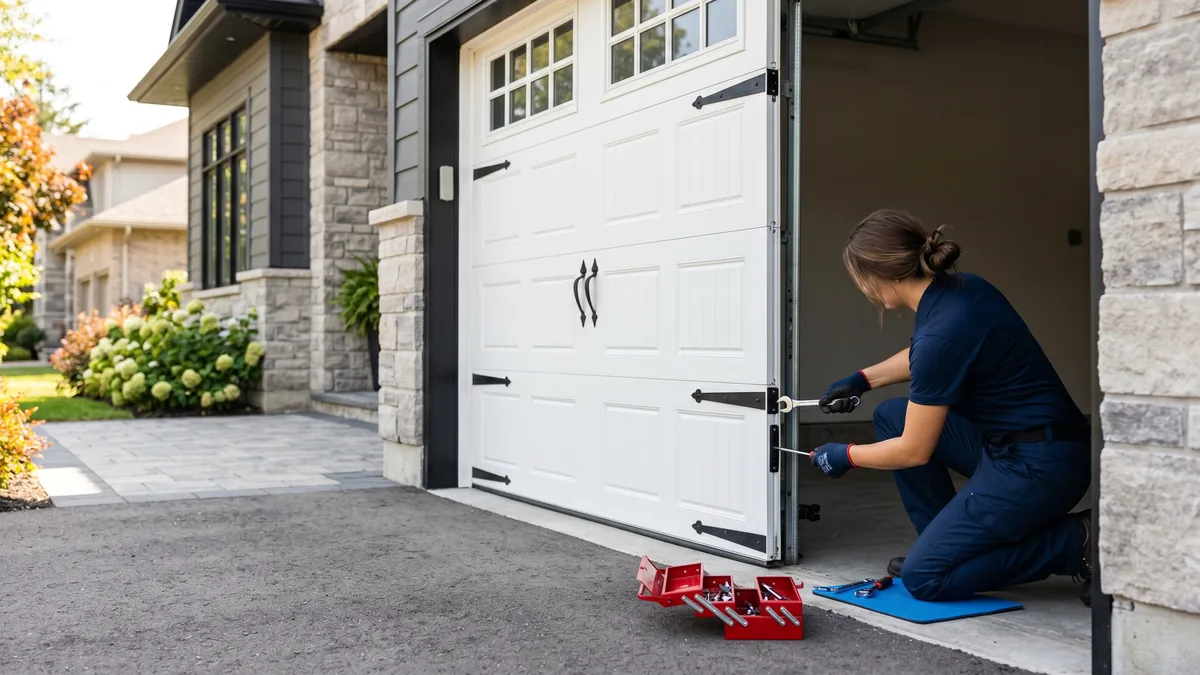
Garage door decorative hardware is a kit of accent handles, strap (or spade) hinges, and clavos — the round, hammered-look studs — that you add to the face of a plain steel door to give it a high-end carriage-house or barn look. It is purely cosmetic and doesn’t change how the door works. You can choose magnetic hardware (snaps onto magnetic steel doors, removable, no drilling) or screw-on/bolt-on hardware (permanent, works on any door material, wind-proof). A basic kit costs as little as $25–$60 and installs in under an hour.
What Is Garage Door Decorative Hardware?
Decorative garage door hardware is a coordinated set of faux accent pieces — handles, hinges, and clavos — designed to mimic the ironwork of a traditional swing-out carriage door. On a modern sectional door the panels still travel along tracks; the hardware simply sits on the surface to create the illusion of antique hand-forged hardware, instantly upgrading curb appeal for a fraction of the cost of a new door.
A flat, builder-grade steel garage door takes up roughly a third of your home’s front facade — so the cheapest way to make the whole house look more expensive is often a $40 hardware kit. Across Mississauga and the GTA we see homeowners transform plain ranch-style doors into charming carriage houses in an afternoon. Here’s exactly what the hardware is, how to pick a style that suits your home, and what it costs.
Types of Decorative Garage Door Hardware
Most kits combine three or four core elements. Understanding what each piece does helps you decide which to buy and where to place them.
Handles (Pulls & Latches)
Handles are the most recognizable accent. They mimic the lift-handles and latch hardware of a real swing door and are usually mounted as a matched pair, one on each side of the door’s vertical center line. Common shapes include the simple colonial L-handle, the longer lift handle, and the ring-pull ring latch. Because they sit near eye level, handles set the overall tone — sleek bar handles read modern, while ornate ring latches read traditional.
Strap & Spade Hinges
Hinges are the long horizontal straps that make a sectional door look like it’s built from individual swinging panels. Strap hinges taper to a decorative tip (arrow, bean, or speartip), while spade hinges end in a pointed spade shape. On a two-car door you typically run two hinges per panel section — one near each vertical edge — so they line up the full height of the door.
Clavos & Studs
Clavos are decorative nail-head studs (the word is Spanish for “nails”) that imitate the forged rivets used to assemble old plank doors. They come in pyramid, round-dome, and rosette shapes and are scattered along hinge straps or around the door perimeter to add texture and authenticity. Small but high-impact, clavos are what separate a convincing carriage-house door from an obviously fake one.
Decorative Accents (Fleur-de-Lis & Corner Plates)
For a more ornate, European or Mediterranean look, kits may add fleur-de-lis medallions, escutcheon plates, or corner brackets. Use these sparingly — one or two focal accents elevate a door, but too many turn elegance into clutter.
Magnetic vs. Bolt-On Hardware: Pros & Cons
The single biggest decision is how the hardware attaches. Each method suits a different homeowner and a different door.
Magnetic Hardware
Magnetic pieces have strong neodymium or ceramic magnets molded into the back. They snap straight onto a magnetic steel door — no tools, no holes, no commitment. You can reposition them in seconds or pull them all off before a repaint. The catch: they only stick to doors with a magnetic steel skin, and in very high wind or on a south-facing door that heats up, weaker magnets can slide or pop off. They’re ideal for renters, first-timers, and anyone who wants a reversible upgrade.
Screw-On / Bolt-On Hardware
Bolt-on hardware is fastened with self-tapping screws or short bolts through pre-drilled pilot holes. It’s permanent, completely wind-proof, and — crucially — the only option for aluminum, fiberglass, vinyl, and wood doors, plus any insulated steel door whose skin a magnet won’t grab. The trade-offs are drilling (small, but not reversible) and a bit more installation care to keep everything level.
Magnetic vs. Screw-On: Side-by-Side Comparison
| Feature | Magnetic Hardware | Screw-On / Bolt-On |
|---|---|---|
| Installation | Snap on, no tools | Drill pilot holes, screw down |
| Door materials | Magnetic steel only | Steel, aluminum, fiberglass, wood, vinyl |
| Reversible / removable | Yes, instantly | No (leaves small holes) |
| Wind & heat resistance | Can slide in extreme conditions | Stays put permanently |
| Repositioning | Easy — just move it | Requires new holes |
| Typical cost (single door) | $25–$60 | $60–$150 |
| Best for | Renters, quick upgrades, steel doors | Permanent results, any door, windy sites |
Choosing a Style to Match Your Home
The right hardware should echo your home’s architecture, roofline, and existing exterior metals (light fixtures, house numbers, railings). Match the finish — usually matte black, oil-rubbed bronze, or dark bronze — to those existing accents so everything looks intentional.
Modern & Contemporary Homes
Keep it minimal. Choose clean bar or square-stock handles in matte black, skip the clavos and ornate hinges entirely, or use slim straight straps. On a flush or full-view glass door, sometimes no hardware (or just two discreet handles) looks best.
Farmhouse & Craftsman Homes
This is the sweet spot for the carriage-house look. Pair speartip strap hinges with matching L-handles and pyramid clavos in matte black or bronze. A door with square windows along the top section completes the barn-door effect perfectly.
Traditional & Colonial Homes
Go a touch more refined: ring-pull latches, scrolled or spade hinges, and round-dome clavos in oil-rubbed bronze. For Tudor, Mediterranean, or Spanish-style homes, this is where a fleur-de-lis accent or a heavier wrought-iron look pays off.
Pairing Windows with Hardware
Decorative hardware and window inserts are a package deal — together they sell the carriage-house illusion far better than either does alone. Windows along the top panel section break up a tall blank door and let the strap hinges “frame” each pane the way they would on a real swing door.
- Square / Stockton grids suit farmhouse and craftsman homes and line up cleanly under strap hinges.
- Arched / cathedral tops pair with traditional and colonial homes and look best with scrolled hinges.
- Frosted or obscure glass keeps privacy while still adding light and detail.
If you’re buying a brand-new door, you can spec windows and hardware from the factory for a seamless result. On an existing door, add-on window kits exist, but on insulated doors they require careful cutting — this is a job worth handing to a professional. You can preview window-and-hardware combinations on our online garage door designer before you commit.
Installation Tips
Whether magnetic or bolt-on, a clean, level layout is what makes hardware look professional rather than stuck-on.
- Clean the door first. Wipe the surface with soapy water and let it dry — dirt weakens magnets and fouls screw threads.
- Plan with painter’s tape. Tape out positions and step back to the curb to judge spacing before anything is permanent.
- Mind the center line. Place the two handles symmetrically about the door’s vertical center, roughly 36–40 inches off the ground — the height of a real latch.
- Line up hinges by panel. Mount strap hinges horizontally near the seam of each panel section, two per section on a wide door, so they march up the door in a straight column.
- Use a level. A crooked hinge is instantly obvious. Check every piece with a small torpedo level.
- Avoid the danger zones. Never drill into the door’s reinforcing strut, the top section near the opener arm, or close to the bottom-edge sensors. Keep screws short on insulated doors so they don’t pierce the back skin.
How Much Does Decorative Hardware Cost?
Decorative hardware is one of the highest-return curb-appeal upgrades you can make. Pricing depends on the material, finish, and whether you add windows.
| Option | What You Get | Typical Cost (per door) |
|---|---|---|
| Basic magnetic kit | 2 handles + 2–4 hinges, plastic/composite | $25–$60 |
| Mid-range bolt-on kit | Handles, hinges + clavos, powder-coated steel | $60–$150 |
| Premium / wrought-iron set | Heavy forged-look hardware, fleur-de-lis accents | $150–$300 |
| Hardware + add-on window inserts | Full carriage-house conversion of existing door | $250–$500+ |
| New door with factory hardware & windows | Complete replacement, built-in carriage look | from $1,350 installed |
If your existing door is dented, faded, or builder-basic, sometimes the smarter spend is a new carriage-style door with the hardware and windows built in. Our overhead garage door options start at $1,350 installed, and you can see full hardware-and-window pricing on our pricing page. For inspiration, browse real installs in our project gallery, or read our deeper guide to carriage house doors and hardware.
Ready to Upgrade Your Curb Appeal?
Whether you want decorative hardware on your current door or a brand-new carriage-house door with windows built in, Royal Garage Doors installs across Mississauga & the GTA — with a FREE service call on any installation.
Call 437-265-9995Frequently Asked Questions
Further reading: the International Door Association (IDEA) sets the technician certification standard, and HGTV’s garage design ideas offer extra carriage-house inspiration.