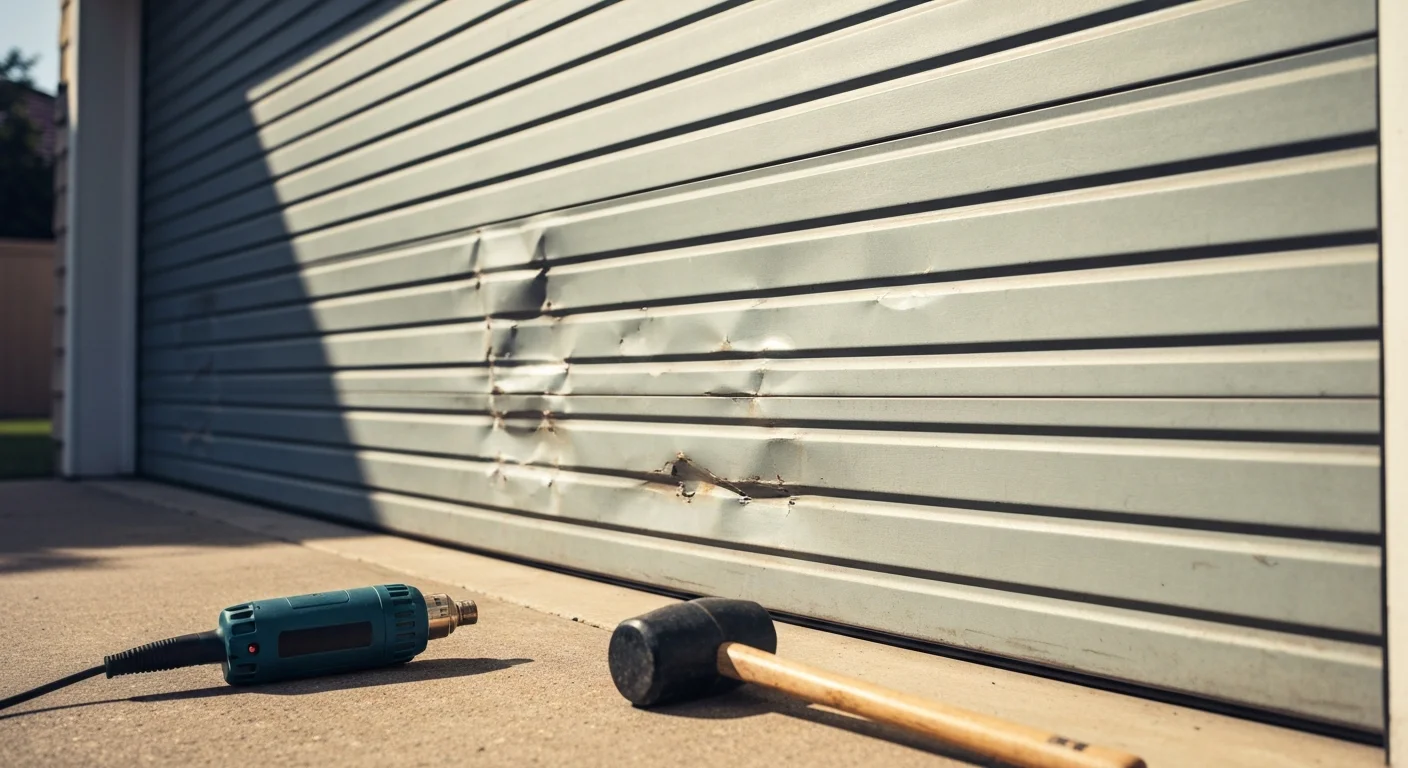
Small dents in a steel garage door can be repaired using the aluminum foil and heat method (heat gun + compressed air creates rapid thermal contraction), a rubber mallet and wooden block for shallow dents, or automotive body filler for cosmetic smoothing. Dents larger than 6 inches across, or any dent with metal creasing, typically require professional panel replacement ($250–$400 per panel).
Types of Garage Door Dents and What You Can Fix
Steel garage door panels are typically 26–28 gauge steel (0.45–0.5mm thick). This is thinner than automotive sheet metal, which means dents pop in easily — but also means some repair techniques used on cars work on garage doors too. The key distinction is between smooth dents (metal stretched without creasing) and creased dents (metal has a fold line). Smooth dents can often be repaired; creased dents usually require panel replacement.
A garage door dent from a basketball, backing up too close, or a hailstorm is frustrating but often fixable. Before calling for a panel replacement quote, try these proven DIY methods — the same techniques Royal Garage Doors technicians assess when evaluating whether a repair or replacement makes more economic sense.
Step 1: Assess the Dent
Before attempting any repair, properly assess the damage:
- Size: Dents smaller than a fist (6 inches) are good DIY candidates. Larger dents are harder to repair invisibly.
- Depth: Shallow dents (less than 1 inch deep) respond best to heat and mallet methods. Deep dents require body filler.
- Crease check: Run your fingers across the dent. If you feel a sharp fold or crease in the metal, the panel is structurally compromised and should be replaced rather than repaired.
- Paint condition: If the paint has cracked or chipped at the dent, rust may already be forming underneath. Factor painting into your repair plan.
- Location: Dents near the panel edges (top, bottom, or sides) affect the door’s sealing and hinge attachment. These are higher priority repairs.
Method 1: Heat and Cold Contraction
This is the most effective method for smooth dents up to 6 inches across:
Materials needed: Aluminum foil, heat gun (or hair dryer on max heat), can of compressed air (held upside down)
- Clean the dented area thoroughly with soap and water. Dry completely.
- Cut a piece of aluminum foil large enough to cover the dent plus 2 inches around all sides.
- Hold the foil flat against the dent and apply heat from a heat gun 2–3 inches away. Move in circular motions for 1–2 minutes until the foil is very hot to the touch.
- Remove the foil and immediately spray the dent with compressed air held upside down (this releases liquid CO2 at approximately -78°C, a massive temperature shock).
- The rapid cooling may cause the metal to contract and pop outward. You should hear or feel the pop within 5–15 seconds.
- Repeat up to 3 times if the dent doesn’t fully pop out on the first try.
Method 2: Rubber Mallet and Backing Block
For dents accessible from behind the panel (when the door is partially open and you can reach inside):
- Open the door to a height where you can access the back of the dented panel through the gap between panels or from inside the garage.
- Place a flat piece of hardwood (a scrap of 2x4 works well) against the back of the dent as a backing block.
- Tap gently from the back side of the dent using a rubber mallet, working from the outer edges of the dent toward the center.
- Check progress from the outside frequently. Stop when the surface is approximately flush.
- Use body filler for remaining low spots.
Method 3: Automotive Body Filler for Finishing
After mechanical repair or for shallow cosmetic dents:
- Sand the dented area with 80-grit sandpaper to remove paint and create adhesion surface.
- Mix automotive body filler (Bondo or equivalent) per instructions.
- Apply a thin layer over the low spot with a plastic applicator. Slightly overfill.
- Allow to cure (15–20 minutes), then sand smooth with 120-grit, then 220-grit sandpaper.
- Apply metal primer, then topcoat paint matched to your door colour.
| Repair Method | DIY Cost | Best For | Difficulty |
|---|---|---|---|
| Heat & Cold | $15–$25 | Smooth dents < 6 inches | Easy |
| Rubber Mallet | $0–$20 | Dents accessible from behind | Easy–Medium |
| Body Filler | $20–$40 | Any dent, cosmetic finish | Medium |
| Professional Panel Replacement | $250–$400 + tax | Large dents, creases, structural damage | Professional only |
Need a Panel Replacement Quote?
If the dent is too large or creased for DIY repair, Royal Garage Doors can replace individual panels on most door brands across Toronto & GTA. FREE service call with any repair.
Call 437-265-9995