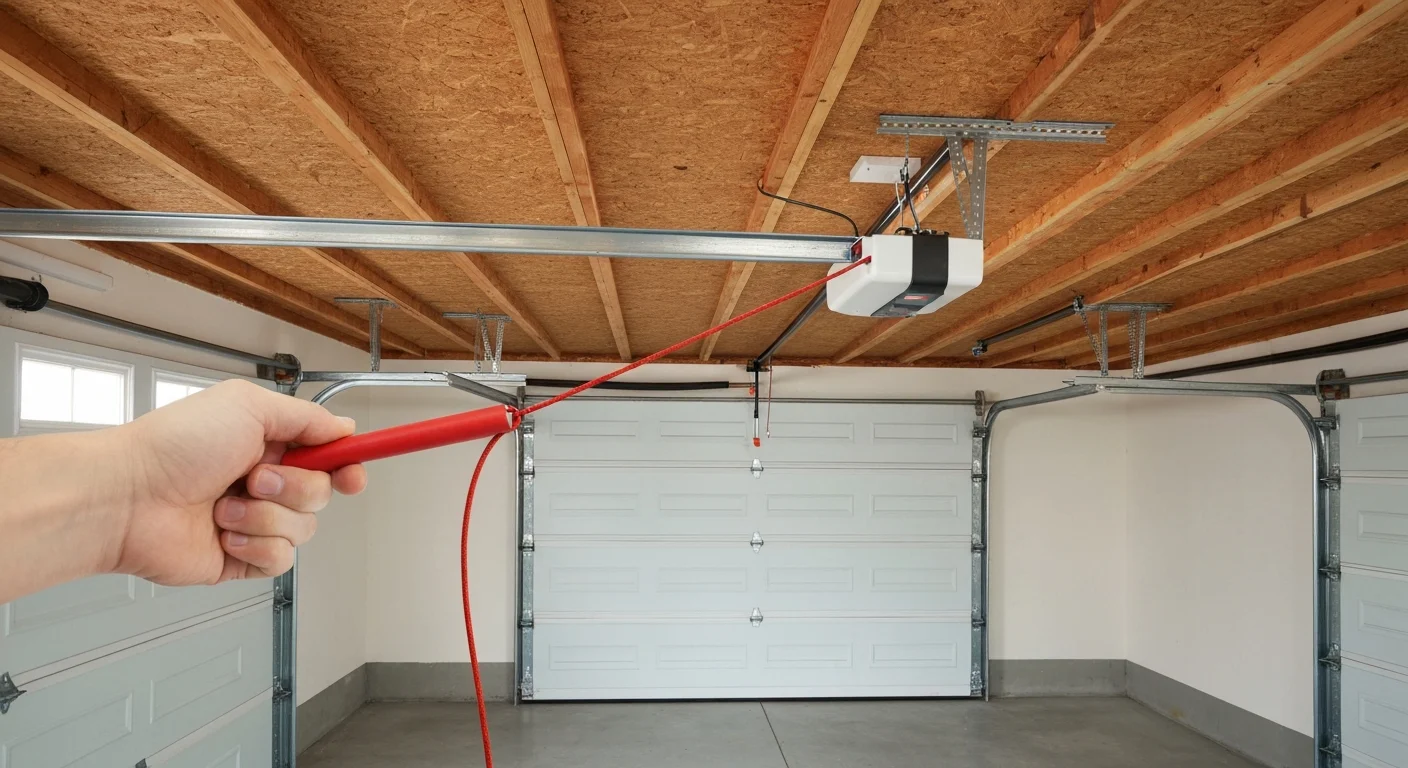
If pulling the garage door emergency release cord doesn’t release the door from the opener, the most likely causes are: broken spring (door is too heavy to move manually), door is locked (check the side lock bar), trolley carriage failure (internal release lever broken), or the cord has detached from the release lever internally. If the cord pulls freely but the door is immovable, suspect a broken spring — do not force it.
What Is the Emergency Release Mechanism?
The garage door emergency release is the red cord hanging from the trolley carriage on the opener rail. Pulling it disconnects the door from the opener’s drive system, allowing the door to be operated manually by hand. It is required by building code for all residential garage door openers and is designed to allow escape or entry during a power outage or opener failure.
The emergency release is the last line of access when your opener fails. When it doesn’t work, you may be locked out or trapped. Understanding why it fails and what to check can mean the difference between solving the problem in five minutes versus calling for emergency service.
Most Common Causes of Emergency Release Failure
The emergency release mechanism is simple but can fail in several distinct ways:
- Broken spring (most common): The emergency release cord works correctly and disconnects the trolley, but the door weighs 150–400 lbs without spring counterbalance. Most adults cannot lift this weight. The cord appears to do nothing because the door simply can’t be moved manually.
- Door is locked: Many garage doors have a side-mounted lock bar (T-handle or slide bolt). If this is engaged, the door cannot move even after disconnecting from the opener. Look for a locking handle on the door’s interior center panel and check if it’s turned or slid to the locked position.
- Broken trolley carriage: The trolley carriage is the plastic/metal assembly that slides along the rail. The release lever inside the carriage can break, meaning pulling the cord does nothing internally even though the cord itself is intact.
- Cord detached from lever: The red cord connects to a release lever via a clip or knot. Over time, this connection can fail, leaving the cord functional but disconnected from the mechanism.
- Door off tracks: If the door has derailed from its tracks, pulling the release cord disconnects the opener but the door still cannot move because it’s physically jammed in the track.
Step-by-Step Diagnosis
- Check the door lock: Look at the center interior of the door for a T-handle or slide bolt. If locked, unlock it and try the release cord again.
- Pull the cord and observe the trolley: Look up at the trolley carriage while pulling the cord. The release lever should pivot and a click or separation should be visible. If nothing moves inside the carriage, the internal lever or cord connection is broken.
- Try to manually lift the door: After confirming the cord was pulled (trolley disengaged), try lifting the door from the bottom. It should lift smoothly. If it feels like lifting a car — extremely heavy with no give — suspect a broken spring.
- Check the tracks: If the door moves slightly but catches or grinds, check both vertical tracks for bent sections or a derailed roller.
Emergency Release Repair Costs in Toronto
| Repair Type | Cost (+ tax) | Includes |
|---|---|---|
| Trolley carriage replacement | $80 – $150 | New carriage, cord reconnection, test |
| Spring replacement (single) | $160 – $220 | New torsion spring, balancing, safety check |
| Track realignment (door off-track) | $120 – $180 | Track adjustment, roller check, test cycle |
| Emergency service call | FREE | FREE with any repair at Royal Garage Doors |
How to Reconnect the Door After Using the Emergency Release
After the power is restored or the opener is fixed, you need to reconnect the door to the opener drive:
- Open the door fully using the remote or wall button (the opener motor will move the drive trolley to the open position without engaging the door).
- Manually lift the disconnected door to the fully open position so it aligns with the open trolley position.
- Pull the emergency release cord toward the door (horizontally, not straight down). This re-engages the release lever in the connected position.
- Lower the door manually and press the wall button. The opener should reconnect and close normally.
- Alternatively: push the door down and simultaneously press the remote — the trolley carriage will automatically re-engage as it reaches the closed position on some models.
Need emergency service? Book online now or call 437-265-9995 for 24/7 emergency garage door repair in Toronto.
Emergency Garage Door Situation?
Royal Garage Doors provides emergency service 7 days a week across Toronto & GTA. FREE service call with any repair. Most issues resolved same day.
Call 437-265-9995