What Is R-Value and Why Does It Matter?
R-value is the standard measurement of thermal resistance used across North America. The "R" stands for resistance—specifically, resistance to heat flow. Higher R-values indicate better insulating properties.
For garage doors, R-value determines how effectively the door prevents heat transfer between your garage and the outside environment. In Canadian winters, this directly affects:
- Energy costs: Heat escaping through an uninsulated garage door forces your heating system to work harder
- Garage temperature: Higher R-values maintain more stable internal temperatures
- Comfort: Adjacent rooms stay warmer when the garage retains heat
- Vehicle protection: Warmer garages mean easier starts and less moisture damage
- Pipe freeze prevention: Insulated garages protect exposed plumbing
The R-Value Formula
R = ΔT × A × t / Q
Where ΔT = temperature difference, A = area, t = time, Q = heat energy. In simple terms: the higher the R-value, the slower heat moves through the material.
R-Value Comparison: R-8 vs R-12 vs R-16 vs R-18
| R-Value | Thickness | Best For | Price Premium |
|---|---|---|---|
| R-6 to R-8 | 1.5-2 inches | Detached, unheated garages; mild climates | Base price |
| R-10 to R-12 | 2-2.5 inches | Attached garages; moderate climates | +$200-400 |
| R-14 to R-16 | 2.5-3 inches | Heated garages; cold climates; rooms above | +$400-700 |
| R-18+ | 3+ inches | Workshops; extreme cold; maximum efficiency | +$700-1,200 |
Real-World Temperature Differences
Based on testing during Toronto winters (-15°C average January temperature):
Uninsulated (R-0)
R-8 Insulated
R-16 Insulated
R-18 Insulated
What R-Value for Ontario? Climate Zone Guide
Canada uses climate zones to determine building insulation requirements. Toronto and most of Southern Ontario fall into Zone 6, requiring higher insulation levels than many US regions.
Zone 6 Toronto, Mississauga, GTA
Minimum recommended: R-12 for attached garages
Optimal: R-16 for energy efficiency
Premium: R-18 for heated garages or workshops
Zone 7 Ottawa, Northern Ontario
Minimum recommended: R-16 for all attached garages
Optimal: R-18 for energy efficiency
Premium: R-20+ for heated spaces
Deciding Factors Beyond Climate Zone
Your ideal R-value depends on more than just location:
- Attached vs. detached: Attached garages share a wall with heated space—insulation matters more
- Living space above: Rooms over the garage require R-16 minimum for comfort
- Garage usage: Workshops, gyms, or hobby spaces benefit from R-18+
- Heating plans: If you'll heat the garage, invest in higher R-value upfront
- Window exposure: South-facing garages with windows can use slightly lower R-values
Calculate Your Energy Savings
Upgrading from an uninsulated to an insulated garage door provides measurable savings, especially in Ontario's cold climate.
Estimated Annual Savings (16×7 ft door)
| Upgrade | Natural Gas | Electric Heat |
|---|---|---|
| R-0 → R-8 | $120-180/year | $200-280/year |
| R-0 → R-16 | $180-260/year | $300-420/year |
| R-8 → R-16 | $60-100/year | $100-160/year |
*Based on Toronto climate, 2024-2025 energy rates. Actual savings vary with home size, heating habits, and insulation of adjacent walls.
R-Values by Insulation Type
Different insulation materials achieve R-values differently. Understanding this helps when shopping for doors or DIY insulation kits. For a complete overview, see our garage door insulation guide:
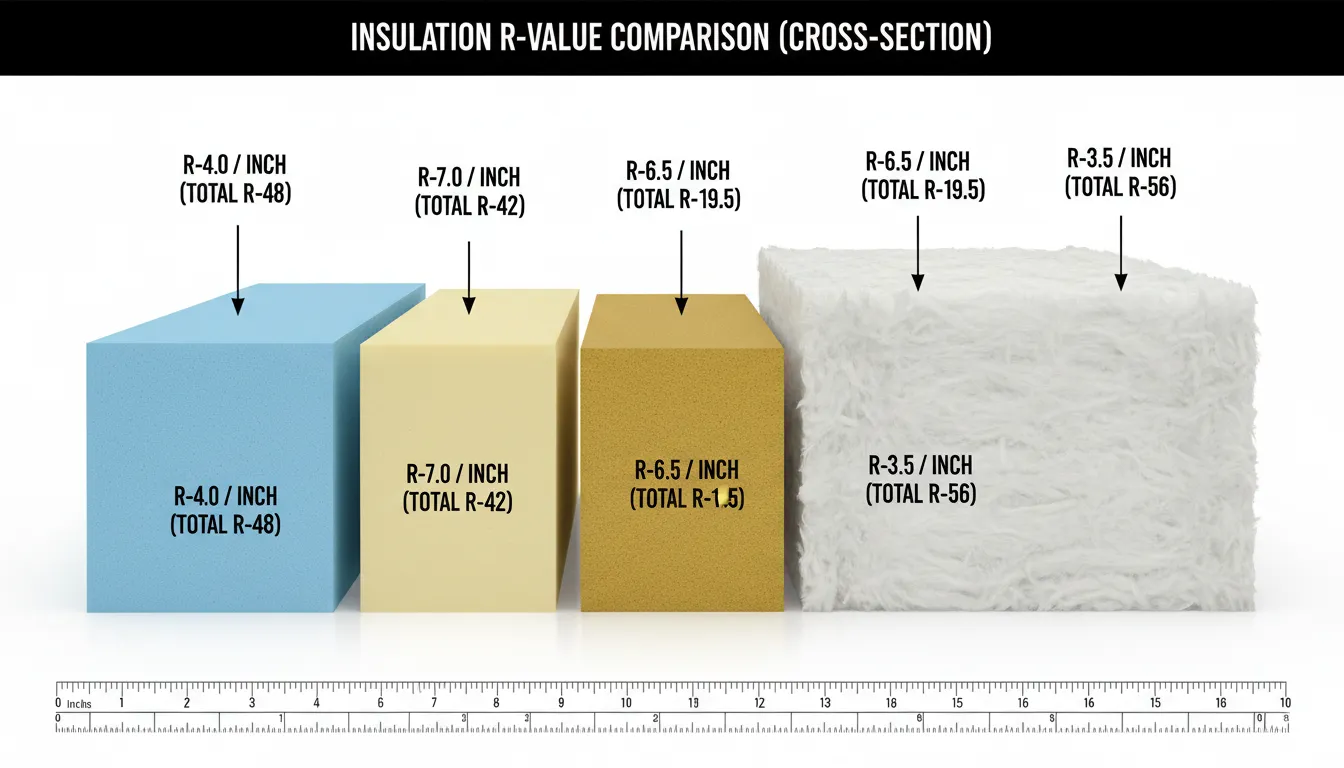
| Material | R-Value per Inch | Thickness for R-12 |
|---|---|---|
| Polystyrene (EPS) | R-3.8 to R-4.4 | 2.7-3.2 inches |
| Polyurethane Foam | R-6.0 to R-7.0 | 1.7-2.0 inches |
| Polyisocyanurate | R-5.8 to R-6.5 | 1.8-2.1 inches |
| Reflective Foil | R-1 (up to R-8 with air gap) | Varies with installation |
| Fiberglass Batts | R-3.1 to R-3.7 | 3.2-3.9 inches |
Why Polyurethane Dominates Premium Doors
Most high-end garage doors use polyurethane foam injection because it offers the highest R-value per inch. This means thinner doors with better insulation—important for headroom in low-ceiling garages. Polyurethane also bonds to the door panels, adding structural rigidity and reducing noise.
Common R-Value Mistakes to Avoid
- Ignoring the weakest link: A high R-value door with unsealed weatherstripping wastes energy. The door's R-value means nothing if cold air flows around the edges.
- Forgetting the walls: An R-18 door in an uninsulated garage still loses heat through walls and ceiling. Consider the whole envelope.
- Overbuying for unheated spaces: If you never heat your detached garage, R-8 may provide 90% of R-16's benefit at half the cost.
- Comparing apples to oranges: Some manufacturers test R-values at different temperatures. Ask for NFRC-certified ratings for accurate comparison.
- Ignoring thermal bridging: Metal frames and hardware conduct heat. Look for thermal breaks in premium doors.
Frequently Asked Questions
Need Help Choosing the Right R-Value?
Our Toronto technicians can assess your garage and recommend the optimal insulation level for your specific situation.
437-265-9995Free consultation on insulated garage doors. Book online.