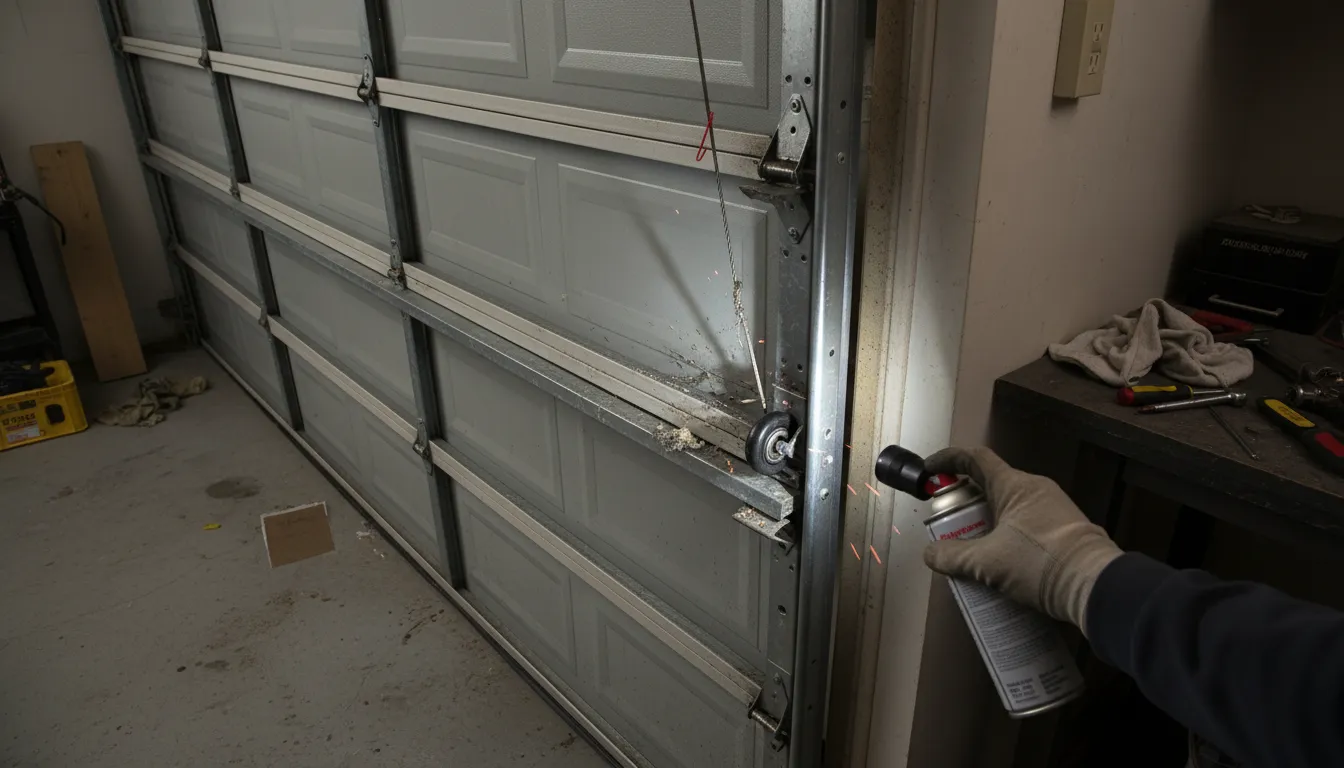
A smooth-operating garage door should glide up and down quietly without hesitation. When your door starts moving jerky, shaky, or in a stop-start pattern, something is interfering with normal operation. Let me walk you through the most common causes I encounter as a Toronto garage door technician, and show you which fixes you can handle yourself.
Types of Jerky Movement
Stop-Start
Door pauses momentarily during travel, then continues
Vibrating/Shaking
Door shakes or vibrates during operation
Uneven Travel
One side moves faster than the other
Grinding Jerks
Jerky movement with grinding sounds
7 Common Causes of Jerky Garage Door Movement
Worn or Damaged Rollers
Rollers develop flat spots, worn bearings, or chipped edges over time. This creates a bumpy, jerky ride as the damaged roller passes through the track.
Lack of Lubrication
Dry rollers, hinges, and springs create friction that causes jerky, stuttering movement. Metal-on-metal contact makes the door hesitate and stick.
Track Alignment Issues
Bent, misaligned, or dirty tracks cause rollers to bind and catch. The door jerks as rollers struggle to pass obstructions or gaps.
Unbalanced Door
When springs don't properly counterbalance the door's weight, the opener strains to lift it. This causes jerky, labored movement and stresses the motor. Learn how to test your garage door balance yourself.
Worn Opener Belt or Chain
Stretched or worn belts/chains slip on pulleys and sprockets. This creates inconsistent movement as the drive mechanism struggles for grip.
Cable Issues
Frayed cables, loose cable drums, or cables that have jumped off drums cause uneven lifting. One side may move faster than the other.
Loose Hardware
Vibration loosens nuts, bolts, and brackets over time. Loose hinges and track mounts allow excessive movement and create jerky operation.
Quick Diagnostic Test
Identify the Problem in 5 Minutes
DIY Fixes for Jerky Movement
Safe DIY Troubleshooting Steps
- Lubricate everything: Spray silicone lubricant on rollers (bearings), hinges, springs, and tracks. Work door up and down to distribute.
- Clean the tracks: Wipe tracks with a rag to remove dirt, debris, and old grease buildup. Don't lubricate tracks - they need friction.
- Tighten loose hardware: Check all visible bolts on hinges, track brackets, and roller brackets. Tighten any that are loose.
- Inspect rollers visually: Look for chipped edges, flat spots, or wobbling. If any roller looks damaged, it needs replacement.
- Check for obstructions: Look for debris, tools, or objects that may have fallen into the tracks.
Leave These to Professionals
Do NOT attempt: Spring adjustment, cable repair, major track realignment, or opener motor repair. These involve high-tension components that can cause serious injury if mishandled. Professional repair costs $150-$400 and includes warranty protection.
Repair Costs in Toronto
| Problem | DIY Cost | Professional Cost |
|---|---|---|
| Lubrication | $15-$25 | Included in $100-$120 tune-up |
| Roller replacement (all) | $40-$80 parts | $80-$200 installed |
| Track adjustment | Not recommended | $100-$200 |
| Spring balancing | Not safe for DIY | $150-$250 |
| Cable repair | Not safe for DIY | $150-$220 |
| Belt/chain replacement | $50-$180 parts | $180-$300 installed |
When Jerky Movement Becomes Urgent
Most jerky movement is an annoyance, not an emergency. However, seek professional help immediately if you notice:
- Door won't stay open - Springs may be failing (fall risk)
- Visible cable fraying - Cable could snap suddenly
- Door jumps off track - Could fall completely
- Loud popping or snapping sounds - Component under stress
- Door tilts significantly to one side - Cable or spring issue
Can't Fix the Jerky Movement?
Our technicians diagnose the exact cause and fix it right the first time. Same-day service throughout Toronto & GTA - most jerky movement issues resolved in under an hour. Book online or call:
Call 437-265-9995