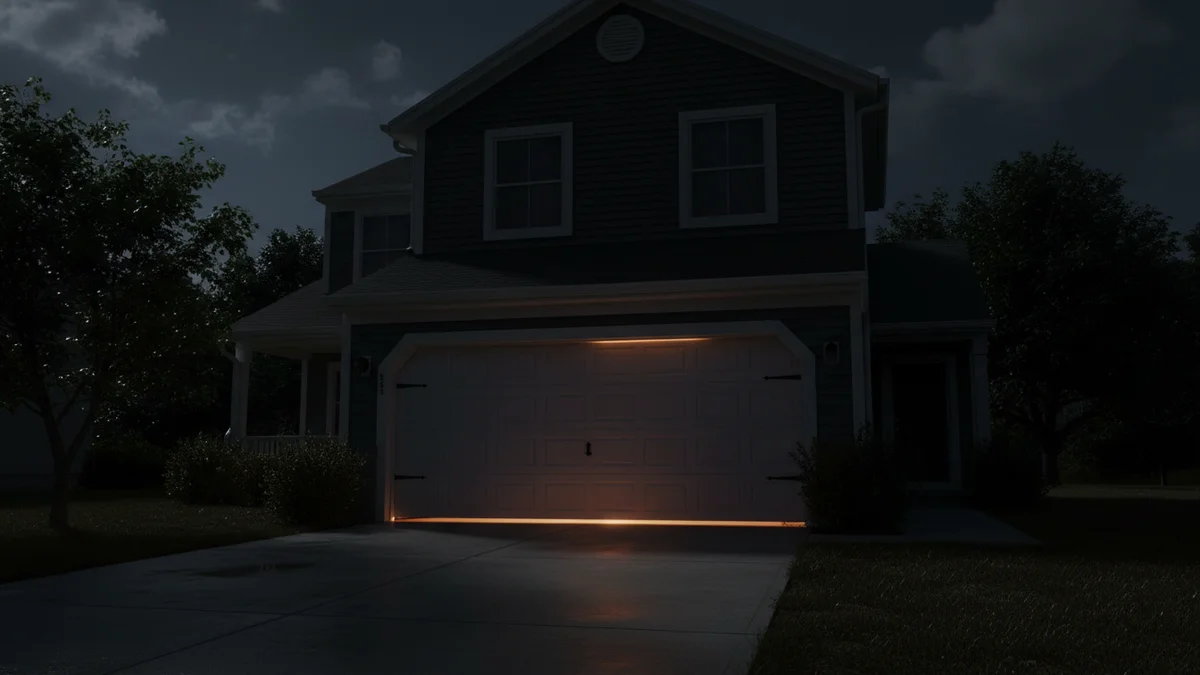
8 Causes of Phantom Garage Door Opening
Here are the most common reasons your garage door opens on its own, from most to least likely:
1Stuck Wall Button
The most common cause. Dirt, debris, or wear causes the wall button to stick in the "pressed" position intermittently. This sends random signals to open the door.
- Clean around the button with compressed air
- Check if button moves freely when pressed
- Replace button if worn ($15-25)
2Radio Frequency Interference
Nearby devices operating on the same frequency (315 MHz or 390 MHz) can accidentally trigger your opener. Common sources: new neighbors, police radios, HAM radios, or new wireless devices. See our remote range guide for more on signal issues.
- Change your opener's frequency code
- Reprogram all remotes to new code
- Upgrade to rolling-code opener if yours is pre-1993
3Wiring Short Circuit
Damaged or corroded wires touching each other create intermittent connections that activate the opener. Common in older homes or after rodent damage.
- Inspect all visible wiring for damage
- Look for chewed wires (rodent damage)
- Check wire connections at opener and wall button
4Faulty Remote Control
A remote with stuck buttons, dying battery, or internal damage can send random signals. Remotes in cars are especially prone to accidental button presses.
- Replace batteries in all remotes
- Check for stuck buttons
- Remove car visor remote temporarily to test
5Safety Sensor Malfunction
Misaligned or dirty sensors can cause erratic behavior. Some openers will reverse or stop mid-cycle, which homeowners mistake for "opening by itself."
- Clean sensor lenses with soft cloth
- Realign sensors (both lights should be solid)
- Check sensor wiring connections
6Lightning/Power Surge Damage
Electrical surges can damage the opener's circuit board, causing erratic behavior. This often happens after storms or power outages.
- Try a factory reset of your opener
- Circuit board may need replacement ($100-200)
- Install surge protector to prevent future damage
7Limit Switch Problems
If limit switches are misadjusted, the opener may not "know" the door is fully closed, causing it to cycle again.
- Adjust up/down limit switches on opener
- Door should fully close without motor straining
- Refer to owner's manual for adjustment procedure
8Neighbor's Remote
Rare but possible with older openers using fixed codes. A neighbor with the same brand opener might accidentally trigger yours.
- Change your opener's frequency code
- Clear all remotes and reprogram them
- Upgrade to rolling-code technology
How to Diagnose the Problem
Follow these steps to find the cause:
Step 1: Disconnect All Remotes
Remove batteries from all remotes and disconnect any car-programmed remotes. Wait 24-48 hours. If problem stops, a remote is the culprit.
Step 2: Disconnect Wall Button
Disconnect the two wires from the wall button at the opener. If phantom opening stops, the wall button or its wiring is faulty.
Step 3: Check for Patterns
Note when openings occur. Same time daily? When specific appliances run? This can identify interference sources.
Security Note
While phantom opening is almost always an electrical issue, always verify your garage is secure. Check that no unauthorized remotes have been programmed to your opener.
DIY Fixes You Can Try
Quick Reset Procedure
- Unplug opener for 30 seconds
- Plug back in
- Press and hold "Learn" button until LED goes out (erases all remotes)
- Reprogram each remote one by one
When reprogramming remotes, stand close to the opener. Weak signals during programming can cause intermittent connection issues later.
Change the Frequency Code
Most openers have DIP switches or a digital code that can be changed. After changing the opener's code, you must reprogram all remotes to match.
Opener Security Explained
Understanding how your garage door opener's security system works helps explain why phantom openings occur and how to prevent them. Modern openers use sophisticated encryption, but older units may have vulnerabilities.
Fixed Code vs. Rolling Code Technology
Garage door openers manufactured before 1993 typically use fixed code technology. These openers have DIP switches (small toggles) that create a static code—the same signal transmits every time you press the button. With only 256 to 4,096 possible combinations, a determined thief with a code scanner could potentially find your code.
Rolling code technology (also called hopping code) was introduced in 1993 and is now standard on all major brands. Each time you press your remote, the opener and transmitter synchronize to a new random code from over 100 billion possibilities. Even if someone captures your signal, it's useless—the code has already changed.
How Code Grabbing Works
Code grabbing devices record radio signals from remotes. With fixed-code openers, this captured signal works indefinitely. That's why upgrading pre-1993 openers is essential for security. With rolling code openers, captured signals are one-time use and won't work again.
Security Red Flag
If your opener has DIP switches (small physical toggles) for setting the code, it uses fixed-code technology. We strongly recommend upgrading to a modern rolling-code opener for security—LiftMaster, Chamberlain, and Genie all offer affordable options starting around $400 installed.
Smart Opener Security Features
Modern smart openers add additional security layers:
- Real-time alerts: Get smartphone notifications whenever your door opens
- Activity logs: See exactly when and how your door was activated
- Auto-close timers: Door automatically closes if left open too long
- Guest access: Grant temporary access that automatically expires
- Camera integration: See who's at your garage with video
If phantom openings concern you from a security standpoint, smart openers provide the visibility and control to know exactly what's happening with your garage door at all times.
Toronto Weather Factors
Toronto's climate creates unique conditions that can contribute to phantom garage door openings. Understanding these factors helps homeowners in the GTA troubleshoot more effectively.
Cold Weather Wiring Issues
When temperatures drop below -10°C, wiring connections contract and can create intermittent contacts. A wire that makes good contact at 20°C may have a loose connection at -20°C. This is especially common in:
- Wire nut connections in unheated garages
- Sensor wire terminals exposed to cold
- Wall button wire connections
- Older opener terminal blocks
Before each winter, check all wire connections in your garage door system. Tighten any loose terminals and consider using heat-shrink connectors instead of wire nuts for exposed connections. This simple maintenance prevents many cold-weather phantom openings.
Power Surge Season
Toronto experiences significant electrical storms from May through September. Lightning strikes—even those miles away—can send power surges through your home's electrical system. Garage door openers are particularly vulnerable because:
- They're often on dedicated circuits with less surge protection
- Antenna wires can pick up electromagnetic interference
- Circuit boards aren't designed for major voltage spikes
After a severe storm, if your door starts behaving erratically, the circuit board may have sustained damage. A surge protector installed on the outlet powering your opener can prevent this—a $20-30 investment that protects a $600+ opener.
Temperature Swings and Limit Switches
Toronto's dramatic temperature changes (sometimes 20°C+ in a single day during spring and fall) cause metal components to expand and contract. This can affect your door's travel distance, causing limit switches to think the door isn't fully closed. When the opener "sees" an incomplete close, some models will reverse to the open position.
If phantom openings coincide with major temperature swings, your limit switches may need seasonal adjustment. This is a 5-minute adjustment covered in your owner's manual, or our technicians can calibrate them during a maintenance visit.
When to Call a Professional
Contact a technician if:
- Problem persists after trying all DIY fixes
- You suspect circuit board damage
- Wiring damage is extensive
- Opener is very old (pre-1993) and needs upgrading
- You're not comfortable working with electrical components
Repair Cost Breakdown
| Service | Price Range (+ tax) | Includes |
|---|---|---|
| Wall Button Replacement | $50 - $75 | New button, wiring check |
| Wiring Repair | $75 - $150 | Diagnosis, wire repair, testing |
| Circuit Board Replacement | $150 - $250 | New logic board, programming |
| Sensor Repair/Replacement | $120 - $180 | Sensors, alignment, testing |
| Complete Opener Upgrade | $680+ | LiftMaster opener, install, programming |
Can't Find the Cause?
Our technicians diagnose phantom opening issues daily. FREE service call with any repair.
Call 437-265-9995Frequently Asked Questions
Common causes include: radio frequency interference from neighbors, stuck wall button, wiring short circuits, misaligned safety sensors, faulty remote controls, lightning damage to circuit board, or limit switches needing adjustment.
It's rare but possible if they have the same frequency and rolling code hasn't been activated. Modern openers (post-1993) use rolling codes that change with each use, making this nearly impossible. Older openers may need upgrading.
Start by checking for stuck buttons on remotes and wall panels. Change opener frequency, clear and reprogram all remotes, inspect wiring for damage, and check that safety sensors are aligned. If issues persist, the logic board may need replacement.
It can be. While most phantom openings are caused by electrical issues (not intruders), an open garage door is a security vulnerability. Fix the issue promptly and verify no unauthorized remotes are programmed to your opener.
Cost varies by cause: wall button replacement ($15-25 DIY, $50-75 pro), wiring repair ($75-150), circuit board replacement ($100-200), or full opener upgrade ($400-800 installed). Many fixes are free (reprogramming, cleaning sensors).
Cold weather can contribute to phantom openings by causing wiring connections to contract and loosen, creating intermittent shorts. In Toronto winters, check all wire connections and consider heat shrink connectors for exposed wires.
Rolling code (also called hopping code) generates a new random code each time you use your remote. This prevents code grabbing and makes it nearly impossible for others to open your door. All openers manufactured after 1993 should have this feature—if yours doesn't, consider upgrading for security.