Your garage door is the largest moving part of your home, cycling an average of 1,500 times per year. Without regular maintenance, that constant motion leads to worn parts, noisy operation, and eventually costly repairs. The good news? Most maintenance takes under an hour and can extend your door's lifespan by years. Here's everything you need to know to keep your garage door running smoothly through Toronto's demanding four-season climate.
A properly maintained garage door can last 25-30 years. Perform basic maintenance (lubrication and inspection) every 3-6 months, with a comprehensive tune-up annually. In Toronto's climate, add a pre-winter check in October to prepare for freezing temperatures. Professional maintenance costs $100-$150 in the GTA, while DIY maintenance requires about $15-$30 in supplies.
Why Garage Door Maintenance Matters
Regular maintenance isn't just about preventing inconvenient breakdowns - it's about safety, security, and savings:
- Safety: A garage door weighing 300-500 lbs under tension can cause serious injury if parts fail. Regular checks catch problems before they become dangerous.
- Security: A malfunctioning door that doesn't close properly leaves your home vulnerable to break-ins and weather damage.
- Cost savings: A $15 tube of lubricant applied twice yearly can prevent a $400 roller replacement or $300 spring repair.
- Lifespan: Well-maintained doors last 25-30 years; neglected doors often need replacement at 15-20 years.
- Quiet operation: Squeaks and grinding sounds are signs of friction that maintenance eliminates. See our guide to silencing squeaky garage doors.
Seasonal Maintenance Checklists
Spring Maintenance (March-April)
After winter's harsh conditions, spring is the ideal time for a thorough inspection and tune-up.
- Cleaning Wash door panels with mild soap and water to remove winter salt and grime
- Inspection Check springs for rust, gaps, or deformation from cold weather stress
- Lubrication Apply fresh lubricant to all moving parts after winter dryness
- Weatherstripping Replace bottom seal if cracked or hardened from freezing temperatures
- Balance Test Perform manual balance test - springs may have weakened over winter
- Hardware Tighten all nuts, bolts, and brackets loosened by thermal expansion/contraction
Summer Maintenance (June-July)
Summer's heat can affect door alignment and accelerate wear on certain components.
- Inspection Check for warping on wood doors or paint bubbling on steel doors
- Sensors Clean photo-eye sensors - summer dust and pollen accumulates quickly
- Touch-Up Address any rust spots or paint chips before they spread
- Opener Ensure garage has adequate ventilation for opener motor (heat buildup)
Fall Maintenance (September-October)
Prepare your door for winter - the most demanding season for garage doors in Ontario.
- Weatherstripping Inspect all seals - replace any that show wear before freezing weather
- Lubrication Apply winter-grade lubricant (silicone-based resists cold better)
- Insulation Check insulation panels for damage; add insulation if needed
- Drainage Clear debris from garage floor threshold to prevent ice dams
- Battery Test opener battery backup before winter power outage season
- Remote Replace remote batteries - cold drains them faster
Winter Maintenance (December-February)
Winter requires extra vigilance as cold affects lubricants, seals, and metal components.
- Snow/Ice Clear snow and ice from bottom seal area before operating door
- Monitoring Listen for unusual sounds - cold makes problems more noticeable
- Frost If door freezes to ground, never force it - use de-icer or warm water
- Slow Operation Normal in cold - allow door to "warm up" with a few cycles if sluggish
DIY Maintenance: Step-by-Step Guide
These tasks can be safely performed by any homeowner. Total time: 30-45 minutes.
What You'll Need
- White lithium grease or silicone-based garage door lubricant ($10-$15)
- Clean cloths or shop towels
- Mild dish soap and water
- Socket wrench set
- Step ladder
- Safety glasses
Visual Inspection (5 minutes)
With the door closed, examine springs (look for gaps, rust, or stretched coils), cables (fraying or kinks), rollers (cracks or chips), and hinges (bent or loose). Look at the tracks for dents, debris, or misalignment. Note any problems for repair.
Clean the Tracks (5 minutes)
Wipe inside of tracks with a damp cloth to remove dirt and debris. Do NOT lubricate the tracks - this attracts more dirt. Tracks should be clean and dry for smooth roller movement.
Lubricate Moving Parts (10 minutes)
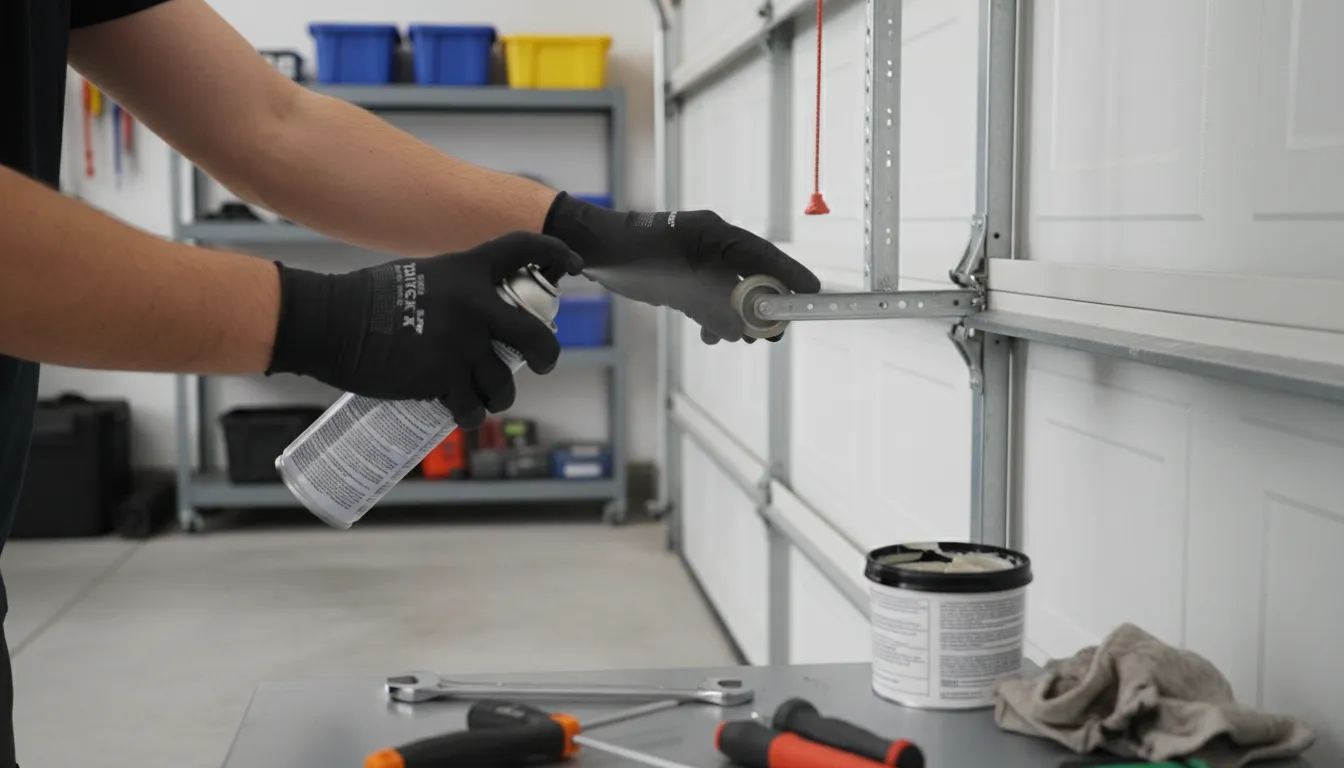
Apply lubricant to: torsion springs (entire length), hinges (pivot points), rollers (bearings, not nylon wheels), lock mechanism, and opener chain or screw rail. Use short bursts - a little goes a long way. Wipe excess.
Tighten Hardware (5 minutes)
Check and tighten: bracket bolts securing tracks to wall/ceiling, roller bracket bolts, hinge screws, and opener mounting brackets. Don't overtighten - snug is sufficient.
Test Door Balance (5 minutes)
Disconnect the opener (pull release cord). Manually lift the door halfway and release. A balanced door stays in place; an unbalanced door moves up or down. If unbalanced, call a professional for spring adjustment.
Test Safety Features (5 minutes)
Place a 2x4 board flat under the door and close it. The door should reverse upon contact. Also test photo-eye sensors by waving an object through the beam while closing - the door should stop and reverse.
Inspect Weatherstripping (5 minutes)
Check the bottom seal for cracks, brittleness, or gaps. Check side and top seals if present. Replace any damaged weatherstripping to prevent drafts and water intrusion.
Never Attempt These Tasks Yourself
- Spring adjustment or replacement - Springs are under extreme tension and can cause serious injury or death
- Cable replacement - Cables are connected to high-tension springs
- Bottom bracket adjustment - Also connected to spring system
- Track realignment - Improper alignment can cause door to fall
These repairs require specialized tools and training. Call 437-265-9995 for professional service.
The Right Way to Lubricate
Lubrication is the single most important maintenance task, yet it's often done incorrectly. Here's what you need to know:
What to Use
- Best choice: Silicone-based garage door lubricant (like 3-in-One or Blaster) - works in all temperatures
- Good alternative: White lithium grease - excellent for metal-on-metal contact
- Avoid: WD-40 (it's a degreaser/cleaner, not a lubricant - it strips away lubrication)
- Never use: Motor oil, cooking spray, or other improvised lubricants
Pro Tip: Temperature Matters
In Toronto's climate, use silicone-based lubricant for year-round application. White lithium grease can thicken and become less effective below -10°C, while silicone remains fluid down to -40°C. Apply lubricant when temperatures are above 0°C for best penetration.
Where to Apply
- Torsion springs: Spray entire length; lubricant reduces friction and prevents rust
- Hinges: Focus on pivot points where metal meets metal
- Rollers: Apply to bearings (metal rollers only; nylon rollers don't need lubrication)
- Locks and latches: Light application to moving parts
- Opener chain/screw: Light coating on chain links or screw rail
When to Call a Professional
Some situations require expert attention. For details on what's included in a professional tune-up service, see our dedicated guide. Call a professional if you notice:
- Door is unbalanced (won't stay halfway open when disconnected from opener)
- Springs show visible gaps, rust, or deformation
- Cables are frayed, kinked, or hanging loose
- Door makes grinding, scraping, or popping sounds
- Door moves unevenly or jerks during operation
- Safety reverse isn't working properly
- Door won't open or close completely
- Opener motor runs but door doesn't move
Maintenance Costs in Toronto (2025)
| Service | DIY Cost | Professional Cost |
|---|---|---|
| Basic tune-up (lubrication, inspection, adjustment) | $15-$30 | $100-$150 |
| Weatherstripping replacement | $20-$40 | $75-$120 |
| Roller replacement (set of 10-12) | $40-$80 | $150-$250 |
| Spring replacement (single torsion) | N/A - Not recommended | $160-$240 |
| Annual maintenance package | $50-$80/year | $100-$150/visit |
Component Lifespan Guide
Knowing when components typically fail helps you plan maintenance and budget for replacements. For detailed information on opener longevity, see our complete opener lifespan guide. For rust prevention tips, see our rust repair and prevention guide.
Torsion Springs
Opener
Rollers
Cables
Weatherstripping
Door Panels
Frequently Asked Questions
Ready for Professional Maintenance?
Our comprehensive tune-up package includes everything your door needs to operate safely and smoothly. We'll lubricate all moving parts, test safety systems, tighten hardware, check balance, and provide a detailed report on your door's condition.
Call 437-265-9995 to schedule your maintenance visit or book online. We serve the entire Greater Toronto Area with same-day service available.