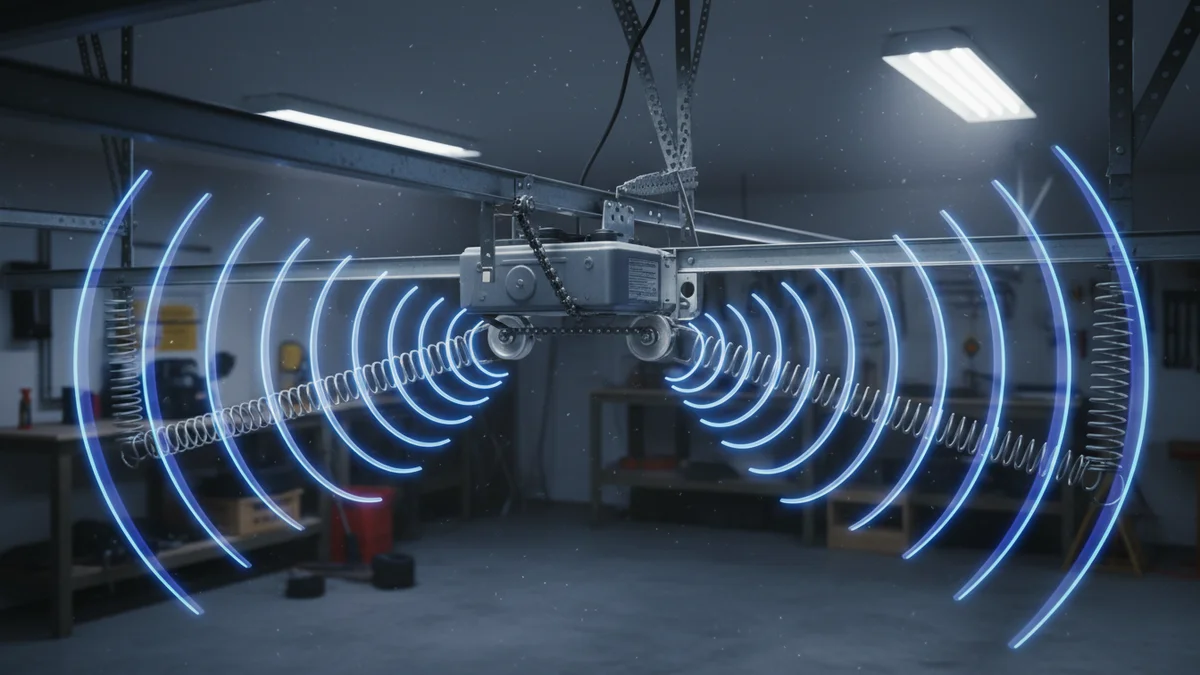
Noise Type Quick Guide
Use this table to identify your noise and likely cause:
| Noise Type | Most Likely Cause | DIY Fix? | Urgency |
|---|---|---|---|
| Squeaking | Needs lubrication | Yes | Low |
| Grinding | Worn rollers, dry hinges | Partial | Medium |
| Rattling | Loose nuts/bolts | Yes | Low |
| Banging/Slamming | Broken spring, limit issue | No | High |
| Popping | Torsion spring coils binding | No | High |
| Vibrating | Opener mount, chain tension | Yes | Low |
| Scraping | Bent track, misalignment | No | Medium |
Squeaking Noise
Squeaking / Squealing
Low Urgency - DIY FixSqueaking is caused by metal parts rubbing without proper lubrication. This is the easiest garage door noise to fix.
Common Causes:
- Dry rollers, hinges, or springs
- Weather stripping rubbing against door
- Dry bearing in opener
How to Fix:
- Apply garage door lubricant spray to all rollers, hinges, springs, and tracks
- Use silicone-based or lithium-based lubricant (NOT WD-40)
- Lubricate every 6 months for prevention
For a complete guide to diagnosing and fixing squeaky doors, see our garage door squeaks troubleshooting guide.
Don't use WD-40 for garage door lubrication - it's a solvent, not a lubricant. Use a dedicated garage door spray or white lithium grease.
Grinding Noise
Grinding / Metal-on-Metal
Medium Urgency - Causes WearGrinding indicates metal parts wearing against each other without proper lubrication or due to component failure. Don't ignore this - it accelerates wear.
Common Causes:
- Worn steel rollers - most common cause
- Dry or seized bearings in rollers
- Hinges rubbing without lubrication
- Track damage or misalignment
How to Fix:
- Inspect rollers - if bearings don't spin freely, replace them
- Replace steel rollers with nylon rollers ($120-$200)
- Check tracks for bends or damage
- Lubricate all metal contact points
Rattling Noise
Rattling / Vibrating
Low Urgency - DIY FixRattling is caused by loose hardware vibrating during operation. This gets worse over time as vibration loosens more parts.
Common Causes:
- Loose track mounting brackets
- Loose hinge bolts
- Loose chain/belt on opener
- Opener motor mount vibrating
How to Fix:
- Tighten all visible nuts and bolts (don't over-tighten)
- Check opener chain/belt tension
- Add rubber isolation pads under opener mount
- Inspect roller brackets and hinges
Banging or Slamming Noise
Banging / Slamming / Loud Clunk
High Urgency - Call a ProLoud banging or slamming usually indicates a serious mechanical issue. Stop using the door and call a professional.
Common Causes:
- Broken torsion spring - door slams down
- Limit switch misadjusted - motor strains at end of travel
- Damaged panel catching during operation
- Door off track
What to Do:
- Stop operating the door immediately
- Check if springs appear intact (look for gap in coils)
- Do NOT attempt DIY repair on springs
- Call a professional for diagnosis
Safety Warning
Never attempt to repair garage door springs yourself. They're under extreme tension and can cause serious injury. Always call a professional for spring-related noises.
Popping Noise
Popping / Snapping Sounds
High Urgency - Call a ProPopping or snapping sounds during door operation typically indicate issues with the torsion spring system. These sounds require immediate professional attention as they often precede spring failure.
Common Causes:
- Torsion spring coils binding - coils sticking together during wind/unwind
- Spring adjustment issues - improper tension causing stress
- Bearing plate problems - worn or dry bearings in end plates
- Cable drum issues - cables jumping off or catching
- Temperature changes - metal expansion/contraction (especially in Toronto winters)
What to Do:
- Do NOT continue operating the door - each cycle increases risk
- Visually inspect the torsion spring for gaps or rust
- Check if cables appear frayed or misaligned
- Call a professional for spring inspection
- Expect repair cost: $160-$400 depending on spring type
Popping sounds that occur only during initial operation (first cycle of the day) may be caused by lubricant thickening in cold weather. If the sound disappears after the door warms up, this is typically not a major concern. However, consistent popping throughout operation indicates a mechanical problem that needs attention.
Opener-Related Noise
Sometimes the garage door itself isn't the problem—it's the opener. Understanding the differences between opener types helps identify noise sources.
Chain Drive Openers (Loudest)
Chain drive openers are reliable and affordable but inherently noisy. The metal chain creates vibration and rattling during operation. If you have rooms above or adjacent to your garage, a chain drive may transmit significant noise into living spaces.
- Noise reduction tip: Adjust chain tension - it should have about 1/2" of play
- Lubricate the chain with garage door lubricant (not motor oil)
- Add anti-vibration pads between opener and ceiling
- Consider upgrading to belt drive for significant noise reduction
Belt Drive Openers (Quietest)
Belt drive openers use a rubber belt instead of a metal chain, dramatically reducing noise. If your belt-drive opener is suddenly noisy, check for:
- Belt wear or damage - belts last 10-15 years typically
- Motor mount loosening - tighten mounting bolts
- Rail alignment issues - ensure the rail is straight
Screw Drive Openers
Screw drive openers use a threaded steel rod. They're moderately quiet but require more maintenance. Common noise issues include:
- Dry lifting mechanism - needs lubrication along the screw
- Worn carriage - may need replacement after 10+ years
- Motor strain - could indicate door balance problems
Motor-Related Sounds
Opener motors themselves can develop noise issues:
- Humming but not moving: Stripped gears inside the motor - needs replacement ($150-$300)
- Clicking: Often electrical - check safety sensors and wiring
- Buzzing: Could be electrical issue or motor capacitor failure
- Whining: Motor bearings wearing out - opener may need replacement
Winter Noise Issues in Toronto
Toronto's cold winters create unique garage door noise challenges. Temperature swings from -20°C to +5°C cause metal expansion and contraction that affects door operation.
Cold Weather Noise Causes
- Lubricant thickening: Standard lubricants become thick and gummy below -10°C, causing stiff operation and squeaking
- Metal contraction: Tracks and hardware contract, changing clearances and causing scraping
- Weather seal stiffening: Rubber seals become rigid and may squeak or stick
- Spring tension changes: Springs may have different tension characteristics in extreme cold
- Ice formation: Moisture freezing in tracks or on rollers creates grinding sounds
Winter Noise Solutions
To minimize winter noise issues:
- Use low-temperature lubricant: Silicone-based sprays perform better in cold than lithium grease
- Apply lubricant before winter: Protect metal parts before freezing temperatures arrive
- Keep tracks clean: Remove salt, sand, and debris that accumulate from vehicles
- Replace worn weather stripping: New seals are more flexible in cold weather
- Operate the door regularly: Daily use prevents ice buildup and keeps parts moving
If your garage door is significantly louder only on very cold mornings, try running it up and down twice to warm up the lubricant and metal parts before leaving for work.
When to Call a Professional
While many noise issues have DIY solutions, some require professional expertise and tools. Call a technician when you notice:
Immediate Professional Service Needed:
- Any spring-related noise (popping, loud bang, door slamming down)
- Door moving unevenly or tilting during operation
- Visible cable fraying or cables hanging loose
- Grinding that persists after lubrication
- Door off track or scraping sounds against frame
- Motor running but door not moving
Schedule Service Soon:
- Noise that progressively gets worse over weeks
- Rollers that appear worn or cracked
- Opener making new sounds (grinding, whining, buzzing)
- Door doesn't seal properly at bottom
- Visible rust on springs or hardware
What Professional Service Costs
| Service | Price Range (+ tax) | Includes |
|---|---|---|
| Nylon Roller Replacement | $120 - $200 | All rollers, labor, quieter operation |
| Full Tune-Up | $100 - $120 | Lubrication, adjustment, inspection |
| Cable Replacement | $150 - $220 | Both cables, labor, inspection |
| Spring Replacement | $160 - $400 | Spring(s), balancing, safety check |
| Belt-Drive Opener | $680+ | Quietest operation, installation |
How to Make Your Garage Door Quieter
For the quietest operation possible:
1. Replace Steel Rollers with Nylon ($120-$200)
This single upgrade eliminates most noise. Nylon rollers are quieter, don't require lubrication, and last longer than steel.
2. Lubricate Everything ($10-$15)
Apply garage door lubricant to: rollers, hinges, springs, bearing plates, lock, and arm bar. Do this every 6 months.
3. Tighten All Hardware (Free)
Use a socket wrench to snug up all visible nuts and bolts. Vibration loosens them over time.
4. Add Vibration Isolators ($20-$50)
Rubber isolation pads between opener and ceiling reduce transmitted vibration and noise.
5. Upgrade to Belt-Drive Opener ($400-$700)
If your chain-drive opener is the main noise source, a belt-drive model is dramatically quieter.
Need Quiet Door Service?
We can make your garage door whisper-quiet. Same-day service available.
Call 437-265-9995Frequently Asked Questions
The most common cause is worn steel rollers. Other causes include lack of lubrication, loose hardware, worn springs, chain drive opener, or bent tracks. Most noise issues can be fixed with lubrication and roller replacement.
Grinding indicates metal-on-metal contact from worn rollers, dry hinges, or damaged tracks. Don't ignore grinding - it causes accelerated wear on other components. Lubricate immediately and inspect rollers.
Replace steel rollers with nylon ($120-$200 installed), lubricate all moving parts with garage door spray, tighten loose hardware, and consider upgrading to a belt-drive opener ($400-$700). Regular maintenance prevents most noise.
No. WD-40 is a solvent and penetrating oil, not a lubricant. It evaporates quickly and can attract dust. Use silicone-based or white lithium grease spray specifically designed for garage doors.
Lubricate every 6 months for optimal operation. If you notice squeaking between maintenance, apply lubricant immediately. Focus on: rollers, hinges, springs, bearing plates, and the lock mechanism.
Popping sounds typically indicate torsion spring coils binding together or bearing plate issues. If the popping only occurs on the first use on cold mornings, it may be lubricant thickening. Consistent popping requires professional inspection as it often precedes spring failure.
Belt drive openers are significantly quieter than chain drive. Chain drives use a metal chain that creates vibration and rattling, while belt drives use a rubber belt that operates almost silently. If noise is a priority, especially with rooms above the garage, choose belt drive ($400-$700).
Cold weather causes lubricant to thicken, metal to contract, and weather seals to stiffen. In Toronto's winters (-20°C or colder), use silicone-based lubricant that performs better in cold. Operating the door a couple times before leaving can warm up the lubricant and reduce noise.
Costs depend on the cause: DIY lubrication is $10-$15, nylon roller replacement is $120-$200, spring repair is $160-$400, and belt-drive opener upgrade is $400-$700. Royal Garage Doors offers free diagnosis with any repair service.