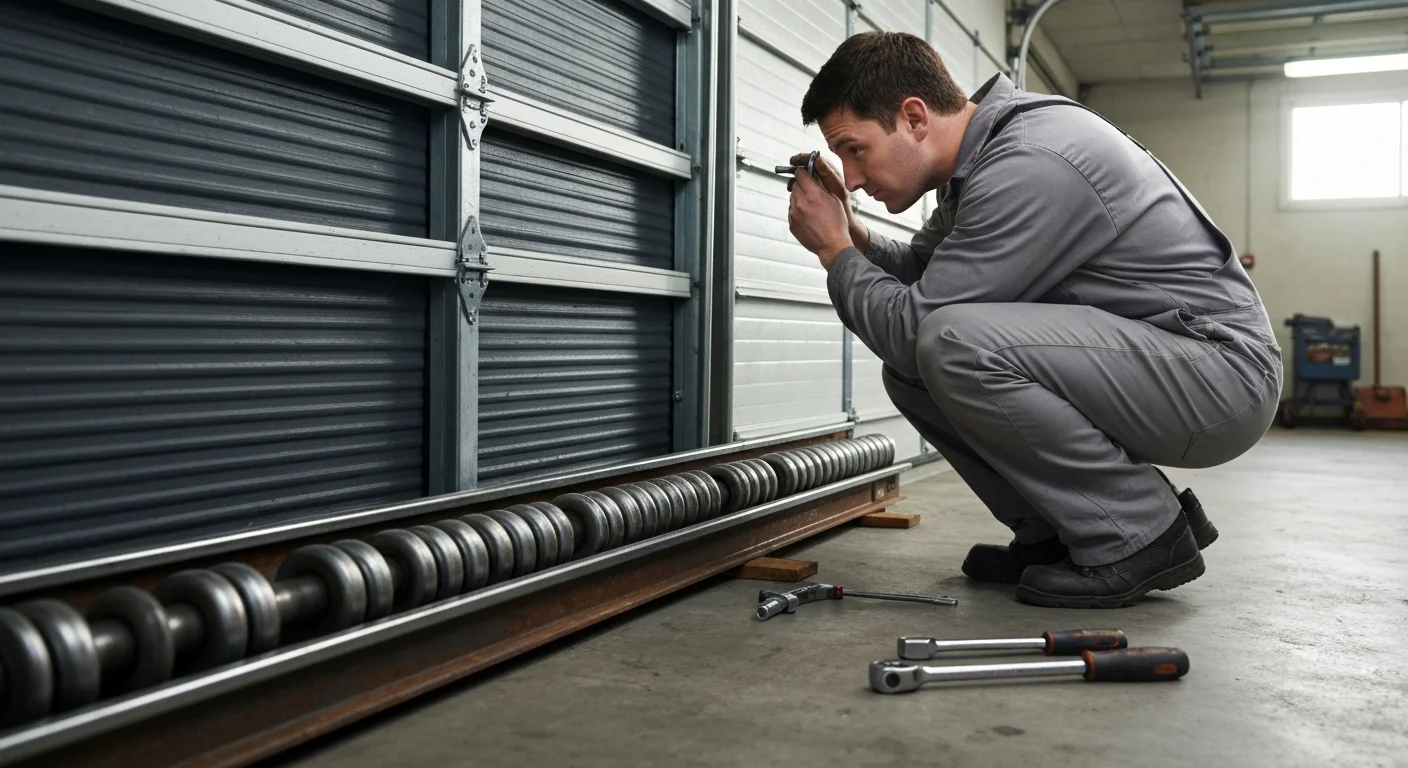
Squealing = dry rollers/hinges (lubricate now). Grinding = worn metal rollers or opener gears (service soon). Banging/popping = spring tension issue (call a technician immediately). Rattling = loose hardware (tighten bolts yourself). Vibrating = loose opener mount (usually DIY fix). Most noise is preventable with twice-yearly lubrication.
Why Garage Doors Make Noise
Garage doors produce noise through three main mechanisms: metal-on-metal friction (dry or worn components), loose hardware vibration (bolts, brackets, opener mounting), and structural stress (spring tension imbalances or damaged panels). Correctly identifying the sound type leads directly to the repair needed.
In 15 years of garage door service across Toronto and the GTA, the most common question I receive from homeowners is: “My garage door is making a noise — is it serious?” The honest answer depends entirely on what kind of noise it is. This guide helps you diagnose the sound and decide whether it’s a five-minute DIY fix or a same-day professional call.
Why Garage Doors Make Noise (and When It’s Serious)
A well-maintained garage door should operate with minimal noise — a quiet hum of the opener motor and a soft rolling sound as the door moves through the tracks. When noise levels increase noticeably, it almost always indicates a component that needs attention.
Some noises are merely annoying (loose bolts, dry hinges), while others signal imminent failure or safety risk (spring tension issues, worn cables). The key is learning to distinguish between the two. Toronto’s climate accelerates many noise-producing conditions: temperature cycling causes metal expansion and contraction, humidity promotes corrosion, and cold weather thickens lubrication until components run dry.
Sound Guide: What Each Noise Means
| Sound | Likely Cause | DIY Fix? | Need Professional? |
|---|---|---|---|
| Squealing / Squeaking | Dry rollers, hinges, or tracks | Yes — lubricate with white lithium grease | No, if minor |
| Grinding | Worn metal rollers or opener drive gear | Try lubrication first | Yes, if grinding continues |
| Banging / Popping | Spring tension issue or panels hitting | No — do not attempt | Yes — inspect springs immediately |
| Rattling | Loose nuts, bolts, or hardware | Yes — tighten with wrench | No |
| Vibrating / Humming | Loose opener mount or chain slack | Usually yes — tighten mounting | No, unless excessive |
| Clicking | Debris in tracks or worn hinges | Yes — clean tracks | No, unless structural |
| Loud slam when closing | Misadjusted down limit or cable issue | Try limit adjustment | Yes, if limit adjustment fails |
How to Diagnose Noise by Location
Listening carefully to where the noise comes from narrows down the cause significantly:
Noise From the Sides of the Door (Tracks)
Noise originating from the vertical or horizontal tracks usually indicates dirty tracks, debris caught in the track, or worn rollers. Inspect the tracks for dents, dirt buildup, or rust. Clean with a damp cloth and dry thoroughly before lubricating. Note: do not lubricate the tracks themselves — only the roller stems and hinges.
Noise From the Top of the Door (Spring Area)
Sounds from the top center of the door — particularly loud banging, snapping, or popping — are spring-related until proven otherwise. A broken torsion spring produces a loud bang and the door will feel extremely heavy immediately after. If you hear a loud bang and your door will barely move, stop using it and call immediately. Spring repair in Toronto costs $160–$400 + tax.
Noise From the Opener Motor Unit
Noise from the ceiling-mounted opener is usually the chain, belt, or drive gear. A squealing chain needs lubrication with chain lubricant spray. A grinding noise from inside the opener indicates worn drive gear — this is a part failure, not a lubrication issue. A vibrating opener that shakes the ceiling suggests loose mounting bolts.
DIY Fixes for Noisy Garage Doors
For squealing, rattling, clicking, and vibrating sounds, try these steps before calling a technician:
- Lubricate the hinges: Apply white lithium grease to the hinge pivot points where panels connect. Do not use WD-40 as a lubricant — it will dry out within weeks.
- Lubricate the rollers: Apply grease to the stem of metal rollers only. Do not lubricate plastic/nylon rollers — this causes them to break down faster.
- Lubricate the springs: Apply a thin coat of white lithium grease along the torsion spring coils. This reduces noise and slows corrosion.
- Tighten loose hardware: Use a 7/16” socket to tighten all roller brackets, track bolts, and hinges. Do not overtighten — snug is sufficient.
- Clean the tracks: Wipe tracks with a clean cloth to remove dirt and debris. Tracks do not need lubrication — only the rollers that run inside them.
When Noise Means Danger: Call a Professional
Some noises are not DIY situations. Call a professional immediately if you hear:
- A loud bang followed by the door becoming very heavy — this is almost certainly a broken torsion spring. Do not operate the door.
- A snapping or popping from the cable area — this may indicate a frayed or breaking cable. A snapped cable can cause the door to fall.
- Grinding that persists after lubrication — worn metal rollers scoring the tracks cause progressive damage that becomes more expensive over time.
- Scraping along one side only — this often indicates the door is off-balance due to a cable or spring issue, causing it to drag against the track on one side.
Noisy Garage Door in Toronto?
Royal Garage Doors’ maintenance package ($100–$120 + tax) includes full lubrication, hardware tightening, safety sensor alignment, balance check, and safety inspection. Same-day service available.
Call 437-265-9995