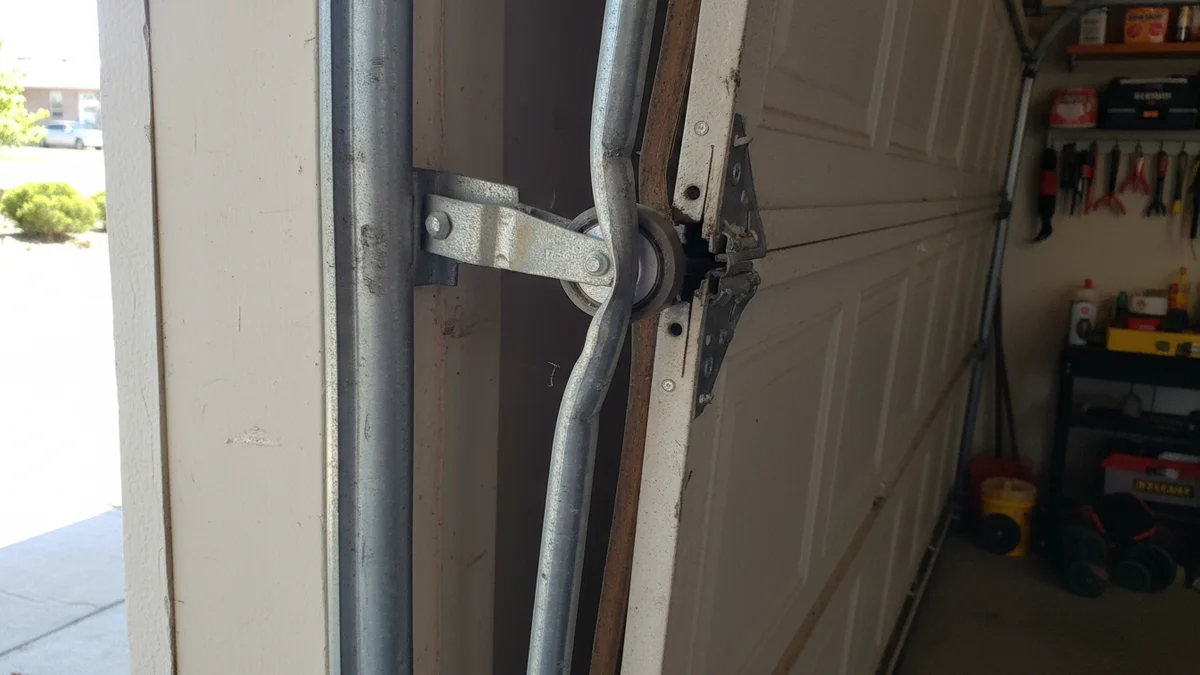
Off-Track Repair Cost
Here's what Toronto homeowners pay for off-track garage door repair in 2025:
| Service | Price Range (+ tax) | When Needed |
|---|---|---|
| Put Door Back on Track | $125 - $200 | Door jumped track, no damage |
| Track Realignment | $150 - $200 | Tracks bent but repairable |
| Single Track Replacement | $200 - $300 | Track too damaged to repair |
| Roller Replacement | $120 - $200 | Worn rollers caused derailment |
| Cable Repair | $150 - $220 | Broken cable caused derailment |
If your door keeps jumping track, the root cause isn't being fixed. Common culprits: worn rollers, bent tracks, or spring balance issues. Ask your technician to diagnose the underlying problem.
Why Garage Doors Jump Off Track
Understanding the cause helps prevent future problems:
1. Door Hit an Obstruction
The most common cause. The door closed on a garbage can, bike, or other object. The impact forces rollers out of the track.
2. Worn or Broken Rollers
Old steel rollers wear down and can slip out of tracks. Broken roller stems let the roller fall off completely.
3. Bent or Damaged Tracks
Tracks bent from impacts (car bumper, ladder, etc.) create a gap where rollers can escape.
4. Broken Lift Cable
When a lift cable breaks, one side of the door drops suddenly. This uneven force pulls rollers off track.
5. Opening Door While Locked
Trying to open the door with the side lock engaged forces the door up at an angle, pulling rollers from tracks.
6. Broken Torsion Spring
When a spring breaks, the door becomes extremely heavy and unbalanced, often jumping the track during operation.
Understanding Garage Door Track Types
Not all garage door tracks are created equal. The type of track system your door uses affects both repair complexity and cost. Understanding your track system helps you communicate effectively with technicians and understand repair estimates.
Standard-Lift Tracks
The most common residential track configuration. The door travels vertically along the jamb (side) tracks, then curves and travels horizontally along the ceiling. Standard-lift tracks require 4-6 inches of headroom above the door opening. When these tracks bend or misalign, the curved section near the top is usually the problem area. This is where rollers experience the most stress during direction change.
Low-Headroom Tracks
Designed for garages with minimal ceiling clearance (as little as 2 inches above the door). These tracks use a double-track system where the top roller rides in a separate rail that angles the door backward before it enters the horizontal track. Low-headroom systems are more prone to off-track issues because of the complex path rollers must travel. Repairs typically cost 15-20% more than standard-lift systems.
High-Lift and Vertical-Lift Tracks
Found in commercial settings or homes with very high ceilings. High-lift tracks extend the vertical portion before curving, while vertical-lift tracks have no horizontal section at all—the door travels straight up and stops. These systems require specialized knowledge and typically cost more to repair because of the additional hardware and spring requirements.
Track Radius Sizes
The curved section of the track comes in different radii:
- 12-inch radius: Standard residential, most common
- 15-inch radius: Smoother operation, less roller stress
- 20-inch radius: Commercial grade, longest-lasting
Smaller radius curves create more stress on rollers and are more prone to derailment issues. If your door repeatedly jumps track at the curve, upgrading to a larger radius track may solve the problem permanently.
Signs Your Door Is Off Track
For related alignment issues, see our garage door alignment guide.
- Door hangs crooked - one side higher than the other
- Visible gap between roller and track
- Door won't move or makes grinding/scraping sounds
- Door slams down when you try to open it
- Panels look bent or damaged
- Rollers visible outside track
Do NOT Try to Force It
Forcing an off-track door to move causes more damage and is extremely dangerous. The door could fall, and springs could release suddenly. Stop and call a pro.
What to Do Right Now
Stop Operating Immediately
Do not press the opener button. Do not try to pull the emergency release. Leave everything as-is.
Don't Walk Under the Door
An off-track door can fall suddenly. Keep family and pets away from the area.
Disconnect the Opener (Optional)
If accessible from inside without going under the door, unplug the opener to prevent accidental activation.
Call a Professional
Most companies offer same-day or emergency service for off-track doors. This is a common, quick repair.
How Professionals Fix an Off-Track Door
Here's what happens when our technician arrives:
1. Safety Assessment
First, we assess the situation and secure the door to prevent it from falling during repair.
2. Identify the Cause
We determine why the door came off track - broken cable, worn rollers, bent track, etc. This prevents future occurrences.
3. Secure Spring Tension
If needed, we safely release or secure spring tension before manipulating the door.
4. Guide Door Back on Track
Using specialized tools, we carefully guide each roller back into the track system.
5. Repair Root Cause
We fix whatever caused the derailment - replace broken rollers, straighten bent tracks, replace cables, etc.
6. Test Operation
We test the door multiple times to ensure smooth, safe operation before leaving.
Toronto Climate Impact on Garage Door Tracks
Toronto's extreme temperature swings—from +35°C summers to -25°C winters—create unique challenges for garage door track systems. Understanding these climate factors helps explain why off-track problems occur and how to prevent them.
Metal Expansion and Contraction
Steel tracks expand in summer heat and contract in winter cold. A 16-foot track can vary by nearly half an inch between seasons. This constant expansion and contraction loosens mounting brackets over time. Tracks that were perfectly aligned in spring may gap away from the wall by winter, creating space for rollers to escape.
Ice and Moisture Problems
When snow melts on your car and drips onto garage floor tracks, it can refreeze overnight. Ice buildup inside tracks acts like a ramp that guides rollers out of position. Toronto homeowners should keep floor tracks clear of ice and snow, especially during freeze-thaw cycles common in March and November.
Salt Corrosion
Road salt tracked into garages accelerates track corrosion. Corroded tracks develop rough spots and pitting that can catch roller wheels. Over time, corrosion eats away at track edges, creating gaps. In severely corroded tracks, the edge itself may break away, leaving nothing to hold rollers in place. Consider stainless steel tracks if your garage experiences significant salt exposure.
Foundation Movement
Toronto homes built on clay soil experience seasonal foundation movement. As soil expands and contracts with moisture changes, garage walls can shift slightly. Even a quarter-inch wall movement throws track alignment off, increasing stress on rollers and brackets. Annual track adjustment is recommended for homes on clay soil.
Preventing Off-Track Problems
Most off-track incidents are preventable with regular maintenance and awareness. Here's how to keep your door on track:
Monthly Visual Inspection
Walk through this checklist once a month:
- Check for gaps between rollers and tracks
- Look for bent or dented track sections
- Inspect roller wheels for chips or flat spots
- Ensure brackets are tight against the wall
- Listen for unusual sounds during operation
Keep Tracks Clean and Lubricated
Contrary to popular belief, you should NOT lubricate the inside of tracks—this attracts dirt. Instead, wipe tracks clean with a dry cloth monthly. Lubricate roller stems and hinges with silicone spray. Never use WD-40 on garage door components; it's a solvent, not a lubricant.
Test Door Balance Annually
Disconnect the opener and manually lift the door halfway. A balanced door should stay in place. If it falls or rises, spring tension is off, creating uneven stress that can cause derailment. Call for professional spring adjustment.
Replace Rollers Before They Fail
Standard steel rollers last 10,000-15,000 cycles (about 7-10 years of typical use). Nylon rollers last 20,000+ cycles. When rollers show wear—cracks, flat spots, or excessive wobble—replace them before they cause an off-track incident. A full set of nylon rollers costs $180-$280 installed and prevents many common problems.
Address Minor Issues Immediately
A grinding noise today becomes a derailment next week. A slightly crooked door gets worse with every cycle. When you notice anything unusual, stop using the door and call for inspection. Minor adjustments cost far less than off-track repairs plus panel damage.
Door Off Track?
Emergency same-day service available. FREE service call with repair.
Call 437-265-9995Frequently Asked Questions
In Toronto, off-track repair costs $125-$200 + tax for putting the door back on track and realigning. If tracks are damaged, replacement adds $200-$400. If rollers caused the issue, add $120-$200 for new rollers.
Not recommended. Off-track doors are extremely dangerous - they can fall suddenly (300-500 lbs) and have spring tension that can cause serious injury. Always call a professional for off-track repairs.
Common causes: hitting an obstruction while closing, broken cable or roller, bent track, opening door while locked, worn rollers popping out, or broken spring causing uneven tension.
Yes, extremely. The door weighs 300-500 lbs and can fall suddenly. Springs are under high tension. Do not walk under the door or try to operate it. Call a professional immediately.
Most off-track repairs take 30-60 minutes once the technician arrives. If other components need replacement (tracks, rollers, cables), add another 30-60 minutes.
Possibly. When a door jumps track, panels often bend at the joints or hinge points. Minor bends can sometimes be straightened, but severely damaged panels need replacement ($200-$600 each depending on style). We always assess panel condition during off-track repairs.
Do NOT try to force the door open. The door could fall suddenly causing injury or vehicle damage. If you need your car urgently, call for emergency service. Our technicians can often arrive within 1-2 hours for emergency off-track situations.
Annual maintenance prevents most off-track incidents. Have a technician inspect tracks, rollers, and cables yearly. Replace rollers every 7-10 years. Keep tracks clean of ice and debris. Most importantly, address unusual sounds or movement immediately—small problems become big ones quickly.
Repeated derailment indicates an underlying issue not being addressed. Common causes: worn rollers, bent tracks, spring imbalance, or misaligned tracks. A thorough inspection should identify and fix the root cause—not just put the door back on track temporarily.