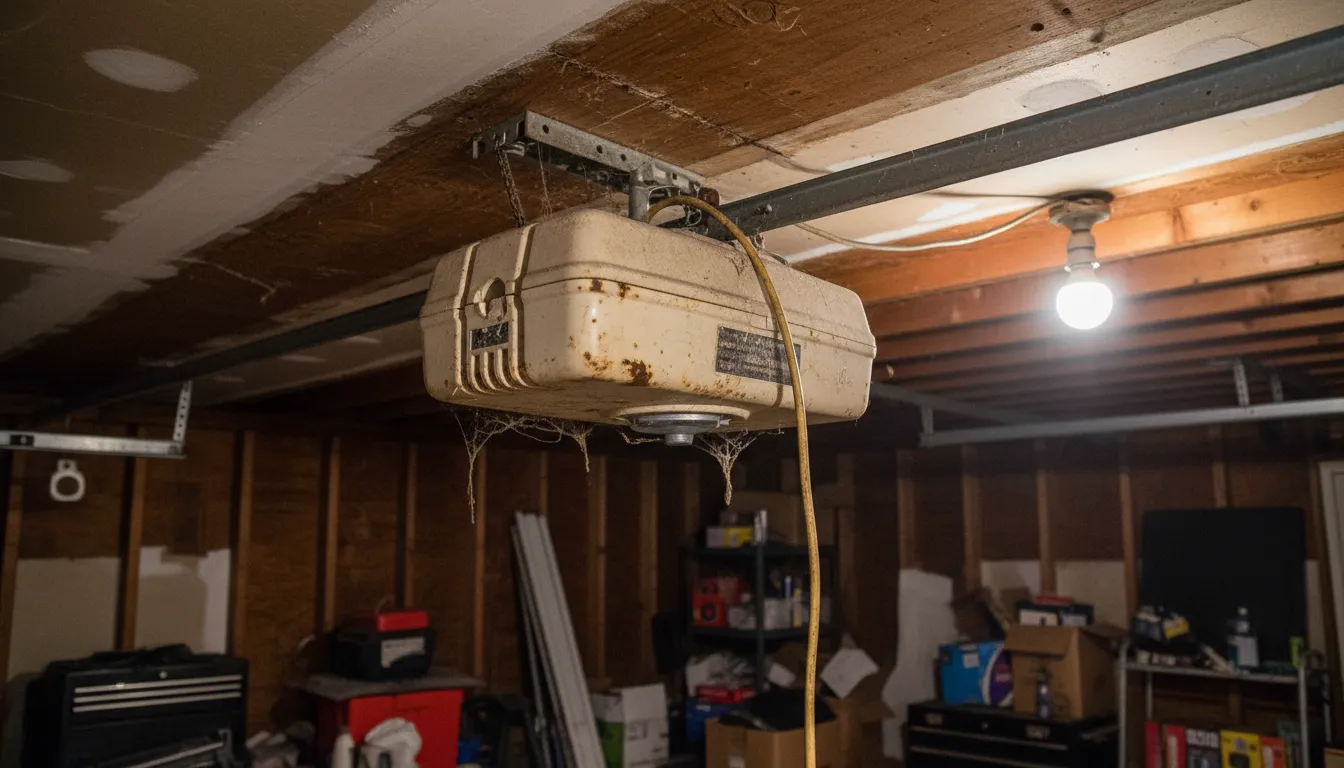
Lifespan by Opener Type
Different drive mechanisms have different expected lifespans. Regular maintenance significantly extends opener life - see our complete maintenance guide for tips. Here's what to expect from each type:
| Opener Type | Average Lifespan | Cycles Rating |
|---|---|---|
| Chain Drive | 15-20 years | 15,000+ |
| Belt Drive | 10-15 years | 10,000-15,000 |
| Screw Drive | 10-12 years | 10,000 |
| Direct Drive | 12-15 years | 12,000+ |
| Jackshaft/Wall-Mount | 15-20 years | 15,000+ |
What's a "cycle"? One complete open-and-close operation counts as one cycle. If you leave for work, come home for lunch, leave again, and return at night, that's 4 cycles per day.
Factors That Affect Lifespan
Usage Frequency
- Light use (2 cycles/day): 15-20 year lifespan
- Average use (4 cycles/day): 10-15 year lifespan
- Heavy use (8+ cycles/day): 7-10 year lifespan
- Commercial use (20+ cycles/day): 5-7 year lifespan
Climate Impact (Toronto Specific)
Toronto's winters put extra strain on garage door openers:
- Cold temperatures thicken lubricant, increasing motor strain
- Frequent temperature changes cause metal expansion/contraction
- Humidity leads to rust on chain drives
- Snow and salt tracked in can damage sensors
Tip: Using cold-weather lubricant and keeping your garage above -10°C can add 2-3 years to opener life.
Door Weight & Balance
An unbalanced or heavy door makes the motor work harder:
- Standard single door (100-150 lbs): Normal wear
- Insulated double door (200-300 lbs): Increased wear, use 1/2+ HP opener
- Unbalanced door: Can reduce opener life by 50%
Maintenance Habits
Regular maintenance can extend lifespan significantly:
- Annual lubrication: +2-3 years
- Keeping sensors clean: Prevents motor strain
- Maintaining door balance: Reduces motor load
- Surge protector: Protects logic board from power spikes
7 Signs Your Opener Is Failing
Grinding or Scraping Noises
New loud noises that lubrication doesn't fix indicate worn gears, bad bearings, or a failing motor. Chain drives naturally get louder with age, but sudden changes warrant inspection.
Door Reverses or Stops Randomly
If the door reverses before fully closing (without sensor obstruction), the force settings may need adjustment—or the motor is struggling to lift the door. Could indicate motor wear or unbalanced door.
Slow Operation
If your door takes noticeably longer to open than it used to, the motor may be losing power. Most openers complete a full cycle in 10-15 seconds. Over 20 seconds suggests problems.
Intermittent Response
Sometimes responds to remote, sometimes doesn't? This often indicates a failing logic board or capacitor issues. If reprogramming remotes doesn't help, electronics are likely failing.
Vibration or Shaking
Excessive vibration during operation suggests worn mounts, loose hardware, or failing internal components. Some vibration is normal for chain drives, but increasing vibration is concerning.
Motor Runs But Door Doesn't Move
If you hear the motor but the door doesn't move, the drive gear (chain drive) or belt has likely failed. This is often repairable but may not be worth it on older units.
Burning Smell or Smoke
Stop using immediately! This indicates motor overheating or electrical failure. Unplug the unit and call a professional. This is a fire hazard and the opener needs replacement.
How to Extend Your Opener's Life
Annual Tune-Up
Lubricate chain/screw drives, tighten hardware, test safety features. $100-$120 in Toronto.
Balance the Door
A balanced door reduces motor strain. Test: disconnect opener, door should stay in place when half-open.
Clean Sensors
Dirty sensors cause repeated cycling, wearing out the motor. Clean monthly with dry cloth.
Use Surge Protector
Power surges fry logic boards. A $20 surge protector can prevent $200+ repairs.
Winter Prep
Switch to cold-weather lubricant. Keep garage above -10°C if possible.
Don't Overwork It
Wait for door to fully stop before reversing direction. Avoid rapid open/close cycles.
Repair vs. Replace: When to Decide
The 50% Rule
If repair cost exceeds 50% of a new opener installation, replace. For Toronto, a new opener installed typically costs $480-$800. If repairs exceed $240-$400, replacement is smarter.
Repair If:
- Opener is less than 8 years old
- Only one component has failed
- Repair cost under $200
- Safety features are up to code
- You're satisfied with current features
Replace If:
- Opener is over 15 years old
- Multiple issues occurring
- Repair cost over $300
- Missing safety sensors (pre-1993)
- Want smart home features
Common Repair Costs (Toronto 2025)
- Gear kit replacement: $150-$200
- Logic board: $150-$250
- Motor capacitor: $80-$120
- Safety sensors: $120-$180
- Remote reprogramming: $80-$100
- Full motor replacement: $280-$400
Frequently Asked Questions
Michael Thompson
IDEA Certified Garage Door Technician. 15+ years experience servicing and replacing openers across Toronto & GTA.