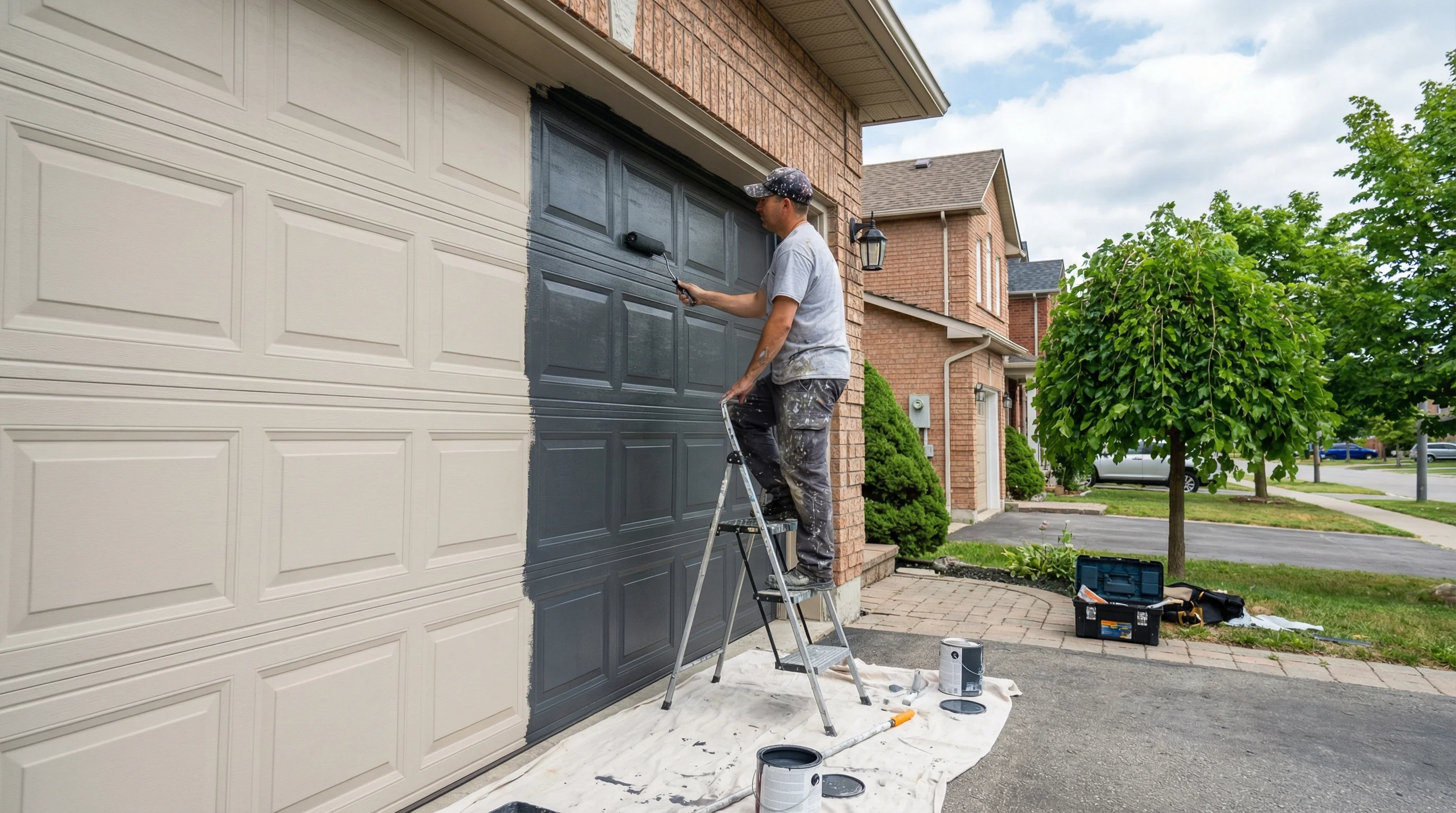
To paint a metal garage door without peeling: clean thoroughly, sand lightly, apply a rust-inhibiting metal primer, then top-coat with 100% acrylic exterior latex paint. In Toronto's climate, avoid oil-based paint on aluminum as it cracks in freeze-thaw cycles. Two thin top coats beat one thick coat every time. Expect 5-8 years before needing a repaint with proper prep.
Why Garage Door Paint Peels
Peeling paint on a garage door is almost always caused by skipping primer, using the wrong paint type, or painting over a surface that was not fully cleaned and dried. Metal expands and contracts significantly with temperature swings — Toronto sees 50°C+ annual temperature ranges — which quickly cracks any paint that lacks flexibility or adhesion. Proper prep is 80% of the job.
Every spring I get calls from Etobicoke and Mississauga homeowners frustrated that the garage door they painted last fall is already peeling. Nine times out of ten, it's the same mistake: they skipped the primer or used interior paint. This guide shows you exactly how to get a factory-fresh finish that actually lasts through Toronto winters.
Can You Paint a Metal Garage Door?
Yes — painting a metal garage door is one of the best-value home improvement projects available to Toronto homeowners. A fresh coat of paint can add $2,000–$5,000 in curb appeal at a fraction of new door cost. Most steel garage doors are designed to be repainted. The factory finish is a baked-on enamel or powder coat — once it starts chalking or chipping, it's time to repaint.
Steel and galvanized steel doors are the most common type in GTA homes and accept paint very well when properly prepared. Aluminum doors also paint well but require slightly different prep since they oxidize rather than rust. Key variables that determine how long your paint job will last:
- Surface preparation: A well-prepped surface holds paint 7-10 years. Poor prep peels within 12 months.
- Primer choice: Must be a rust-inhibiting metal primer. Standard drywall primer fails on metal.
- Paint type: Exterior 100% acrylic latex or alkyd enamel rated for metal surfaces.
- Application conditions: Don't paint in direct hot sun or below 10°C.
- Number of coats: Two thin top coats always outperform one thick coat.
Supplies You Need for a Professional Finish
Cleaning and Prep
- TSP (trisodium phosphate) cleaner or Simple Green degreaser
- 120-grit and 180-grit sandpaper or sanding sponges for raised panels
- Wire brush or drill-mounted wire wheel for rust spots
- Rust converter (Rust-Oleum or Corroseal) for surface rust
- Painter's tape (3M Blue or FrogTape), drop cloth for driveway
Primer and Paint
- Primer: Rust-Oleum Clean Metal Primer or Zinsser Bulls Eye 1-2-3
- Top coat: Benjamin Moore Aura Exterior, Sherwin-Williams Duration, or Behr Premium Plus Ultra — 1 litre for a single door, 2-3 litres for a double
- 4” foam roller for flat panels, 2” angled brush for raised panel edges
Step-by-Step Painting Process
The entire process takes about 6-8 hours spread over two days (Day 1: prep and prime; Day 2: top coat). Do not skip the cleaning and priming steps.
- Clean the door completelyMix TSP with water per directions. Scrub all surfaces — panels, rails, stiles, and trim. Focus on the bottom section where road salt accumulates. Rinse thoroughly. Allow to dry 24 hours ideally, 4 hours minimum on a warm sunny day.
- Treat rust spotsInspect for rust at bottom corners, hardware holes, and chipped areas. Use a wire brush or 80-grit sandpaper to remove loose rust. Apply rust converter to surface rust and cure per label (usually 24 hours). It converts rust to a stable black primer-ready surface.
- Sand the entire surfaceLightly sand with 120-grit to break the gloss and give primer something to grip. Follow with 180-grit for a smoother finish. Wipe with a tack cloth to remove all dust. This is what separates a 2-year paint job from an 8-year paint job.
- Tape and maskApply painter's tape along the frame, windows (if any), hardware, and weatherstripping. Lay a drop cloth on the driveway. Close the door — you need it in closed position to cover the full face.
- Apply rust-inhibiting primerUse a foam roller on flat sections and a brush in raised panel recesses. Work top to bottom. Keep the coat thin and even — heavy primer sags. Allow 2-4 hours to dry fully before top-coating.
- Apply the first top coatStart with panel recesses using your brush, then roll the flat sections. Work in shade or early morning — direct sunlight causes paint to dry too fast, leaving marks and poor adhesion. Let dry 2-4 hours.
- Apply the second top coatOnce the first coat is dry to the touch, apply the second coat in the same manner. This gives full coverage, colour depth, and weather resistance. Remove painter's tape while paint is still slightly wet for the cleanest lines. Allow 24-48 hours to fully cure.
- Touch up and inspectInspect edges and corners once dry. Touch up any missed spots with a small brush. Apply exterior caulk along the top and sides of the door frame where you see gaps — this prevents water infiltration that can lift paint from the edges.
Best Paints for Canadian Weather Conditions
Toronto's climate is demanding: winters reaching -25°C, summer humidex above 40°C, road salt November through April, and frequent freeze-thaw cycles. Here's what actually works:
| Paint | Type | Best For | Approx. Cost |
|---|---|---|---|
| Benjamin Moore Aura Exterior | 100% Acrylic Latex | Best overall — excellent flexibility, fade resistance | $85–$95/L |
| Sherwin-Williams Duration | 100% Acrylic Latex | Self-priming on well-prepped surfaces, very durable | $75–$85/L |
| Behr Premium Plus Ultra | Acrylic Latex | Best value — available at Home Depot, solid performance | $55–$65/L |
| Rust-Oleum Stops Rust Enamel | Oil-Based Alkyd | Best for very rusty doors — bonds to bare metal | $45–$55/L |
For most Toronto homeowners, Benjamin Moore Aura Exterior or Sherwin-Williams Duration is the right call. The extra cost over big-box paint is worth it in a climate with such temperature extremes. Both provide excellent colour retention and flexibility that resists cracking in freeze-thaw conditions.
Common Mistakes That Cause Peeling
Mistake 1: Skipping the Primer
The number one cause of premature peeling. Primer bonds chemically to metal in a way top-coat paints cannot. Always prime bare metal and any area where old paint was removed.
Mistake 2: Painting Over a Dirty Surface
Garage doors accumulate grease, exhaust residue, pollen, and road grime. Paint over contamination peels within months. TSP cleaning is not optional.
Mistake 3: Wrong Conditions
Direct sunlight causes paint to dry too fast before it can properly adhere. Temperatures below 10°C prevent curing. High humidity traps moisture under the film. Aim for an overcast day, 15-25°C, humidity below 70%.
Mistake 4: Using Interior Paint
Interior paints lack UV inhibitors and mildew resistance. They chalk, fade, and peel within one year outdoors. Always use paint labelled for exterior use.
Mistake 5: One Thick Coat Instead of Two Thin Coats
A single thick coat forms a skin on the outside while the inside remains soft. Temperature changes cause bubbling and peeling. Two thin coats create a more uniform and durable film.
Is Your Door Too Far Gone to Paint?
If your door has extensive rust, bent panels, or severe paint failure, replacement may be more cost-effective. New single steel doors installed start from $800 — free assessment included.
Call 437-265-9995 — Free Assessment