Sensor Replacement Cost Breakdown
Here's what Toronto & GTA homeowners can expect to pay for garage door sensor repair in 2025:
| Service | Price Range (+ tax) | Includes |
|---|---|---|
| Sensor Alignment Only | $80 - $120 | Realignment, cleaning, testing |
| Sensor Replacement (pair) | $120 - $180 | New sensors, installation, testing |
| Wiring Repair | $100 - $150 | Wire repair/replacement, testing |
| Sensor + Wiring Combo | $150 - $220 | New sensors, wiring, full installation |
| Universal Sensor Upgrade | $140 - $200 | Compatible with all opener brands |
How Garage Door Sensors Work
Understanding sensor technology helps you troubleshoot problems and communicate with technicians more effectively. Here's what's happening inside those small boxes mounted near your garage floor.
The Infrared Beam System
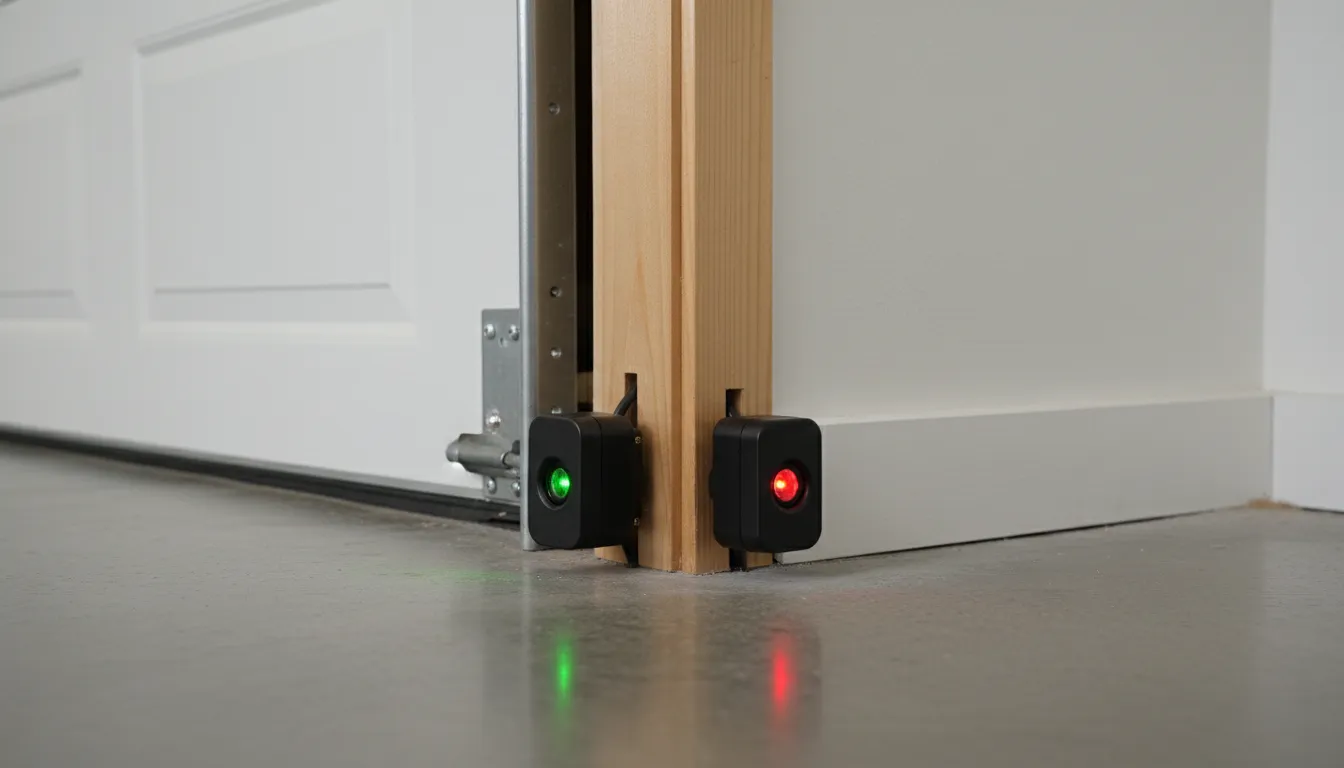
Garage door sensors use infrared (IR) light technology, similar to your TV remote. One sensor (the sending unit) emits an invisible infrared beam, while the other sensor (the receiving unit) detects that beam. When the beam is intact, the green light illuminates and the door can close normally. When something blocks the beam—a person, pet, car, or even a leaf—the receiver loses the signal and triggers the safety reverse.
LED Indicator Lights Explained
Most sensors use a two-light system:
- Sending sensor: Shows amber/yellow light when powered (always on when garage door opener has power)
- Receiving sensor: Shows green light when properly aligned and receiving the IR beam
- Blinking: Indicates alignment issues or intermittent signal
- No light: Power issue—check wiring and connections
Why Sensors Are Required
The U.S. Consumer Product Safety Commission mandated safety sensors on all garage door openers manufactured after January 1, 1993 (Canada followed similar standards). Before sensors, garage doors caused dozens of deaths and thousands of injuries annually, particularly among children. Modern sensors have reduced these incidents by over 90%.
Toronto-Specific Sensor Challenges
Our Canadian climate creates unique challenges for garage door sensors that homeowners in warmer regions don't experience.
Winter Cold and Condensation
When temperatures drop below -10°C, condensation can form inside sensor lenses, especially in heated garages where warm air meets cold sensors. This moisture creates a foggy film that blocks the infrared beam. Some mornings, your door won't close until sensors warm up. If this happens regularly, consider adding small vent holes or heat tape near sensors.
Salt and Road Spray
Salt spray from winter roads accumulates on sensor lenses throughout the season. This white residue builds up gradually and can completely block sensors by late February. Monthly cleaning during winter months prevents salt buildup from causing sensor failures.
Temperature Fluctuations
Toronto's dramatic temperature swings (sometimes 20°C in a single day) cause sensor brackets to expand and contract. Over time, this movement loosens mounting screws and shifts sensor alignment. We see more alignment calls in spring and fall when temperature swings are most extreme.
Moisture and Corrosion
Spring snowmelt and summer storms expose sensors to significant moisture. Water seeping into wiring connections causes corrosion that creates intermittent failures. Sensors mounted too close to the garage floor (below 6 inches) are especially vulnerable to splash damage from rain and melting snow.
Types of Garage Door Sensors
Brand-Specific Sensors
Most major manufacturers use proprietary sensor designs:
- LiftMaster/Chamberlain: 041A5034 series, uses Bell wire connections
- Genie: GSTB-BX series, known for yellow indicator lights
- Craftsman: Uses Chamberlain sensors (same parent company)
- Linear/Wayne Dalton: HAE00002 series
Universal Replacement Sensors
Universal sensors work with most opener brands and are often more affordable than OEM parts. They're a good option if your opener is older or from a discontinued brand. We carry universal sensors that are compatible with 95% of openers currently in use.
Smart Sensors
Newer LiftMaster myQ-compatible sensors include WiFi connectivity, allowing you to receive smartphone alerts when sensors detect obstructions. These cost more ($180-250) but provide added peace of mind, especially if you have children or pets.
Common Sensor Problems
Understanding what's wrong with your sensors helps you know what to expect:
1. Blinking Red Light
A red blinking sensor indicates the sensors can't "see" each other. The beam is blocked or sensors are misaligned. This is usually fixable without replacement.
2. Solid Red Light (No Green)
One sensor should show green (receiving) and one amber/red (sending). If there's no green light, the receiving sensor may be faulty or have wiring issues.
3. Door Reverses Immediately
If your door starts closing then immediately reverses, the sensors think something is blocking the path. Could be alignment, dirty lenses, or sun interference.
4. Door Won't Close at All
Complete sensor failure prevents the door from closing with the remote. See our complete won't close troubleshooting guide. You can usually close it by holding the wall button continuously (bypasses sensors).
DIY Troubleshooting Steps
Try these fixes before calling a professional:
- Clean the lenses: Wipe both sensor lenses with a soft, dry cloth
- Check for obstructions: Remove anything blocking the beam path
- Check alignment: Both sensors should point directly at each other
- Inspect wiring: Look for loose, damaged, or disconnected wires
- Check for sunlight: Direct sunlight can interfere with sensors
- Test with wall button: If door closes holding wall button, sensors are the issue
Safety Note
Never disable or bypass your garage door sensors permanently. They're a critical safety feature that prevents the door from closing on people, pets, or vehicles. Bypassing sensors is also a code violation.
When to Replace vs Repair
Repair/Realign When:
- Sensors are dirty (clean them)
- Sensors are misaligned (adjust brackets)
- Loose wire connections (tighten them)
- Minor wire damage (splice and tape)
Replace When:
- Physical damage to sensor housing
- Cracked or cloudy lenses
- Sensors are 10+ years old
- Repeated failures after alignment
- Severe wire damage or corrosion
- Water damage inside sensor
What's Included in Our Price
- FREE service call (with any repair)
- Professional diagnosis of sensor issues
- High-quality replacement sensors (if needed)
- Proper alignment and calibration
- Wiring inspection and repair
- Complete door operation testing
- Safety feature verification
- 1-year warranty on parts and labor
Frequently Asked Questions
In Toronto, garage door sensor replacement costs $120-$180 + tax. This includes new sensors, wiring check, alignment, and testing. Simple alignment fixes cost less ($80-$120), while complete sensor replacement with wiring repair costs more.
A red blinking sensor usually indicates misalignment or an obstruction. The sensors can't 'see' each other. Check for dirt on lenses, objects blocking the beam, or sensors knocked out of alignment. If cleaning and adjusting doesn't help, the sensor may need replacement.
Basic sensor cleaning and alignment can be DIY tasks. However, replacing sensors involves electrical wiring and precise alignment. If you're not comfortable with electrical work, hire a professional. Improper installation can create safety hazards.
Garage door sensors typically last 10-15 years. However, exposure to moisture, dust, and temperature extremes can shorten their lifespan. Regular cleaning (monthly) and protecting sensors from sprinkler water can extend their life.
Not all sensors are universal. Many are brand-specific (LiftMaster, Chamberlain, Genie). However, universal replacement sensors are available that work with most opener brands. We carry sensors compatible with all major manufacturers.
Yes, direct sunlight can interfere with infrared sensors. When bright sunlight hits the receiving sensor, it may interpret the light as the infrared beam, causing erratic behavior. Solutions include repositioning sensors, adding small sun shades, or using sensors with better light filtering.
Intermittent sensor issues usually indicate loose wiring connections, partial misalignment, or environmental factors. Temperature changes can cause brackets to shift slightly, and vibration from the door operation can loosen connections over time. A professional can identify and permanently fix these issues.
Garage door sensors should be mounted 4-6 inches above the floor. This height catches objects at ground level while staying above typical moisture and debris. Sensors mounted too low are prone to splash damage; too high and they may miss low objects or crawling children.