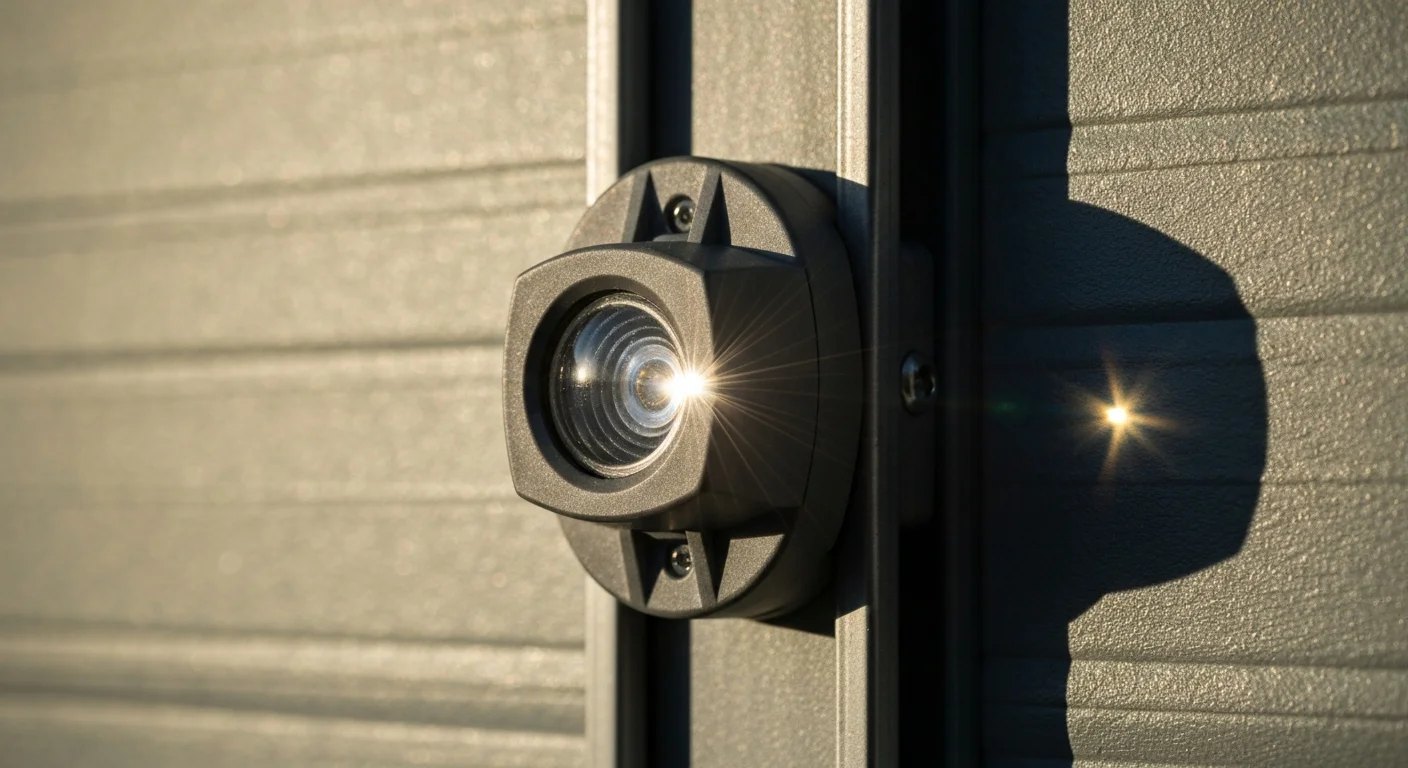
If your garage door refuses to close at the same time every day — particularly in morning or late afternoon — sunlight shining directly into your safety sensor is almost certainly the cause. The quick fix is shading the receiving sensor with a cardboard tube or aluminum deflector. This is a free DIY fix that takes under 5 minutes and resolves the problem permanently in most cases.
How Safety Sensors Work (And Why Sunlight Confuses Them)
Garage door safety sensors use a photoelectric infrared beam between two units at the base of the door tracks. One unit (the emitter) sends an infrared beam; the other (the receiver) detects it. When an object breaks the beam, the opener knows not to close. Sunlight contains infrared wavelengths that can overpower the sensor’s receiver, making it “see” so much infrared that it loses track of the emitter’s beam.
This is one of the most common seasonal garage door complaints in Toronto: a door that worked perfectly all winter suddenly refuses to close in the afternoon sun. The sensor indicator lights look fine — one green, one amber — but the door reverses every time. This guide explains exactly what is happening and how to fix it in minutes.
How Safety Sensors Work (And Why Sunlight Confuses Them)
Most garage door safety sensors (LiftMaster, Chamberlain, Genie, and all brands) operate on an infrared photoelectric beam system. The sending unit emits a continuous infrared beam at a specific frequency. The receiving unit contains a photodetector tuned to that frequency.
The problem: sunlight is a broadband radiation source that includes infrared frequencies. When direct sunlight hits the receiving sensor, the sensor becomes saturated — it is receiving so much infrared energy that it can no longer distinguish the emitter’s specific signal from the background solar radiation. The sensor interprets this as “beam unbroken” which paradoxically can cause the system to behave erratically, or in some cases, it misreports the beam as broken (obstruction detected), preventing the door from closing.
The result: your door works perfectly for most of the day but refuses to close for a specific 1–3 hour window when the sun is at an angle that shines directly into the receiver.
Signs That Sunlight Is Your Sensor Problem
These specific symptoms confirm sun interference rather than a different sensor problem:
- The door fails to close only at specific times — same time each day, typically morning or late afternoon
- The problem is seasonal — started when the sun angle changed (spring or fall in Toronto)
- The sensor lights appear normal (green on receiver, amber on emitter) but door still won’t close
- Blocking the sun from hitting the sensor (with your hand or a piece of cardboard) allows the door to close immediately
- Closing the door via the wall button has the same problem as the remote
Quick Fixes for Sun Interference on Safety Sensors
These solutions can be implemented immediately without tools or expense:
Fix 1: Cardboard Tube Shade (Free, 5 Minutes)
Cut a section of cardboard tube (paper towel or toilet paper roll) about 3–4 inches long. Tape or zip-tie it over the face of the receiving sensor, extending forward like a sun visor. This shades the sensor from overhead or angled sunlight while allowing the horizontal infrared beam from the emitter to pass through unobstructed. This fix works for the majority of sun interference cases.
Fix 2: Aluminum Foil Deflector
Shape a small piece of aluminum foil into an L-shape and tape it above the receiving sensor to create a hood. The foil reflects sunlight away from the sensor face. This is slightly more durable than cardboard in humid Toronto summers.
Fix 3: Adjust Sensor Angle
Most safety sensors can be tilted slightly on their mounting bracket. Angling the receiver sensor slightly downward or toward the floor can move it out of the direct sun path. Test by adjusting the angle a few degrees and watching whether the sensor LED remains steady during the problematic time of day.
Permanent Solutions to Prevent Sun Interference
For a more robust solution, consider these permanent options:
Commercial Sensor Sun Shields
Replacement sensor mounting brackets with built-in sun shields are available through garage door parts suppliers. These angled brackets position the sensor to naturally avoid direct sun exposure while maintaining proper beam alignment. Installation takes approximately 15–20 minutes.
Sensor Relocation
If the sensor position on the track corresponds directly with the sun angle, a technician can relocate the sensor bracket slightly higher or lower on the track while maintaining the required 6-inch maximum height from the floor. This can permanently move the sensor out of the direct sun path.
Upgrade to Enhanced Sensors
Some newer sensor models from LiftMaster include improved sunlight rejection circuitry. Upgrading to current sensors ($120–$180 + tax installed) resolves persistent sun interference on older sensor units that lack this capability.
When Sunlight Isn’t the Problem: Other Sensor Issues
If the problem occurs at all times of day (not just during sun exposure), the cause is not sunlight. Other common sensor problems include:
- Misalignment: Sensors knocked out of position — look for a blinking or off LED on the receiver. See our sensor blinking red guide.
- Dirty sensor lenses: Wipe the sensor face with a clean dry cloth. A cobweb or dirt smear can cause the same symptoms as misalignment.
- Damaged wiring: Kinked or broken sensor wire at any point between the sensor and opener causes intermittent failure.
- Sensor unit failure: The sensor itself has failed electronically. Replacement at $120–$180 + tax is the solution.
Sensor Problems in Toronto or GTA?
Royal Garage Doors troubleshoots and repairs all safety sensor issues including sun interference, misalignment, wiring problems, and sensor replacement. FREE service call with any repair. Same-day service available.
Call 437-265-9995