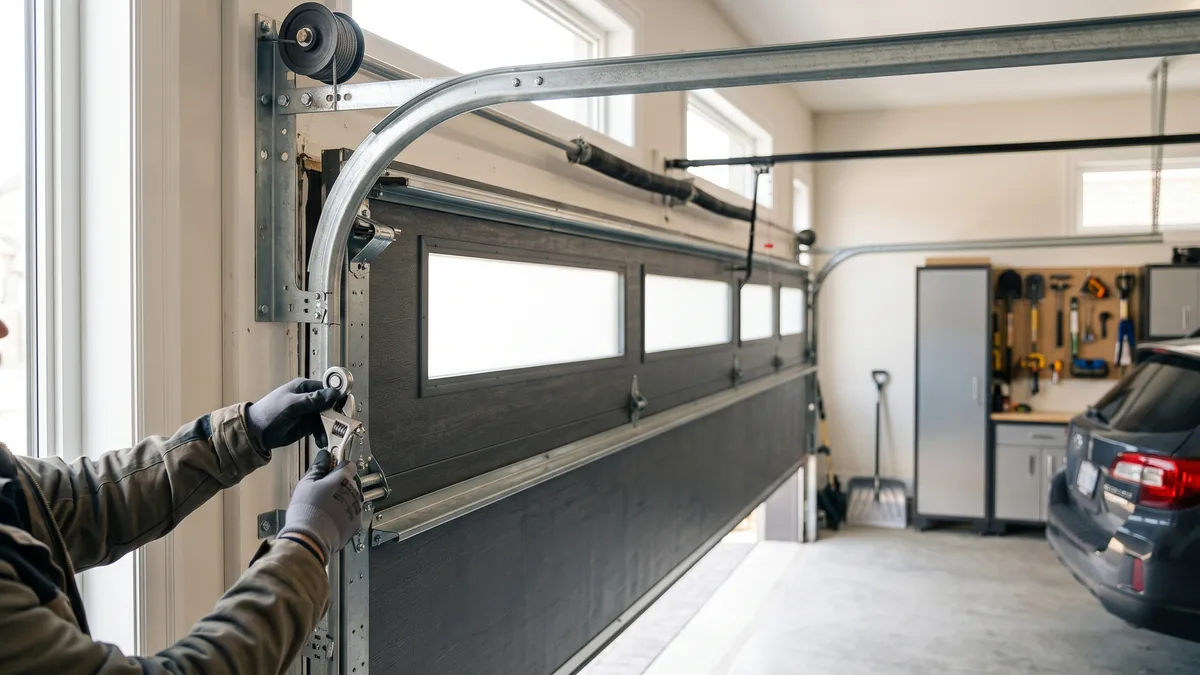
A garage door shakes or vibrates mainly because of worn or dry rollers, loose track hardware, or an unbalanced spring system. As the door moves, dry rollers chatter inside the tracks and loose nuts and bolts let the panels rattle and wobble. Lubricating the rollers and hinges and tightening all hardware fixes most vibration. But if the door jerks, lurches, or feels heavy by hand, the cause is likely a spring, cable, or balance problem that needs a professional technician.
What Does It Mean When a Garage Door Vibrates?
Vibration is the symptom of one or more moving parts no longer travelling smoothly. A balanced garage door on healthy rollers should glide up and down with minimal shake and noise. When rollers wear out, hardware loosens, tracks bend, or the spring counterbalance falls out of tune, the door starts to oscillate — transferring shudder through the panels, tracks, and even the ceiling joists the opener is bolted to.
A garage door that shakes, shudders, or vibrates when it opens is one of the most frequent calls we get across Toronto and the GTA — and it is also one of the most misunderstood. Most homeowners assume the opener is failing, when in reality the noise and movement almost always come from the door’s mechanical parts. Here are the seven causes I diagnose most often, how to tell them apart, and which you can fix yourself.
The 7 Most Common Causes of a Shaking Garage Door
Garage door vibration is rarely caused by a single failing part — it is usually a combination of wear and neglected maintenance. Here are the seven causes ranked roughly from most to least common, with the tell-tale signs of each.
1. Worn or Dry Rollers
Rollers are the small wheels that ride inside the vertical and horizontal tracks. Inexpensive builder-grade steel rollers have exposed bearings that dry out, rust, and seize over 5–10 years. Nylon rollers develop flat spots. Either way, a roller that no longer spins freely drags and skips inside the track, producing a chattering, vibrating motion. This is the single most common cause of a shaking door. Upgrading to sealed nylon rollers is one of the most cost-effective fixes — learn more in our garage door roller replacement guide.
2. Loose Hardware (Nuts, Bolts & Brackets)
A garage door cycles thousands of times a year, and that constant movement gradually loosens the nuts, bolts, hinge screws, and track brackets that hold everything together. Loose hardware lets the panels and tracks shift independently, creating a rattle and wobble that gets worse over time. This is the easiest cause to fix — and the easiest to prevent.
3. Bent, Misaligned, or Dented Tracks
If a track is bent, dented, or pulling away from the wall, the rollers are forced to squeeze through a narrowed or warped path. The door binds, jerks, and shakes as the rollers fight the deformation. Common causes include a minor car bump, an impact from stored items, or brackets that have worked loose. Minor track adjustment is a DIY job; a badly bent track usually needs replacement by a professional.
4. Unbalanced Door or Failing Spring
The torsion or extension springs counterbalance the door’s weight so the opener only has to overcome friction. When a spring weakens, stretches, or partially breaks, one side of the door becomes heavier than the other. The door then lifts unevenly — lurching, jerking, and shaking, often with a banging sound. This is the most serious cause on the list because an unbalanced door overworks the opener and can fall. If you suspect a spring, read our broken garage door spring warning signs and do not attempt the repair yourself.
5. Worn Opener Drive Gear or Sprocket
Inside chain- and belt-drive openers, a plastic main drive gear meshes with the motor worm gear. As this gear wears, teeth chip and the drive develops play, causing the opener to lurch and the chain or belt to slap, which transmits vibration to the door. A grinding sound with the motor running but the door barely moving points here. See our garage door opener repair guide for diagnosis.
6. Loose or Vibrating Opener Motor Mount
The opener is bolted to the ceiling with a metal hanger bracket. If those lag bolts loosen, the entire motor head wobbles when the door cycles, amplifying every vibration and producing a loud rattle from the ceiling. Tightening the lag bolts and adding rubber isolation pads between the bracket and joist dramatically reduces transmitted noise.
7. Loose Chain or Worn Belt Tension
A chain drive that has stretched, or a belt that has gone slack, will whip and slap as the door changes direction. This slack translates directly into a jerky, shuddering start and stop. Most openers have a tension adjustment nut on the trolley rail to take up the slack.
How to Diagnose Why Your Garage Door Shakes
Before you reach for tools, spend five minutes pinpointing the source. Work through these steps in order — they isolate mechanical problems from opener problems and flag anything that needs a professional.
- Watch and listen with the opener running. Open and close the door a few times. Note where the shaking happens — at the start, throughout, or at the top — and whether the noise comes from the tracks, the panels, or the ceiling-mounted motor.
- Disconnect the opener and test by hand. With the door fully closed, pull the red emergency release cord and lift the door manually. A balanced door rises smoothly and stays put when raised halfway. If it still shakes or feels heavy and uneven, the problem is mechanical (rollers, tracks, springs) — not the opener.
- Inspect the rollers. Look for worn bearings, rust, flat spots, or rollers that wobble in their stems. Spin each one by hand; a healthy roller spins freely.
- Check the tracks. Sight down each vertical and horizontal track for bends, dents, gaps, or brackets pulling off the wall.
- Wiggle the hardware. Grab hinges, brackets, and track bolts. Any movement means loose hardware contributing to the shake.
- Run the balance test. A door that won’t stay put when raised halfway has a spring problem — the most important finding on this list.
DIY Fixes vs. When to Call a Pro
Some causes of a vibrating garage door are genuinely homeowner-friendly. Others involve high-tension components that send technicians to the hospital every year. Use this table to decide.
| Cause | Difficulty | Safe to DIY? | Action |
|---|---|---|---|
| Dry rollers & hinges | Easy | Yes | Lubricate with silicone spray |
| Loose nuts & bolts | Easy | Yes | Tighten with a socket wrench |
| Loose chain / belt tension | Moderate | Yes | Adjust trolley tension nut |
| Loose opener motor mount | Moderate | Yes | Tighten lag bolts, add isolation pads |
| Worn rollers | Moderate | Caution | Replace (bottom roller needs care) |
| Bent or misaligned track | Hard | No | Call a technician |
| Unbalanced door / spring | Hard | No | Call a technician immediately |
| Worn opener drive gear | Hard | No | Professional opener repair |
The 15-Minute DIY Tune-Up
If your door lifts smoothly by hand and the shaking comes from dry parts and loose hardware, you can often fix it yourself:
- Tighten everything. Working from a stable ladder, snug every hinge screw, roller bracket bolt, and track bracket with a socket wrench. Do not overtighten.
- Lubricate the moving parts. Apply a garage-door-specific or silicone-based lubricant to the rollers, hinges, springs, and bearing plates. The U.S. Consumer Product Safety Commission and most manufacturers recommend regular lubrication and inspection — see the CPSC garage door safety guide. Avoid WD-40, which is a degreaser, not a lubricant.
- Wipe the tracks clean. Remove dirt and old grease from inside the tracks with a rag; never lubricate the inside of the tracks themselves.
- Re-test. Run the door a few cycles. If vibration persists, the cause is worn rollers, a bent track, or a spring — time to call a pro.
How to Prevent Your Garage Door From Vibrating
Most vibration problems are the result of skipped maintenance. A garage door is the largest moving object in most GTA homes, and our freeze-thaw winters are hard on metal parts. A little routine care keeps the door quiet and the springs and opener lasting years longer.
- Lubricate every 3–6 months. Silicone or garage-door lubricant on rollers, hinges, and springs is the single most effective preventive step.
- Tighten hardware twice a year. A 10-minute pass with a socket wrench catches loosening bolts before they cause a wobble.
- Replace worn rollers proactively. Swapping aging steel rollers for sealed nylon ones eliminates the most common vibration source and runs much quieter.
- Keep the tracks clean and clear. Wipe out debris; never let stored items lean against the tracks.
- Book an annual professional tune-up. A technician checks spring tension, balance, cables, and safety sensors — the parts you should not service yourself.
What a Professional Tune-Up Costs in the GTA
A complete maintenance package — lubrication, balance check, safety-sensor alignment, and hardware tightening — runs $120 + tax and resolves the majority of minor shaking. If diagnosis turns up a deeper issue, here is what the underlying repairs typically cost:
| Repair | Typical Cost (CAD) |
|---|---|
| Maintenance & tune-up | $120 + tax |
| Cables & brackets | $180–$260 + tax |
| Single torsion spring | from $280 + tax |
| New opener / motor | from $600 + tax |
For full, up-to-date pricing on every service, see our garage door pricing page. If you would rather have a professional handle it from the start, find a same-day technician through garage door repair near me or your local team in Mississauga.
Door Still Shaking After a Tune-Up?
Persistent vibration usually means worn rollers, a bent track, or a spring out of balance — jobs best left to a pro. Royal Garage Doors provides FREE service calls with any repair across Toronto & the GTA, with same-day appointments available.
Call 437-265-9995