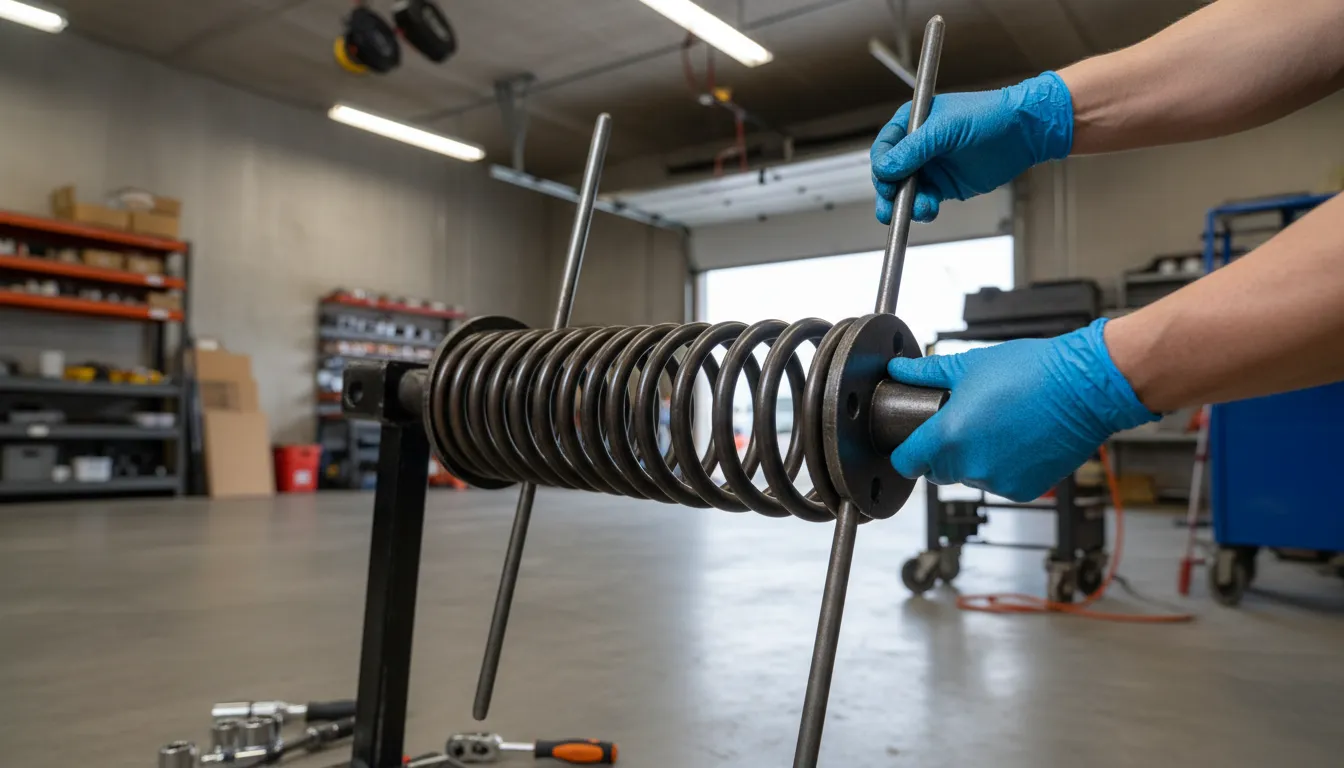
Spring Replacement Cost Breakdown
Here's what Toronto & GTA homeowners can expect to pay for garage door spring replacement in 2025. All prices include parts, labor, and warranty:
| Service | Price Range (+ tax) | Includes |
|---|---|---|
| Single Torsion Spring | $160 - $240 | 1 spring, labor, balancing |
| Double Spring Package | $280 - $400 | Both springs, labor, balancing, safety check |
| Extension Springs (pair) | $200 - $300 | Both springs, cables, safety check |
| Torquemaster Conversion | $480 | Convert to standard torsion system |
| High-Cycle Springs | +$50 - $100 | 25,000+ cycle springs (2-3x lifespan) |
Understanding Spring Types
Before diving into costs, it helps to understand what type of springs your garage door uses. This knowledge will help you make informed decisions and understand the technician's recommendations.
Torsion Springs
Torsion springs are the most common type in modern residential garages. They're mounted horizontally on a metal shaft above the garage door opening. When you open the door, the springs unwind and release stored energy to help lift the door. When closing, the springs wind up and store energy.
Benefits of torsion springs include:
- Longer lifespan: Typically last 15,000-20,000 cycles compared to 10,000 for extension springs
- Smoother operation: Provide more controlled, even lifting motion
- Better balance: Distribute weight more evenly across the door
- Safer: If they break, they remain on the shaft rather than flying off
Extension Springs
Extension springs run along the horizontal tracks on both sides of the door. They stretch and contract to provide lifting force. While less expensive, they're generally considered less safe and durable than torsion springs.
Extension spring considerations:
- Always require safety cables to prevent injury if they break
- Need to be replaced in pairs for proper balance
- More exposed to wear from temperature fluctuations
- Often found on older or lighter single-car doors
Torquemaster Springs
Wayne Dalton Torquemaster systems enclose the springs inside the torsion tube. While this looks cleaner, it creates problems: the springs are smaller and fail more frequently, and they require specialized knowledge to repair. Most technicians recommend converting Torquemaster systems to standard torsion springs ($480 + tax) for better long-term reliability.
Why Replace Both Springs?
We strongly recommend replacing both springs at once, even if only one is broken. Here's why this approach saves you money and hassle in the long run:
- Similar wear: If one spring broke, the other has similar wear and will likely fail within 6-12 months
- Save on labor: Second service call costs $100-150; replacing both saves this
- Proper balance: New and old springs have different tension, causing uneven door operation
- Warranty: Many warranties require matching springs
- Door stress: Mismatched springs put extra stress on your opener, rollers, and tracks
- Safety: A weak remaining spring could fail at any time, leaving you stranded
Factors That Affect Spring Cost
1. Door Size and Weight
Heavier doors (double-car, insulated, wood) require larger, stronger springs that cost more. A standard 7x16 insulated door needs springs rated for 250-400 lbs.
2. Spring Quality (Cycle Rating)
| Spring Type | Cycle Rating | Expected Life | Price Premium |
|---|---|---|---|
| Standard | 10,000 cycles | 7-9 years | Base price |
| High-Cycle | 25,000 cycles | 15-20 years | +$50-75 |
| Ultra High-Cycle | 50,000+ cycles | 25+ years | +$100-150 |
3. Spring Type
- Torsion springs: Most common, mounted above door. More durable and safer.
- Extension springs: Mounted on sides, common on older doors. Require safety cables.
- Torquemaster: Wayne Dalton proprietary. Often converted to standard torsion.
Signs You Need Spring Replacement
Recognizing the warning signs of spring failure can help you address problems before you're stranded with a garage door that won't open. Here are the key indicators to watch for:
- Door is stuck closed and won't open: The most obvious sign - if the door won't lift, the spring has likely broken
- Loud bang from garage: A broken spring releases stored energy with a distinctive loud noise, often mistaken for a car backfire or gunshot
- Visible gap in torsion spring coils: Look for a 2-3 inch gap in the spring where the coils have separated
- Door feels heavy or opens unevenly: If the door requires significant force to lift manually, the springs are weakening. Use our door balance test to check spring condition.
- Door falls quickly when closing: Worn springs can't control the door's descent properly
- Cable hanging loose: When springs break, the cables often come off the drums
- Door opens only 6-8 inches then stops: This happens when one spring is broken and the opener can't lift the full weight
- Crooked door: If the door tilts to one side, one spring may have failed or be weaker than the other
The Spring Replacement Process
Understanding what happens during a professional spring replacement helps you know what to expect and why the service takes 30-60 minutes.
Step 1: Safety Assessment (5 minutes)
The technician first secures the door and inspects the entire system. If the door is stuck partially open, they'll carefully release tension and lower it safely. They'll check that the area is clear and set up their equipment.
Step 2: Spring Measurement (5-10 minutes)
Garage door springs must be precisely sized for your door's weight and height. The technician measures the wire gauge, inside diameter, spring length, and calculates the required number of turns. Using the wrong spring size can be dangerous and cause premature failure.
Step 3: Tension Release (5 minutes)
Using specialized winding bars, the technician carefully releases any remaining tension from the broken spring. This is the most dangerous part of the job - springs under tension store tremendous energy and can cause serious injury if handled improperly.
Step 4: Spring Installation (15-20 minutes)
The new spring(s) are mounted on the torsion shaft and wound to the correct tension. Each turn adds approximately 7-8 pounds of lifting force. A typical residential door requires 7-8 full turns, though this varies by door weight and spring specifications.
Step 5: Balancing and Testing (10-15 minutes)
After installation, the technician balances the door and tests its operation. A properly balanced door should stay in place when lifted to waist height and released. They'll also test the safety features and opener operation, making adjustments as needed.
Seasonal Considerations in Toronto
Toronto's climate affects garage door spring lifespan and failure patterns. Understanding these factors helps you plan for maintenance and replacement.
Winter Failures
Cold weather is the most common time for spring failures in the GTA. Metal becomes more brittle in freezing temperatures, and springs that are near the end of their lifespan often break on the coldest mornings. The temperature change from a heated garage to outdoor cold creates thermal stress that accelerates wear.
Spring Rush Season
January through March is our busiest time for spring replacements. If your springs are more than 7 years old, consider having them inspected in fall before the cold weather hits. This helps avoid the inconvenience of a breakdown during a winter storm.
Humidity and Rust
Toronto's humid summers can cause spring corrosion, especially in garages with poor ventilation. Annual lubrication with a quality garage door lubricant (not WD-40) helps prevent rust and extends spring life by reducing friction and wear.
Choosing the Right Spring Quality
When replacing springs, you have options for different cycle ratings. Here's how to choose:
Standard Springs (10,000 cycles)
Best for: Homes with typical use (2-4 cycles per day). Expected lifespan of 7-9 years. Most economical upfront cost. Good choice if you might move within 5-10 years.
High-Cycle Springs (25,000 cycles)
Best for: Active households, home offices with frequent in/out trips, families with multiple drivers. Expected lifespan of 15-20 years. Costs $50-75 more per spring but typically pays for itself by avoiding one future replacement.
Ultra High-Cycle Springs (50,000+ cycles)
Best for: Commercial use, rental properties, or homeowners who want "lifetime" springs. Expected lifespan of 25+ years with typical residential use. Higher upfront cost but often the best value for long-term homeowners.
What's Included in Our Price
- FREE service call (with any repair)
- New spring(s) correctly sized for your door
- Professional installation (15-45 minutes)
- Door balancing and adjustment
- Complete safety inspection
- 1-year warranty on parts and labor
Need Spring Replacement?
Same-day service available. No hidden fees. 1-year warranty.
Call 437-265-9995Frequently Asked Questions
In Toronto, single torsion spring replacement costs $160-$240 + tax. Double spring replacement (both springs) costs $280-$400 + tax. Prices include parts, labor, balancing, and safety inspection.
We recommend replacing both springs at the same time. If one spring broke, the other has similar wear and will likely break soon. Replacing both saves a second service call ($100-150) and ensures even door balance.
Spring replacement costs include specialized tools ($500+ equipment), dangerous high-tension work (springs hold 200+ lbs of force), professional expertise (15-30 min of focused work), and parts that must be correctly sized for your specific door.
Standard springs (10,000 cycles) last 7-9 years with average use (3-4 cycles per day). High-cycle springs (25,000 cycles) last 15-20 years. Lifespan depends on usage frequency, climate, and maintenance.
Technically yes, but it's not recommended. A standard garage door weighs 150-400 lbs, and without springs, you'd need to lift this entire weight manually. More importantly, operating a door with broken springs can damage your opener and cause the door to fall unexpectedly, creating a safety hazard.
Metal becomes more brittle in freezing temperatures. Springs that are near the end of their lifespan often break on the coldest mornings when the temperature stress is highest. The thermal expansion and contraction from a heated garage to cold outdoor air accelerates metal fatigue.
Torsion springs mount horizontally above the door and twist to provide lifting force. They're more common, durable, and safer. Extension springs mount on the sides and stretch to lift the door. They're older technology, less expensive, but require safety cables to prevent injury if they break.
Regular maintenance extends spring life: lubricate springs and moving parts twice yearly with garage door lubricant (not WD-40), keep tracks clean and aligned, test door balance annually, and address any issues like binding or unusual noises promptly. Also consider high-cycle springs for significantly longer lifespan.