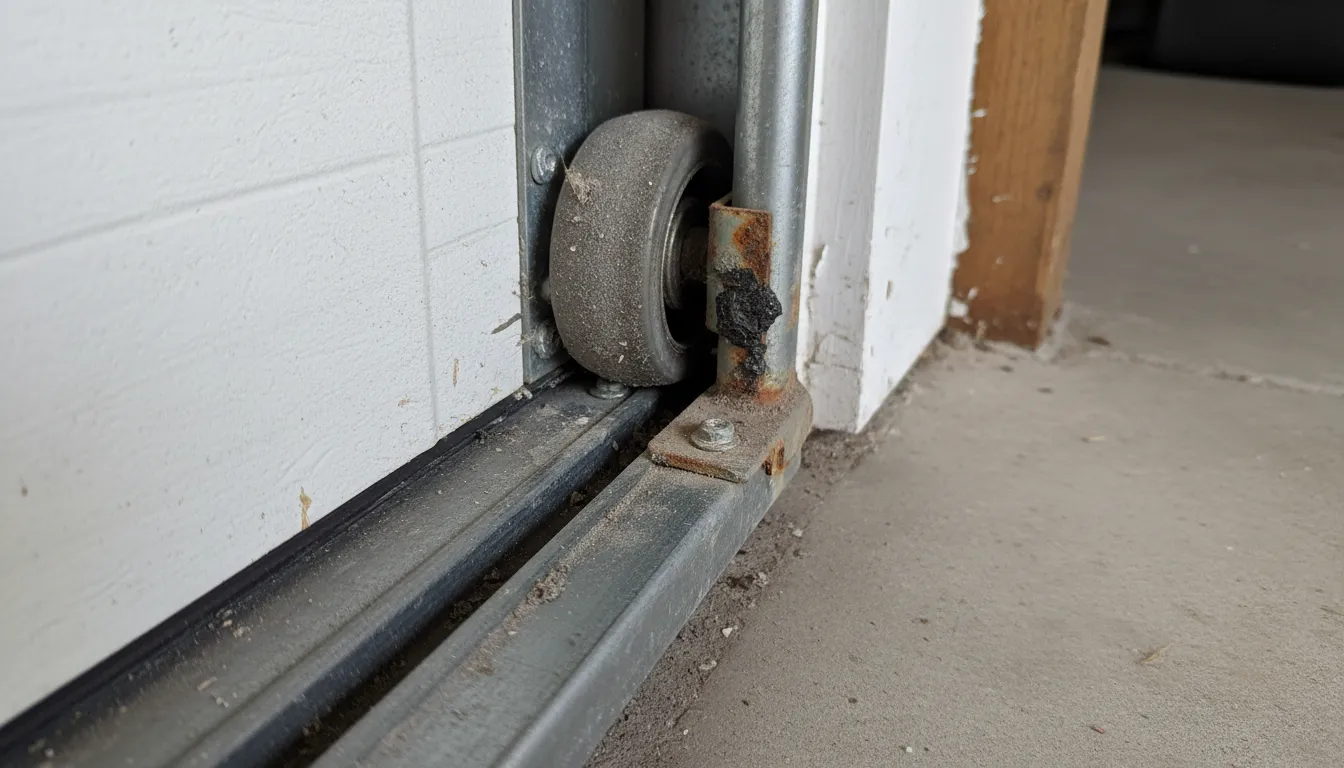
That annoying squeak every time your garage door opens isn't just irritating - it's your door telling you something needs attention. As a garage door technician serving Toronto for over 15 years, I've silenced thousands of squeaky doors. In this guide, I'll show you exactly what causes the noise and how to fix it yourself. For a complete seasonal maintenance routine, see our maintenance guide.
What Type of Noise Is Your Door Making?
Different sounds indicate different problems. Identify your noise type first:
Squeaking
High-pitched, continuous
Cause: Dry rollers/hinges
Grinding
Low, rough sound
Cause: Worn rollers/bearings
Popping/Snapping
Sharp, sudden sounds
Cause: Spring coils binding
Rattling
Loose, clanking noise
Cause: Loose hardware
6 Common Causes of Squeaky Garage Doors
1 Dry Metal Rollers
Steel rollers have bearings that require lubrication. Without it, metal-on-metal contact creates that classic squeak.
2 Unlubricated Hinges
Each door panel connects with hinges that pivot during operation. Dry pivot points squeak loudly.
3 Dry Torsion Springs
Springs create friction as coils rub together during winding/unwinding. This produces a "twanging" squeak.
4 Worn Nylon Rollers
Even "quiet" nylon rollers wear out after 5-7 years. Worn edges create friction against tracks.
5 Loose Hardware
Vibration loosens nuts, bolts, and brackets over time. Loose parts rattle and squeak during movement.
6 Misaligned Tracks
Tracks that are bent, shifted, or improperly spaced cause rollers to bind and squeak.
Important: WD-40 Is NOT a Lubricant!
WD-40 is a degreaser and penetrating oil - it actually removes lubrication. Using it on your garage door will make squeaking worse within weeks. Always use silicone-based or white lithium grease lubricants specifically designed for garage doors.
How to Silence a Squeaky Garage Door (Step-by-Step)
- Identify the Squeak Source Operate the door slowly (disconnect opener and lift manually). Listen carefully and watch for problem areas. Mark squeaky spots with tape.
- Clean the Tracks Wipe tracks with a clean rag to remove dirt, dust, and old grease. Don't lubricate tracks - they need friction to work properly.
- Lubricate Metal Rollers Spray lubricant directly into the roller bearing (the small hole in the center). Spin each roller by hand to distribute. Skip nylon rollers - they don't need lubrication.
- Lubricate All Hinges Apply lubricant to each hinge pivot point where metal meets metal. Operate the door a few times to work it in.
- Coat Torsion Springs Spray lubricant along the full length of the springs. This prevents coil-on-coil squeaking and extends spring life.
- Tighten Loose Hardware Use a socket wrench to tighten hinge bolts, track brackets, and roller brackets. Don't over-tighten - snug is enough.
What to Lubricate (And What NOT To)
| Component | Lubricate? | Notes |
|---|---|---|
| Metal Rollers | Focus on bearing holes | |
| Nylon Rollers | Self-lubricating material | |
| Hinges | All pivot points | |
| Torsion Springs | Full length of coils | |
| Tracks | Need friction to work | |
| Bearing Plates | Above door on each side | |
| Chain/Belt | Can cause slipping |
Recommended Lubricants for Canadian Climates
- 3-IN-ONE Garage Door Lube - Excellent cold-weather performance, available at Canadian Tire
- Blaster Silicone Lubricant - Won't attract dust, ideal for year-round use
- White Lithium Grease - Best for high-friction areas like hinges
- LiftMaster Premium Lubricant - Professional-grade, rated to -40°C
Avoid: WD-40, cooking oils, motor oil, Vaseline (all wrong viscosity or attract dirt)
How Often Should You Lubricate?
Recommended Lubrication Schedule
When to Call a Professional
While lubrication fixes most squeaks, some issues require professional attention:
- Squeaking persists after lubrication - May indicate worn components
- Grinding or scraping sounds - Possible track damage or roller failure
- Door moves unevenly - Could be spring or cable issues
- Visible roller damage - Cracked, chipped, or wobbling rollers need replacement
- Door is over 10 years old - May be time for full tune-up with parts inspection
In Toronto, a professional tune-up costs $100-$120 + tax and includes lubrication, hardware tightening, balance check, and safety inspection. This annual service extends your door's life by 5+ years.
Squeaky Door Won't Quiet Down?
If DIY lubrication isn't working, our technicians can diagnose and fix any garage door noise. Same-day service in Toronto & GTA. Book online.
Call 437-265-9995