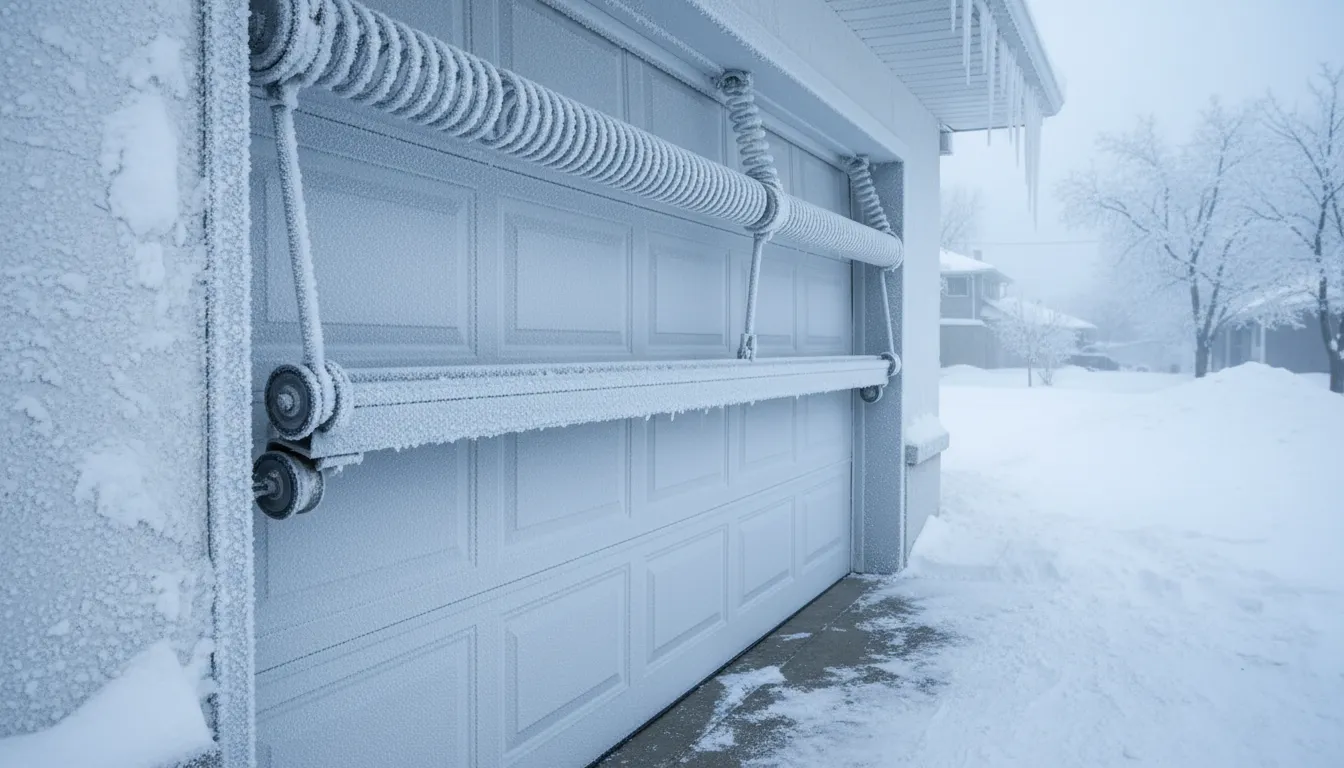
Cold-Weather Causes (In Order of Likelihood)
Cold weather creates specific challenges for garage doors. For all 12 possible causes your door won't close (not just cold-related), see our complete troubleshooting guide.
1. Sensor Misalignment (Most Common)
Metal sensor brackets contract in cold, shifting sensors by just millimeters—enough to break the infrared beam. Look at the receiving sensor (usually has green LED): if it's blinking instead of solid, the beam is broken. Fix: Loosen wing nut, adjust until LED is solid, retighten. See our blinking light troubleshooting guide for detailed blink codes.
2. Frost/Ice on Sensor Lenses
Condensation freezes on sensor lenses, blocking the beam. The lights may look normal but the beam can't pass through. Fix: Wipe both sensor lenses with a dry cloth. Consider applying anti-fog treatment.
3. Ice/Snow Blocking Door Path
Ice buildup at the bottom or debris in the door path triggers the safety reverse. Fix: Clear ice and snow from the door threshold. Salt the concrete to prevent re-freezing.
4. Thickened Lubricant
Standard lubricant thickens below -10°C, increasing resistance. The opener senses this as an obstruction and reverses. Fix: Apply cold-weather silicone lubricant rated to -40°C.
5. Weakened Springs
Springs lose 10-15% tension in extreme cold, making the door heavier. If opener force is set correctly for warm weather, it may struggle in cold. Fix: Seasonal spring tension adjustment ($100-$150).
Quick Fixes (Try These First)
-
Check Sensor LEDs
Look at both sensors at floor level. Sending sensor should show solid amber. Receiving sensor should show solid green. If green is blinking, sensors need alignment.
-
Clean Sensor Lenses
Wipe both sensor faces with a dry, soft cloth. Even invisible frost can block the infrared beam.
-
Clear the Door Path
Check for ice, snow, or debris along the door bottom. Shovel and salt the threshold.
-
Use Wall Button Override
As a temporary fix, press and hold the wall button continuously. The door will close while held, bypassing sensors. Only do this when you can see nothing is in the path.
-
Warm the Garage
Run a space heater for 20 minutes to warm components. This helps lubricant flow and reduces metal contraction.
Preventing Cold-Weather Close Issues
- Fall maintenance: Have sensors checked and aligned before winter
- Cold-weather lubricant: Apply silicone-based lube rated to -40°C
- Lithium batteries: Replace sensor backup batteries (if applicable)
- Insulate garage: Proper insulation keeps temperature more stable
- Check weatherstripping: Good seal prevents frost inside tracks
Frequently Asked Questions
Michael Thompson
IDEA Certified Technician. 15+ years of Toronto winter service calls.