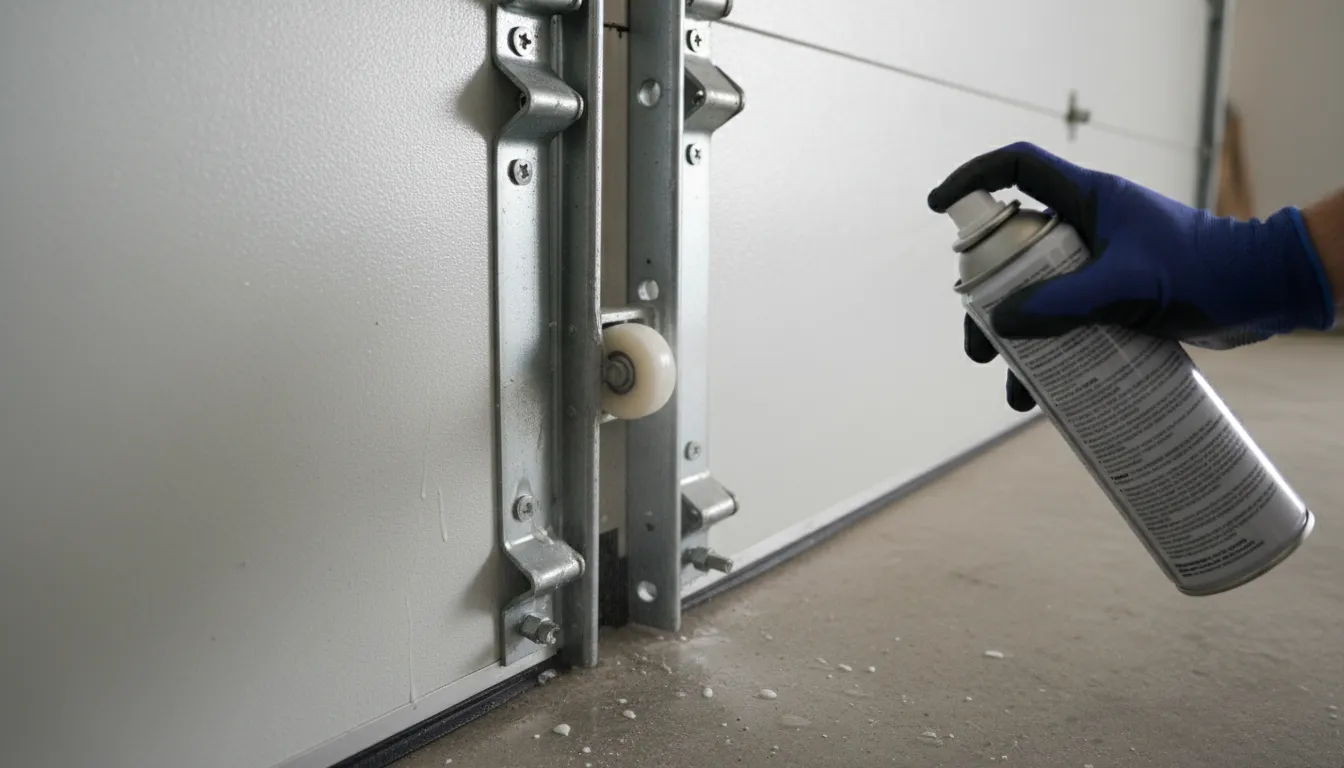
What Lubricant to Use
The right lubricant makes all the difference. Here's what works and what doesn't:
Recommended Lubricants
- Silicone-based spray - Best overall choice, stays clean, doesn't attract dust
- White lithium grease - Longer lasting, good for high-wear areas like hinges
- Garage door specific lubricant - 3-IN-ONE, Blaster, or LiftMaster brands
| Lubricant | Garage Door Use? | Notes |
|---|---|---|
| Silicone Spray | YES | Best overall choice, stays clean |
| White Lithium Grease | YES | Great for hinges, longer lasting |
| Garage Door Lube (3-IN-ONE) | YES | Formulated specifically for garage doors |
| WD-40 | NO | Solvent/degreaser, strips lubricant |
| Motor Oil | NO | Attracts dust, too thick |
| Grease (heavy) | NO | Too thick, collects debris |
Despite popular belief, WD-40 is NOT a lubricant. It's a solvent and water displacer that actually strips away existing lubricant. Use it only for cleaning rusted parts before applying proper lubricant.
Parts That Need Lubrication
Here's a checklist of every part that needs lubricant for smooth, quiet operation:
Lubrication Checklist
- Hinges - All pivot points where metal meets metal
- Rollers - Bearings only (not nylon wheels)
- Torsion Springs - Full length of each spring
- Bearing Plates - At each end of the spring tube
- Lock Mechanism - Keyhole and internal parts
- Arm Bar Pivot Points - Where opener arm connects
- Rail - Chain or screw drive rail (if applicable)
Step-by-Step Lubrication Instructions
Follow these steps for a complete garage door lubrication. The whole process takes about 15 minutes.
Close the Door & Disconnect Power
Close the garage door fully. Pull the red emergency release cord to disconnect the opener. This allows you to manually move the door and access all parts safely.
Clean the Tracks
Wipe down the tracks with a damp rag to remove dirt and debris. DO NOT lubricate the tracks - they should stay dry so rollers can grip properly.
Lubricate the Hinges
Apply lubricant to each hinge pivot point where the metal pieces move against each other. Spray lightly - a little goes a long way. Open and close the door to work it in.
Lubricate the Rollers
For steel rollers, spray the bearings (the center part where the wheel meets the stem). For nylon rollers, only lubricate the stem that goes into the hinge - nylon wheels don't need lubricant.
Lubricate the Springs
For torsion springs (above the door), spray along the entire length of each spring. This prevents rust and reduces stress. For extension springs (on the sides), spray the coils and pulleys.
Lubricate Bearing Plates & Lock
Spray the bearing plates at each end of the torsion bar. Also spray inside the lock mechanism and the manual lock bar if you have one.
Lubricate the Opener Rail
For chain drive openers, apply lubricant to the chain. For screw drive openers, apply to the screw. Belt drives typically don't need lubrication.
Test the Door
Reconnect the opener and run the door through 2-3 full cycles. Listen for any remaining squeaks or grinding noises. Wipe away any excess lubricant that drips.
After lubricating, manually lift the door halfway and let go. A properly balanced door should stay in place. If it falls or rises, your springs may need adjustment - call a professional.
What NOT to Lubricate
These parts should NOT be lubricated:
- Tracks: Keep them clean and dry - lubricated tracks cause the door to slip and bind
- Nylon roller wheels: Only lubricate the stem/bearing, not the wheel itself
- Weatherstripping: Lubricant degrades rubber seals
- Photo eye sensors: Keep the lenses clean with a dry cloth only
- Belt drive belt: These are designed to run dry
How Often to Lubricate
- Standard use (2-4 cycles/day): Every 6 months (spring and fall)
- Heavy use (4+ cycles/day): Every 3-4 months
- Harsh climate: Every 4 months (Toronto winters are hard on doors)
- If you hear squeaking: Lubricate immediately - see our guide to silencing squeaky doors for more solutions
Regular lubrication is part of a complete maintenance routine. For a full tune-up including balance check, safety sensor alignment, and hardware tightening, see our complete garage door maintenance guide or consider our Maintenance Package for $100-$120 + tax.
Toronto Winter Lubrication Tips
Toronto's harsh winters present unique challenges for garage door maintenance. Cold temperatures affect lubricant performance, and understanding these factors helps ensure your door operates reliably even on the coldest January mornings.
Cold Weather Lubricant Selection
Not all lubricants perform equally in extreme cold. Standard lithium grease thickens significantly below -10°C, making your door sluggish or even stuck. For Toronto winters, silicone-based lubricants are essential because they maintain their viscosity down to -40°C. Brands like 3-IN-ONE Garage Door Lube and Blaster specifically formulate products for cold weather performance. Check the label for temperature ratings before purchasing - many generic lubricants aren't rated for Canadian winters.
Pre-Winter Application Timing
The ideal time to lubricate your garage door in Toronto is mid-October to early November, before the first hard freeze. Applying lubricant when temperatures are still above 10°C ensures proper coverage and penetration into moving parts. Cold lubricant doesn't spray evenly and won't penetrate into tight spaces like hinge pivot points. If you missed the fall window and need to lubricate in winter, warm the lubricant can in your hands for several minutes before application, and work in short sessions to avoid prolonged exposure to cold.
Preventing Winter-Specific Problems
- Ice buildup on springs: A well-lubricated spring resists ice formation because water beads off the oily surface rather than freezing in place
- Frozen hinges: Apply extra lubricant to all hinge pivot points - these are most prone to freezing due to condensation
- Stiff rollers: Steel roller bearings need fresh lubricant to prevent cold-related binding
- Frozen lock: Spray graphite lubricant into the lock mechanism to prevent key freezing - silicone spray works as secondary protection
Emergency Winter Lubrication
If your garage door becomes stuck or extremely sluggish during a cold snap, don't force it open. First, inspect the weatherstripping at the bottom - it may be frozen to the floor. For frozen tracks or rollers, use a hair dryer to gently warm the affected area, then apply silicone lubricant once thawed. Never use hot water as it will refreeze quickly and worsen the problem. If the door remains stuck, call our 24/7 emergency line at 437-265-9995 for immediate assistance.
Garage Door Maintenance Pricing
While lubrication is DIY-friendly, professional maintenance extends door life significantly:
| Service | Price Range (+ tax) | Includes |
|---|---|---|
| Maintenance Tune-Up | $100 - $120 | Full lubrication, balance check, safety sensor alignment |
| Roller Replacement (Nylon) | $180 - $280 | Quiet nylon rollers, installation, lubrication |
| Weatherstripping | $100 - $200 | Bottom seal, side seals, installation |
| Spring Service | $160 - $400 | Inspection, adjustment, or replacement |
Want Professional Maintenance?
Our technicians perform complete tune-ups including lubrication, balance check, and safety inspection.
Call 437-265-9995Frequently Asked Questions
Use a silicone-based lubricant spray or white lithium grease specifically designed for garage doors. Avoid WD-40 - it's a degreaser, not a lubricant. Good brands include 3-IN-ONE Garage Door Lube, Blaster Garage Door Lubricant, and LiftMaster Premium Lubricant.
Lubricate your garage door every 6 months - once in spring and once in fall. If your door is noisy or gets heavy use (4+ cycles per day), lubricate every 3-4 months. Apply lubricant after cleaning the tracks.
Lubricate these parts: hinges (where metal meets metal), rollers (bearings only, not nylon wheels), torsion springs (full length), bearing plates (at each end of spring tube), lock mechanism, and arm bar pivot points. Never lubricate the tracks - they should stay dry.
No, WD-40 is not recommended for garage doors. It's a solvent and degreaser, not a lubricant. It will actually strip away existing lubricant and attract dust. Use silicone spray or white lithium grease instead.
Persistent squeaking after lubrication usually means worn rollers, loose hardware, or track alignment issues. Check that all bolts are tight, rollers aren't worn flat, and tracks are properly aligned. If squeaking continues, a professional inspection may be needed.
Yes, Toronto winters require special attention. Apply lubricant in fall before temperatures drop below 0°C, as cold thickens lubricant and makes application difficult. Use silicone-based lubricant (not lithium grease) in winter as it performs better in extreme cold down to -40°C.
A complete garage door lubrication takes about 15-20 minutes. This includes disconnecting the opener, cleaning the tracks, lubricating all hinges, rollers, springs, bearing plates, and the lock mechanism, then testing the door through several cycles.