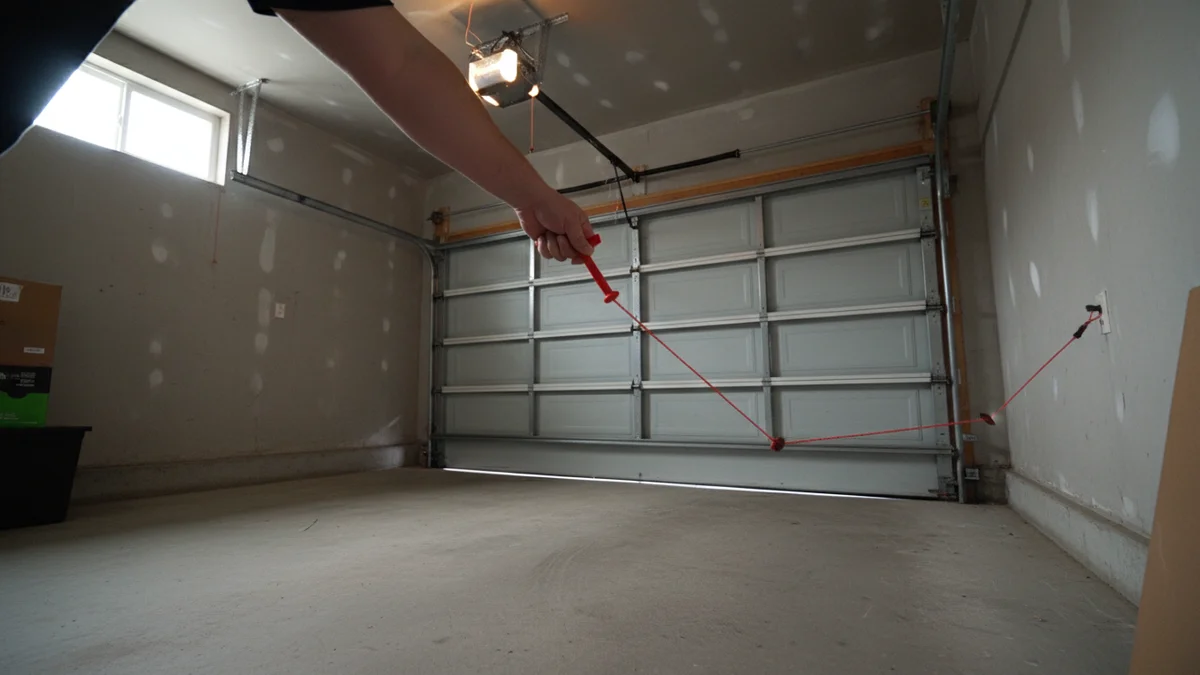
How the Emergency Release Mechanism Works
Understanding how your garage door's emergency release works helps you use it confidently when needed. Every automatic garage door opener sold in North America is required to have an emergency release mechanism that allows manual operation when power fails or the opener malfunctions.
The Trolley and Carriage System
Your garage door opener uses a trolley and carriage system to move the door. The carriage is attached to the opener's chain, belt, or screw drive and moves back and forth along the rail. The trolley connects to the door's arm and rides along the rail. During normal operation, the trolley locks into the carriage, so when the opener moves the carriage, the door moves with it.
The emergency release disconnects the trolley from the carriage. Once disconnected, the door can move freely on its tracks while the opener's carriage stays in place. This allows you to lift the door by hand without fighting the motor.
Why the Cord is Always Red
The emergency release cord is universally colored red as required by safety standards. This makes it immediately identifiable in an emergency, even in low light or when you're unfamiliar with the garage. The red handle typically hangs 5-6 feet from the floor so adults can reach it easily. Some models have a secondary cord for reconnecting the trolley after manual use.
The Spring Balance System
When you disengage the opener, your door's torsion or extension springs take over. These springs are calibrated to counterbalance the door's weight, making a 150-300 lb door feel like just 10-15 lbs when properly balanced. If your door feels extremely heavy after releasing, the springs are broken or weak, and you should not attempt to lift it manually.
Opening From Inside (Power Outage)
This is the most common scenario - you're inside your garage and need to open the door manually during a power outage. To avoid this situation, consider a garage door opener battery backup.
Close the Door Completely
If the door is partially open, carefully lower it to the fully closed position before proceeding. This is the safest position to disengage the opener.
Locate the Emergency Release Cord
Look for the red cord with a handle hanging from the trolley on the opener rail. It's usually 6-8 feet from the motor unit, positioned where you can easily reach it.
- The cord is always red for easy identification
- It hangs from the "trolley" that connects the door to the opener
Pull the Cord Down and Toward the Door
Grasp the handle and pull down and toward the garage door (away from the opener motor). You should hear or feel a "click" as the trolley disengages from the carriage.
Lift the Door
Grasp the door handle (usually at the bottom center) or the bottom edge of the door. Lift straight up with a smooth motion.
- A properly balanced door should feel light (25-35 lbs of force)
- If it's very heavy, the springs may be broken or weak
- Lift from a crouching position using your legs
Secure the Door
Once fully open, the door should stay in place by itself. If it falls, the springs may need adjustment - call a professional.
After a power outage, leave the door in manual mode until power returns. Then follow the "re-engage" instructions below before using the opener.
Opening From Outside (Locked Out)
If you're locked out and need to open the door from outside, you'll need an emergency release key.
If You Have an Emergency Key Lock
Many garage doors have a lock cylinder at the top center of the door. Here's how to use it:
- Insert the emergency key and turn it (usually 90 degrees)
- Pull down on the lock tumbler - a cable inside will pull the release
- Lift the door manually
- Remember to re-lock when you leave!
If You Don't Have an Emergency Key
Your options are limited for security reasons:
- Enter through another door and use the interior release
- Call a locksmith (can open most garage doors)
- Call us - we offer emergency access service
Security Warning
The emergency release is a known vulnerability. Criminals can use a coat hanger to pull the release from outside. Consider installing a zip tie or emergency release shield for security.
Emergency Release by Opener Brand
While the basic principle is the same across all brands, there are subtle differences in how emergency releases work on popular opener models found in Toronto homes.
LiftMaster / Chamberlain
LiftMaster and Chamberlain openers (made by the same company) use a two-cord system on many models. The red cord disengages the trolley, while a second cord or lever re-engages it. On newer Security+ 2.0 models, pulling the red cord toward the door releases the trolley, and it automatically re-engages when you press the opener button with the door closed.
Genie
Genie openers typically have a spring-loaded trolley release. Pull the red cord down and toward the door. To re-engage, pull the cord straight down (not toward the opener), then manually slide the door until the trolley clicks into the carriage. Some Genie models require the door to be fully closed before re-engaging.
Craftsman
Craftsman openers (often made by Chamberlain) work similarly to LiftMaster. The emergency release cord hangs from the trolley assembly. One important note: on older Craftsman models, you may need to manually push the trolley back toward the opener until it locks before pressing the wall button.
Overhead Door / Wayne Dalton
These brands often have a slightly different trolley design. The release lever may be located on top of the trolley rather than hanging below. Look for a red handle or lever on the trolley assembly itself. Some models have a twist-lock mechanism that requires rotation before pulling.
How to Re-Engage the Opener
After power returns or the opener is fixed, you need to reconnect the door to the opener:
Method 1: Automatic Re-Engage (Most Openers)
- Pull the release cord toward the opener motor (opposite direction)
- You should hear/feel the trolley lock back into position
- Press the wall button or remote
- The opener will reconnect as the carriage passes the trolley
Method 2: Manual Re-Engage
If automatic doesn't work:
- Close the door completely by hand
- Pull the release cord toward the opener
- Move the door up and down slightly by hand until the trolley clicks
- Test with the remote or wall button
Toronto Winter Considerations
Toronto's harsh winters create unique challenges for manually operating your garage door. Here's what you need to know when temperatures drop.
Frozen Weatherstripping
The most common winter issue is the bottom weatherstripping freezing to the garage floor. If you try to lift the door without breaking this seal, you can tear the weatherstripping or damage the door. Before pulling the emergency release, gently tap along the bottom seal with your foot to break the ice bond. In severe cases, use a heat gun or hair dryer to thaw the seal before attempting to open the door.
Stiff Emergency Release
Cold temperatures cause lubricants to thicken, making the emergency release mechanism stiffer than normal. The trolley may require more force to disengage. Apply steady, firm pressure rather than jerking the cord. If the release is too stiff, let your garage warm up slightly before trying again, or apply a silicone-based lubricant to the trolley mechanism.
Door Balance Changes in Cold Weather
Garage door springs become stiffer in cold weather, which can affect door balance. A door that feels light in summer might feel slightly heavier in January. This is normal, but if the door becomes difficult to lift, have a technician check the spring tension in spring when temperatures normalize.
Power Outages During Ice Storms
Toronto ice storms can knock out power for hours or days. Know where your emergency release is before you need it. Consider keeping a flashlight near the garage door so you can locate the red cord during a nighttime outage. Battery backup openers are also available and highly recommended for Toronto homeowners.
Emergency Release Security
The emergency release is a critical safety feature, but it's also a known security vulnerability that criminals exploit. Here's how to protect your home while maintaining emergency access.
The "6-Second Attack"
Burglars can open many garage doors in under 6 seconds using the following technique: they slide a thin wire (like a coat hanger) through the gap at the top of the door, hook the emergency release cord, and pull it to disengage the opener. Once the door is in manual mode, they simply lift it and walk in. This is why you should never assume a closed garage door is secure.
Security Solutions
- Emergency release shield: A plastic cover that blocks access to the release cord from the outside. Costs $15-30 and installs in minutes.
- Zip tie method: Loop a zip tie through the release lever to prevent it from moving when tugged with a wire. You can still break the zip tie by pulling hard from inside.
- Disconnect the cord: Some homeowners remove the cord entirely, but this is NOT recommended as it makes emergency use much harder.
- Door reinforcement: Install a deadbolt lock on the garage door that must be manually locked when away for extended periods.
If you have an attached garage with a door to your home, always lock the interior door. Even if someone gains access to your garage, they shouldn't have easy access to your home.
Troubleshooting
Door is Too Heavy to Lift
Likely cause: Broken or weak torsion spring. A properly balanced door should lift easily with 25-35 lbs of force. If it feels like 100+ lbs, do not force it - call a professional.
Door Falls When I Let Go
Likely cause: Spring tension issue. The springs should hold the door at any position. If it falls, the springs need adjustment or replacement.
Release Cord Won't Pull
Likely cause: Trolley is jammed or door isn't fully closed. Try closing the door completely and pulling straight down on the cord.
Can't Re-Engage the Opener
Solution: Make sure door is fully closed. Pull release cord toward motor. Move door up 6 inches, then press opener button - the carriage will pick up the trolley as it moves.
Emergency Repair Pricing
If your door is too heavy or stuck, professional repair is needed. Here's what to expect:
| Service | Price Range (+ tax) | Includes |
|---|---|---|
| Broken Spring (Single) | $160 - $220 | Spring, installation, balancing, safety check |
| Both Springs | $280 - $400 | Both springs, matching, balancing, warranty |
| Cable Repair | $150 - $220 | Cable replacement, bracket realignment |
| Opener Repair | $120 - $300 | Diagnosis, gear/board repair, testing |
Frequently Asked Questions
Pull the red emergency release cord hanging from the opener rail (pull toward the door). This disconnects the door from the opener. Then lift the door by hand - it should move freely on the tracks.
The emergency release is a red cord with a handle hanging from the trolley/carriage on the opener rail, usually 6-8 feet from the motor unit. It's always red for easy identification.
Pull the release cord toward the opener (opposite direction), then press the opener button. The trolley will re-engage when the carriage moves past it. Some models require manually pushing the trolley until it clicks.
A door that's too heavy likely has a broken spring. Torsion springs counterbalance the door's weight. Without them, you're lifting 150-300+ lbs. Do not force it - call a professional immediately.
Not safely or easily. The emergency release is designed to only be accessible from inside for security. If locked out, you'll need to enter through another door, call a locksmith, or contact a garage door professional.
Cold weather can make the emergency release stiffer. In Toronto winters, lubricant can thicken and weatherstripping may freeze to the floor. Let the door warm slightly or apply gentle pressure. Never force the release mechanism.
Install an emergency release shield that blocks the 6-second attack method. You can also use a zip tie through the release lever that breaks under force but prevents coat hanger attacks.
Test the emergency release every 3-6 months to ensure it operates smoothly. This is especially important in Toronto where seasonal temperature changes can affect the mechanism.