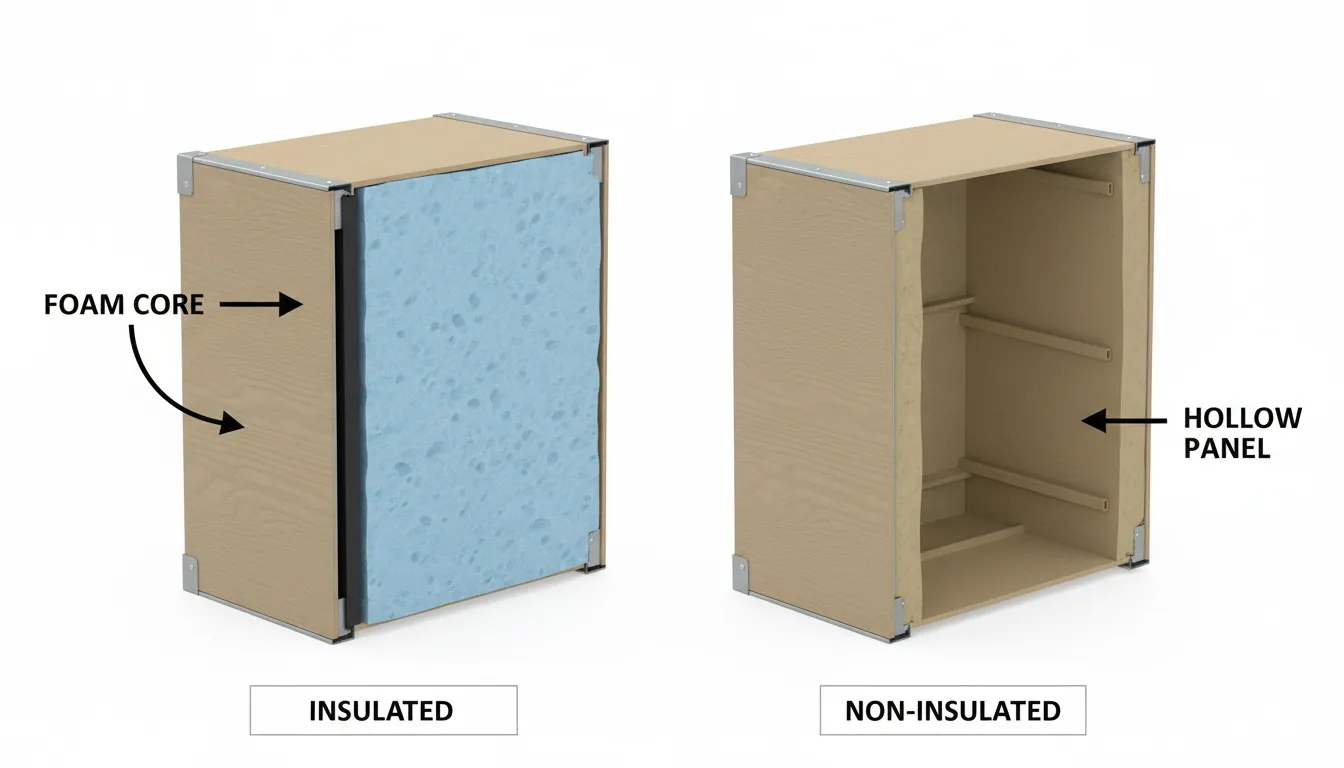
Quick Comparison: Insulated vs Non-Insulated
Insulated Door
- R-value: R-6 to R-18
- Energy savings: $100-200/year
- Noise reduction: Up to 50%
- Durability: 20-30 years
- Dent resistance: High
- Temperature control: Yes
- Best for: Attached garages
Non-Insulated Door
- R-value: R-0
- Energy savings: None
- Noise reduction: Minimal
- Durability: 15-20 years
- Dent resistance: Low
- Temperature control: No
- Best for: Budget projects
Understanding R-Value: What It Means for Your Garage
R-value measures thermal resistance - how well a material prevents heat transfer. Higher R-values mean better insulation. For a deep dive into R-values, see our complete R-value guide. For garage doors in Toronto's climate (Zone 6), here's what each R-value delivers:
Garage Door R-Value Guide
Energy Savings: The Numbers
Installing an insulated garage door creates measurable energy savings, especially for attached garages where the garage wall connects to conditioned living space.
💰 Annual Savings with Insulated Door (Toronto)
Winter Performance: Real-World Temperature Difference
❄️ Garage Temperature on a -20°C Day
This temperature difference matters for:
- Vehicle performance: Warmer garages mean easier cold starts
- Stored items: Paint, chemicals, and tools stay usable
- Pipes: Reduced risk of frozen pipes in attached garages
- Comfort: Less cold air seeping into your home
Which Should You Choose? Decision Guide
🏠 Attached Garage
Shares a wall with living space. Temperature fluctuations directly impact your home's heating/cooling.
🚗 Detached Garage (Heated)
Standalone structure used as workshop, gym, or hobby space with heating system.
🏚️ Detached Garage (Unheated)
Basic storage for vehicles and equipment. No heating or living space connection.
🛏️ Room Above Garage
Bonus room, bedroom, or office located directly above the garage.
Insulation Types: Polystyrene vs Polyurethane
| Feature | Polystyrene | Polyurethane |
|---|---|---|
| R-Value per inch | R-3.5 to R-4 | R-6 to R-7 |
| Max R-Value | R-9 | R-18+ |
| Construction | Foam boards inserted | Foam injected, bonds to steel |
| Strength | Good | Excellent (2-3x stronger) |
| Cost | $1,200 - $2,000 | $2,000 - $3,500 |
| Best For | Budget-conscious buyers | Maximum performance |
Cost Comparison: Toronto 2025 Prices
| Door Type | 16x7 Single | 16x7 Double | 9x7 Single |
|---|---|---|---|
| Non-Insulated Steel | $900 - $1,400 | $1,400 - $1,800 | $800 - $1,200 |
| Insulated (R-9) | $1,300 - $1,800 | $1,800 - $2,400 | $1,200 - $1,600 |
| Insulated (R-16) | $1,800 - $2,500 | $2,500 - $3,200 | $1,600 - $2,200 |
| Premium (R-18+) | $2,500 - $3,500 | $3,200 - $4,500 | $2,200 - $3,000 |
Prices include professional installation in Toronto & GTA. Tax extra.
Noise Reduction Benefits
Insulated garage doors are significantly quieter than non-insulated models due to:
- Foam core dampening: Absorbs vibration during operation
- Tighter construction: Less rattling and metal-on-metal contact
- Sound barrier: Blocks street noise from entering your home
- Quieter opener: Less strain on motor = quieter operation
This matters most if you have bedrooms adjacent to or above the garage, work night shifts, or value peace and quiet.
Durability & Lifespan
Insulated doors outlast non-insulated doors due to their construction:
- Dent resistance: Foam core provides backing that resists impacts
- Panel strength: Polyurethane bonds to steel, creating rigid panels
- Less warping: Thermal stability reduces expansion/contraction damage
- Average lifespan: Insulated 20-30 years vs Non-insulated 15-20 years
Need Help Choosing the Right Door?
Our Toronto experts can assess your garage and recommend the best insulation level for your home and budget.