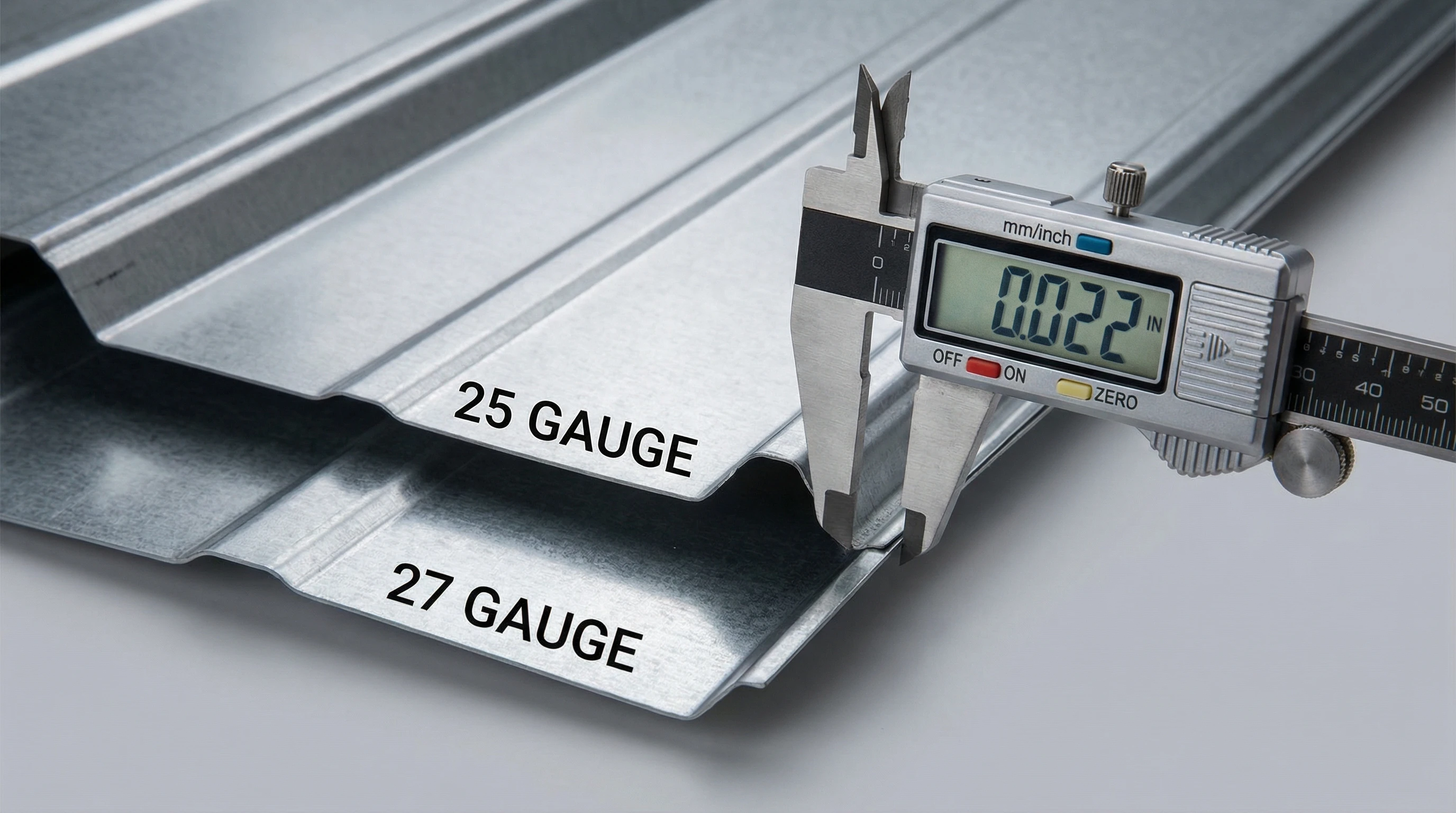
Lower gauge = thicker steel. 24 gauge steel (0.026 inches) is the recommended minimum for Ontario homes - more dent-resistant than the builder-grade 25 gauge. 27 and 28 gauge are thin economy options best avoided. For premium dent resistance in exposed driveways, choose 24 gauge or upgrade to steel with polyurethane insulation for added rigidity.
Steel gauge is one of the most confusing specifications in garage door shopping. The counterintuitive numbering system - where lower numbers mean thicker steel - trips up buyers constantly. Here is a practical guide to understanding what thickness you actually need.
Understanding the Gauge Numbering System
Steel gauge follows an old American standard where higher gauge numbers indicate thinner steel. A 24-gauge door panel is thicker and more robust than a 25-gauge panel. Manufacturers use this system to describe both the outer steel skin and the inner backing panel, which may be different gauges.
Steel Gauge Comparison Chart
| Gauge | Thickness (inches) | Thickness (mm) | Common Use | Dent Resistance |
|---|---|---|---|---|
| 22 gauge | 0.030" | 0.76mm | Premium residential | Excellent |
| 24 gauge | 0.026" | 0.66mm | Standard residential | Good |
| 25 gauge | 0.022" | 0.56mm | Builder/entry level | Fair |
| 26 gauge | 0.018" | 0.46mm | Economy | Poor |
| 27-28 gauge | 0.016" or less | 0.41mm or less | Very economy | Very Poor |
What Most Door Salespeople Will Not Tell You
Many "24 gauge" doors specify the outer skin at 24 gauge but use a thinner 26 or 27 gauge inner backing panel. Ask for both specs. Polyurethane insulation between the panels adds rigidity that partly compensates for a thinner inner skin.
Which Gauge Do You Need?
25 Gauge - Entry Level (Builder Grade)
25 gauge steel is what most builders install in new construction to meet minimum code while keeping costs low. At 0.022 inches thick, it dents from moderate impact. Acceptable for detached garages away from vehicles and foot traffic, rental properties and budget upgrades, or doors that will be replaced within 10-15 years.
24 Gauge - Recommended Standard
24 gauge at 0.026 inches is the sweet spot for residential garage doors in Ontario. It handles typical impacts without denting, holds its finish longer, and supports both polyurethane and polystyrene insulation well. We recommend 24 gauge minimum for:
- Attached garages with vehicles parked close to the door
- Homes with children (hockey pucks, bicycles, playground equipment nearby)
- Driveways exposed to hail
- Any homeowner who expects the door to last 20+ years
22 Gauge - Premium Residential
22 gauge offers exceptional dent resistance and is available from premium manufacturers on their top-tier lines. It is heavier, requiring properly tensioned springs, and costs 15-25% more. Worth considering for exposed driveways or homeowners who want the absolute best without going to fiberglass or aluminum.
How Polyurethane Changes the Equation
A 25-gauge door with polyurethane insulation can perform similarly to a 24-gauge uninsulated door in dent resistance. The injected foam bonds to both steel skins, creating a composite sandwich that absorbs impact energy. Always consider the complete door system, not just gauge alone.
Get Expert Gauge Recommendations for Your Home
Royal Garage Doors technicians assess your driveway exposure, climate zone, and budget to recommend the exact steel gauge and insulation combination for your needs. Free consultation, no pressure.
Call 437-265-9995Frequently Asked Questions
24 gauge steel is the best choice for most residential garage doors - it offers an excellent balance of dent resistance, weight, and cost. 25 gauge is the builder-grade minimum and dents relatively easily. For premium dent resistance, some manufacturers offer 22 gauge steel, which is exceptionally strong but heavier and more expensive.
25 gauge steel (0.022 inches / 0.56mm) is adequate for budget garage doors in protected locations but dents easily from moderate impacts. For exposure to vehicles, sports equipment, hail, or wind-driven debris common in Ontario, 24 gauge is the minimum we recommend for durability.
In steel gauging, lower numbers mean thicker steel. So 24 gauge is THICKER than 25 gauge, and 22 gauge is thicker than 24 gauge. This counterintuitive numbering confuses many buyers. Always ask for the actual thickness in millimeters or inches when comparing doors - 24 gauge = 0.026 inches (0.66mm), 25 gauge = 0.022 inches (0.56mm).
Yes indirectly. Thicker gauge steel panels hold insulation more rigidly and reduce panel flex that can cause insulation to shift or compress over time. However, the insulation material itself (polyurethane vs polystyrene) has a far greater impact on R-value than steel thickness.
Check the manufacturer label inside the door or on the opener hanging bracket area. You can also use a digital caliper to measure actual steel thickness and compare to gauge charts. Alternatively, call Royal Garage Doors with your door brand and model - we can look it up.
Yes. Thicker 24 gauge steel panels resonate less than thin 25 gauge panels. Combined with polyurethane insulation, a 24-gauge insulated door operates noticeably quieter than a 25-gauge uninsulated door. For attached garages with bedrooms above, 24-gauge polyurethane insulated steel is the quietest steel option.