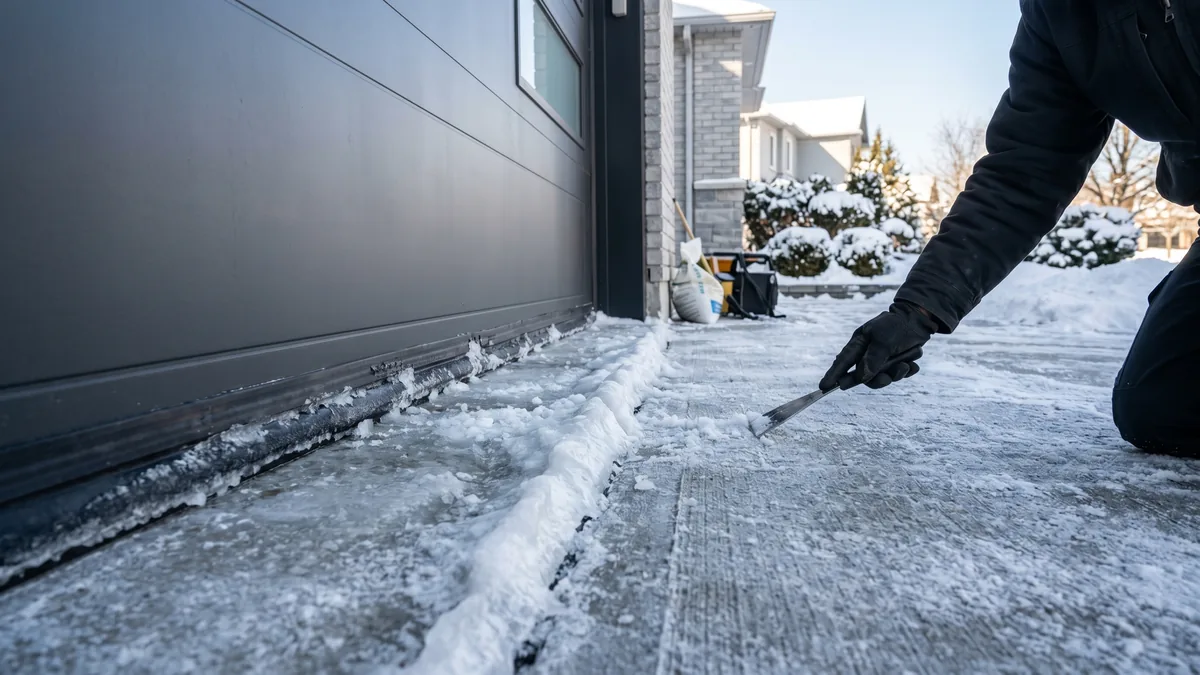
A garage door freezes to the ground when meltwater or slush under the rubber bottom seal freezes solid against the concrete slab overnight, effectively gluing the door shut. To free it safely, do not keep pressing the opener button — that burns out the motor and strips the drive gear. Pull the red emergency release cord, then melt the ice bond with warm (not boiling) water, a hair dryer, or a flat plastic ice scraper along the bottom seal. To stop it from happening again: keep the bottom seal in good shape, apply silicone spray, add a threshold seal, and manage meltwater so it drains away from the door.
What Does “Frozen to the Ground” Actually Mean?
It means the flexible rubber strip along the bottom of your garage door — the bottom seal, or astragal — has become physically frozen to the concrete floor or driveway. Water sitting under the seal turns to ice and bonds the rubber to the slab. The door itself is fine; it is the ice bond at the floor that is holding it down. Once that bond is melted, the door lifts normally.
Few winter calls are as frustrating as a garage door that simply will not budge on the coldest morning of the year. Across Mississauga and the wider GTA, our phones light up every time we get a freeze-thaw swing — a mild afternoon, a sudden overnight cold snap, and by 7 a.m. the door is locked to the slab by a thin sheet of ice. The good news: it is almost always a five-minute fix, and a few cheap habits will stop it from happening at all.
Why Garage Doors Freeze to the Ground in GTA Winters
Ontario winters are tough on garage doors specifically because of freeze-thaw cycling, not just steady cold. A region that stays at –20°C all season rarely has this problem; the GTA, which bounces between mild days and hard overnight freezes, is the perfect recipe for a door icing to the floor. Here is exactly what happens at the bottom of your door:
- Meltwater pools under the seal. Snow tracked in on tires, slush blown under the door, or rooftop melt running down the driveway collects in the small gap where the rubber seal meets the concrete.
- The temperature drops after dark. When the overnight temperature falls below freezing, that thin film of water turns to ice and bonds the rubber seal to the slab.
- The seal becomes the anchor. A healthy bottom seal is soft and grippy — great for sealing out drafts, but it also gives ice plenty of surface to grab. A cracked, hardened seal lets even more water seep underneath and freeze.
- Condensation makes it worse. A heated or semi-heated garage produces warm, moist air that condenses and refreezes right at the cold threshold, adding to the ice.
- Poor grading and drainage. If your driveway slopes toward the garage instead of away from it, every thaw sends water straight to the base of the door, where it refreezes.
The result is a door that is mechanically perfect but physically stuck. Understanding this is the key to freeing it without damage: you are not fighting a broken door, you are melting an ice bond.
How to Safely Free a Garage Door Frozen to the Ground
The single most important rule: stop pressing the wall button or remote. Each press tells the motor to drag the entire door against an ice bond it was never built to break. Work through these steps instead.
- Pull the emergency release cord. The red rope hanging from the opener trolley disconnects the door from the motor so you cannot accidentally strain it while you work. This protects the opener and the cables.
- Find the ice bond. It is almost always along the very bottom of the door where the rubber seal meets the floor — sometimes only at the corners where water pools.
- Apply gentle heat. A hair dryer or heat gun on low, held a few inches from the seal and moved steadily back and forth, melts the bond in a couple of minutes without harming the rubber. A small space heater aimed at the threshold for 10–15 minutes works too.
- Or use warm water. Pour warm — not boiling — water along the seam where the seal meets the concrete. Boiling water can crack cold concrete and simply refreezes into thicker ice. Immediately squeegee or sweep the water away so it does not pool and refreeze.
- Break the bond mechanically if needed. A flat plastic ice scraper or putty knife slid along the seal can crack the ice free. Never use a metal blade, screwdriver, or hammer — you will gouge the concrete and tear the rubber seal.
- Test by hand. With the opener still disconnected, lift the door manually a few inches. If it moves freely, the bond is broken. If a corner still grips, heat that spot again.
- Reconnect the opener. Re-engage the trolley (most pull back toward the door or you simply run the opener and it re-latches), then operate the door normally. Open and close it once fully to clear any remaining slush before it refreezes.
How to Prevent a Garage Door From Freezing to the Ground
Freeing a frozen door is easy; not having to do it at all is better. These are the same prevention steps we recommend to every GTA homeowner heading into winter, in order of impact.
1. Replace a Cracked or Hardened Bottom Seal
The bottom seal is your first line of defence. When it hardens, cracks, or no longer makes full contact with the floor, water gets underneath and freezes — and a damaged seal grips ice even harder. A fresh, flexible seal sheds water and bonds to ice far less. Replacement runs about $120–$260 + tax depending on door size, and it is one of the cheapest pieces of winter insurance you can buy. See our full guide to garage door bottom seal replacement.
2. Apply Silicone Spray to the Seal
A light coat of silicone lubricant spray on the rubber bottom seal does two things: it keeps the rubber soft and flexible in the cold so it does not crack, and it creates a slick surface that ice struggles to bond to. Reapply every few weeks through the deep-freeze months. Critically, use silicone — never WD-40 or petroleum oil, which degrade rubber and attract grime.
3. Install a Garage Door Threshold Seal
A threshold seal is a raised rubber strip that bonds to the concrete floor across the door opening, creating a small dam. It blocks driveway meltwater and slush from ever reaching the door’s bottom seal — which means far less water to freeze in the first place. It is especially effective on driveways that slope toward the garage. Read more on the benefits of a garage door threshold seal.
4. Manage Meltwater and Driveway Grading
Wherever possible, keep water away from the base of the door:
- Clear snow and slush from the opening before nightfall so it cannot melt and refreeze under the seal.
- Squeegee or sweep standing water away from the threshold after a thaw.
- Use pet-safe or concrete-safe de-icer on the slab just inside and outside the door — avoid rock salt, which damages concrete and metal hardware over time.
- Check your grading. If the driveway slopes toward the garage, water will always find the door. Adding a threshold seal, a trench drain, or regrading the apron solves the root cause.
5. Keep the Seal and Floor Clear of Debris
Leaves, dirt, and grit along the threshold trap moisture and hold it against the seal. A quick sweep of the door opening before winter, and again after big storms, keeps water from collecting where it freezes.
| Prevention Step | Approx. Cost | Effort | Impact |
|---|---|---|---|
| Silicone spray on seal | $10–$15 / can | 5 min | Medium |
| Replace bottom seal | $120–$260 | Pro / DIY | High |
| Threshold seal install | $60–$150 | 1–2 hrs | High |
| Clear snow / de-ice nightly | Free | Daily | High |
| Regrade driveway apron | Varies | Contractor | Permanent |
What NOT to Do With a Frozen Garage Door
Plenty of well-meaning advice online will cost you a repair bill. Avoid these mistakes:
- Don’t keep hitting the opener button. Already covered, but it bears repeating — it is the fastest way to turn a free fix into an opener replacement, with chain drive from $600 and belt-drive DC from $630.
- Don’t pour boiling water on the door or slab. The thermal shock can crack cold concrete, the water refreezes into thicker ice within minutes, and you can warp or split the seal.
- Don’t use an open flame, blowtorch, or propane heater pressed to the door. You risk melting the seal, damaging the panel finish, and starting a fire.
- Don’t pry with metal tools. Screwdrivers, crowbars, and metal scrapers gouge the concrete and tear the rubber seal — creating the exact gap that makes future freezing worse.
- Don’t ignore a recurring freeze. If your door freezes shut repeatedly, it is telling you the seal, threshold, or drainage needs attention. Treat the cause, not just the symptom.
Door Frozen, Damaged, or Sealing Poorly?
If your door keeps freezing shut, the bottom seal is shot, or the opener strained itself trying to lift a frozen door, we can help. Royal Garage Doors provides FREE service calls with any repair across Mississauga & the GTA — same-day available, no weekend surcharge.
Call 437-265-9995Frequently Asked Questions
Further reading: Natural Resources Canada offers guidance on reducing drafts and air leaks around doors, and the Door & Access Systems Manufacturers Association (DASMA) publishes technical standards for residential garage door seals and weatherization.