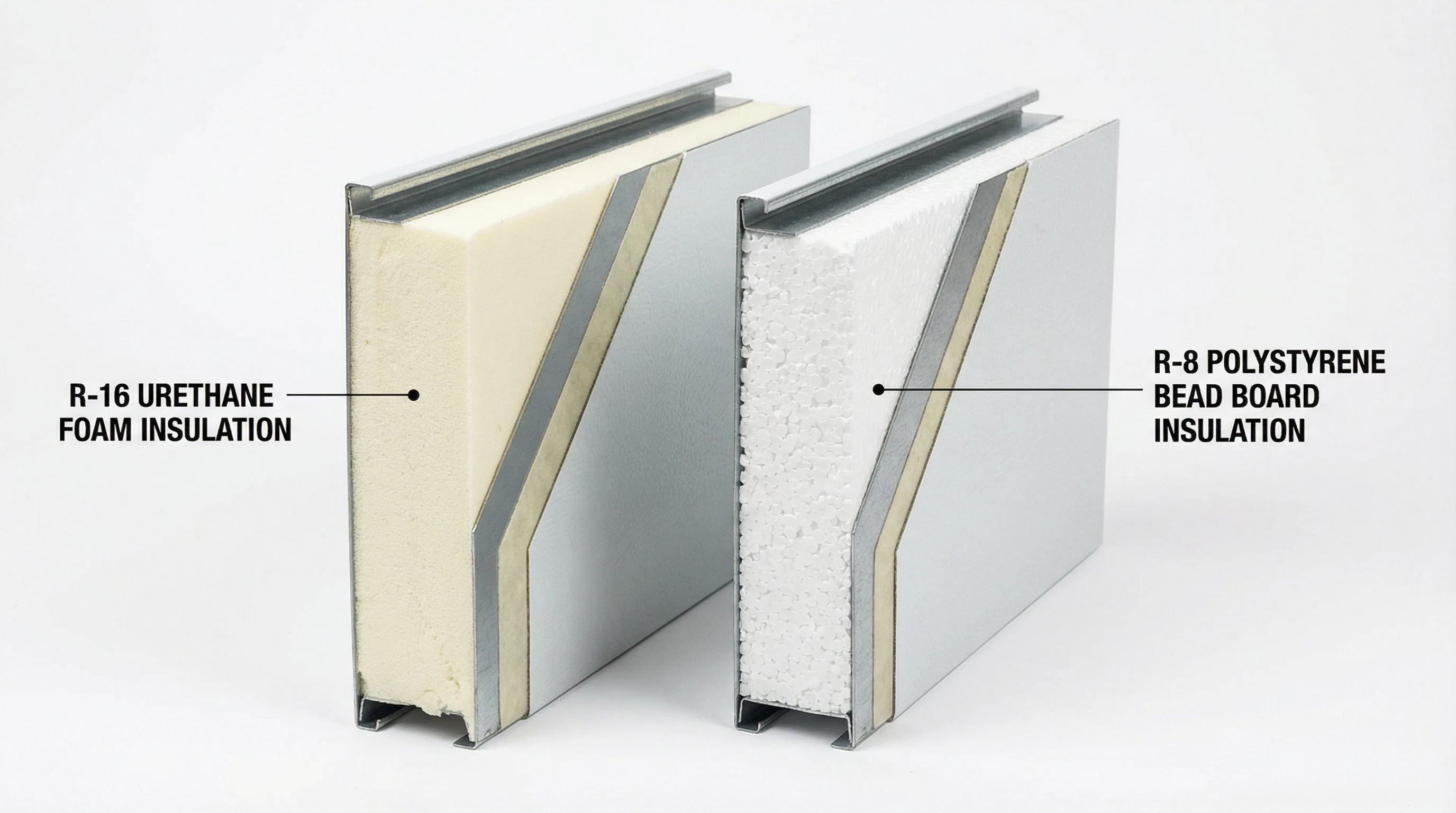
Polyurethane (urethane) foam insulation is superior to polystyrene for garage doors - it delivers R-18 vs R-10, bonds to the steel for added strength, and provides better soundproofing. Polystyrene costs 20-30% less and is adequate for mild climates or unheated detached garages.
When shopping for an insulated garage door in Toronto or the GTA, you'll encounter two main insulation types: polyurethane foam and polystyrene panels. Understanding the difference directly affects your energy bills, comfort, and long-term door performance.
What Is Polyurethane (Urethane) Insulation?
Polyurethane is a two-component foam injected directly into the door panel cavity under pressure. As it expands, it bonds to both steel skins of the door, curing into a rigid foam that achieves R-18 to R-20 per typical door thickness. The bond also stiffens the panel, reducing flex and denting.
What Is Polystyrene Insulation?
Polystyrene (EPS or XPS) is a rigid foam board cut to fit the door panel cavity. Unlike polyurethane, it is not injected - boards are placed inside and held by retainer clips. Standard polystyrene achieves R-6 to R-12 depending on thickness, but leaves air gaps around the edges.
R-Value Comparison: Urethane vs Polystyrene
R-value measures thermal resistance - higher is better. Here is how the two insulation types compare at typical garage door thicknesses:
| Door Thickness | Polyurethane R-Value | Polystyrene R-Value | Winner |
|---|---|---|---|
| 1-3/8 inch | R-6 | R-4 | Urethane |
| 1-3/4 inch | R-12 | R-7 | Urethane |
| 2 inch | R-16 | R-10 | Urethane |
| 2-1/4 inch | R-18 to R-20 | R-12 | Urethane |
Toronto Climate Recommendation
In Toronto, winter temperatures average -8 C but can reach -20 C or lower. For attached garages (connected to living spaces), we recommend R-16 minimum - achievable only with polyurethane at standard door thicknesses. For detached, unheated garages, polystyrene at R-10 is acceptable.
Structural Differences and Door Strength
Beyond thermal performance, insulation type affects door strength in ways many buyers overlook.
Polyurethane: Injected foam bonds to both inner and outer steel skins of the door panel. This creates a composite sandwich structure that resists denting and flexing. A 2-inch polyurethane door can be 50% more dent-resistant than an equivalent uninsulated or polystyrene door.
Polystyrene: Cut boards sit inside the cavity without bonding to the steel. The steel skins remain structurally independent. The door retains flexibility, which means it dents more easily from impact (hockey pucks, hail, backing vehicles).
Cost Comparison: Price vs Value
The upfront cost difference is real but narrows over time through energy savings:
| Factor | Polyurethane Door | Polystyrene Door |
|---|---|---|
| Door cost (installed) | $1,100 - $2,200 | $800 - $1,400 |
| Annual energy savings (vs uninsulated) | $150 - $250/yr | $80 - $150/yr |
| Payback period | 4 - 8 years | 5 - 10 years |
| Expected lifespan | 25 - 30 years | 20 - 25 years |
| Dent resistance | Excellent | Good |
| Soundproofing | Excellent | Moderate |
Sound Insulation Performance
For homeowners with living spaces above or adjacent to the garage, noise reduction is a major factor. Polyurethane foam fills every void in the door panel, absorbing sound vibrations. Typical results:
- Polyurethane: 20-30% noise reduction from outside traffic, wind, and rain
- Polystyrene: 10-15% noise reduction (air gaps around boards reduce effectiveness)
- Both types also reduce the metallic resonance sound of the door operating
- Combine with a belt-drive opener for maximum quiet operation
Need Help Choosing the Right Insulated Door?
Royal Garage Doors carries both polyurethane and polystyrene insulated doors from leading manufacturers. We'll help you select the right R-value for your climate zone and budget.
Call 437-265-9995 for Free AdviceWhich Should You Choose?
Choose polyurethane if: You have an attached garage, want maximum energy efficiency, live in Toronto/GTA where winters are harsh, or value dent resistance and noise reduction.
Choose polystyrene if: You have a detached garage, budget is the primary concern, the garage is rarely temperature-controlled, or you want a lighter door weight.
Frequently Asked Questions
Urethane (polyurethane) is better overall - it achieves R-18 vs R-10 for polystyrene at the same thickness, bonds directly to door steel for structural rigidity, and provides better soundproofing. However, polystyrene costs 20-30% less and is still adequate for mild climates or detached garages.
For Toronto and the GTA where winters drop to -20 C, aim for R-16 or higher. A polyurethane-insulated door typically achieves R-18 to R-20, which is ideal. Polystyrene at R-10 to R-12 is borderline - adequate for detached garages but not optimal for attached garages connected to living spaces.
Yes significantly. Polyurethane foam fills every gap and cavity in the door panel, acting as a sound dampener. It can reduce outside noise by 20-30%. Polystyrene boards leave air gaps and don't bond to steel, providing less noise reduction - typically 10-15% noise reduction.
Polystyrene-insulated garage doors cost $800-$1,400 installed. Polyurethane-insulated doors cost $1,100-$2,200 installed. The price difference narrows when you factor in energy savings - a well-insulated garage can reduce heating costs by $100-$200 per year in Toronto's climate.
Yes, you can retrofit polystyrene batt insulation kits to existing steel garage doors for $50-$150 DIY. However, you cannot retrofit polyurethane - it must be factory-injected. Retrofitted polystyrene adds R-6 to R-8 and also adds weight, so verify your opener can handle the added load.
Yes. An insulated steel garage door weighs 20-50% more than uninsulated. Polystyrene adds moderate weight; polyurethane adds slightly less due to its integrated structure. Most modern openers (1/2 HP+) handle insulated doors fine, but older openers may need upgrading. Royal Garage Doors always checks spring balance after insulated door installation.