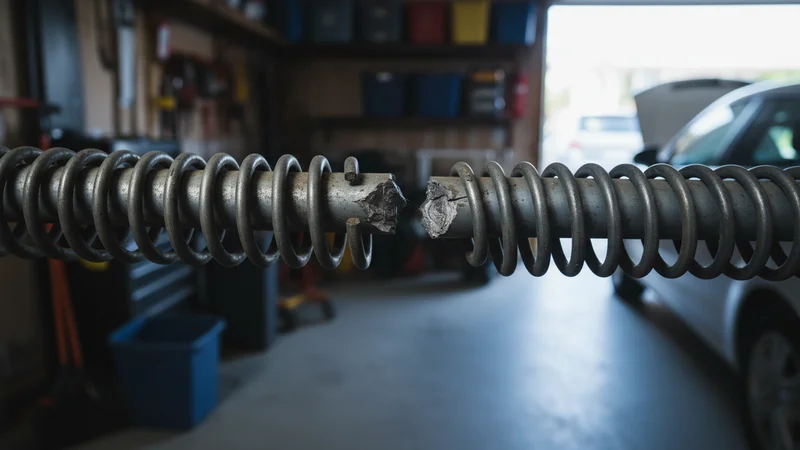
Garage door springs break primarily due to metal fatigue from normal use - standard springs are rated for about 10,000 cycles (7-10 years). Other common causes include rust/corrosion (accelerates wear by 30-50%), cold temperatures (metal becomes brittle), lack of maintenance, improper sizing, and manufacturing defects. Understanding these causes helps you prevent premature failure.
What Causes Garage Door Springs to Break?
Garage door spring failure occurs when the metal in your torsion or extension springs fatigues beyond its structural limits. Springs are rated for a specific number of cycles (typically 10,000-20,000), and various factors like rust, extreme temperatures, and lack of maintenance can accelerate this wear.
That loud bang from your garage followed by a door that won't open is never welcome. As a technician who's replaced thousands of springs, I can tell you that spring failure is almost always predictable - it's just a matter of time. But understanding why springs break can help you maximize their lifespan and schedule replacement before you're stranded.
The 8 Most Common Causes of Spring Failure
Normal Wear and Metal Fatigue
Every time your garage door opens and closes, the spring flexes. This repeated stress causes microscopic damage that accumulates over time - a process called metal fatigue. Standard springs are rated for approximately 10,000 cycles, which translates to 7-10 years for the average household (3-4 uses per day).
Rust and Corrosion
Rust is a spring's worst enemy. Corrosion weakens the steel, creates friction that increases wear, and can cause sudden failure without warning. Garages that aren't climate-controlled, homes near salt water, and areas with high humidity see significantly more rust-related failures.
Cold Weather and Temperature Extremes
Metal contracts and becomes brittle in cold temperatures. In Canadian winters, springs that are nearing end-of-life often fail on the coldest mornings when stress is highest. The temperature swing from a heated house to a freezing garage accelerates metal fatigue.
Lack of Maintenance
Springs need regular lubrication to operate smoothly. Without it, friction increases dramatically, causing heat buildup and accelerated wear. Unlubricated springs also rust faster because the lubricant provides a protective barrier against moisture.
Improper Spring Sizing
Springs must be precisely matched to your door's weight. An undersized spring works harder than designed, failing prematurely. An oversized spring can make the door too light, damaging the opener. Either way, improper sizing significantly shortens component life.
Manufacturing Defects
While rare with quality springs, manufacturing defects do occur. Inconsistent wire diameter, improper heat treatment, or material impurities can cause premature failure. This is why we only use springs from reputable manufacturers with quality control processes.
Improper Installation
Springs installed with incorrect tension create problems. Over-tensioned springs wear faster and can damage other components. Under-tensioned springs strain the opener motor and create safety issues. Proper installation requires experience and precision.
Door Balance Problems
An unbalanced door puts uneven stress on springs. Bent tracks, worn rollers, or binding hinges make the spring work harder to compensate. Regular balance checks and addressing track issues early prevents premature spring failure.
What Causes Most Spring Failures?
Seasonal Impact on Spring Failure
Our service records show clear patterns in when springs fail throughout the year:
Winter (Dec-Feb)
Peak failure season. Cold makes metal brittle. 40% of annual failures occur in these 3 months.
Spring (Mar-May)
Moderate failure rate. Temperature swings stress springs. Good time for inspection.
Summer (Jun-Aug)
Lowest failure rate. Warm metal is more flexible. Best time for proactive replacement.
Fall (Sep-Nov)
Increasing failures as temps drop. Last chance for inspection before winter.
Expected Spring Lifespan
Based on average use of 3-4 cycles per day. Heavy use reduces these estimates.
Warning Signs Before Your Spring Breaks
Springs rarely fail without warning. Knowing what to look for helps you schedule replacement before you're stranded with a door that won't open. Here are the key warning signs:
Visual Warning Signs
- Gaps Between Coils: As springs stretch and weaken, you'll see visible gaps developing between coils. A healthy torsion spring has tightly wound coils touching each other.
- Rust and Corrosion: Any visible rust on the spring surface indicates weakening metal. Even surface rust accelerates wear significantly.
- Uneven Coil Spacing: If some sections appear stretched while others remain tight, the spring is failing unevenly and could break soon.
Performance Warning Signs
- Door Feels Heavier: If the door requires more force to lift manually than before, the springs are losing tension.
- Door Drops Faster: A properly balanced door should stay in place when released halfway open. If it falls, springs are failing.
- Unusual Noises: Squeaking, grinding, or popping sounds during operation indicate stressed springs.
- Opener Strains: If your opener motor sounds like it's working harder than usual, weak springs may be the cause.
Age-Based Warning Signs
Even without visible symptoms, consider proactive replacement if any of the following apply to your situation:
- Standard springs are over 7-10 years old (the typical lifespan for 10,000-cycle springs)
- You use your door more than 4-5 times daily, which accelerates wear significantly
- Springs have never been replaced on a garage door system over 10 years old
- You're entering a Toronto winter with springs near their cycle limit—cold weather triggers most failures
How to Prevent Premature Spring Failure
Extend Your Spring's Life
1 Lubricate Every 3-4 Months
Apply silicone-based lubricant to all coils. This reduces friction, prevents rust, and can add 2-3 years to spring life.
2 Address Rust Immediately
If you see rust forming, clean with steel wool and apply lubricant. Early treatment prevents structural damage.
3 Test Balance Annually
Use our door balance test guide. Disconnect opener and manually lift door halfway. If it won't stay put, springs need adjustment.
4 Upgrade to High-Cycle Springs
When replacing, consider high-cycle springs (25,000-50,000 cycles). Cost is 20-30% more but they last 2-3x longer.
5 Replace Both Springs Together
If one spring breaks, the other is at end-of-life too. Replacing both prevents a second failure weeks later.
6 Schedule Professional Inspection
Annual inspection catches problems early. Techs can spot wear patterns you might miss.
Spring Replacement Pricing
When your spring breaks, here's what replacement costs in the GTA:
| Service | Price Range (+ tax) | Includes |
|---|---|---|
| Single Torsion Spring | $160 - $220 | Spring, installation, balancing, safety check |
| Both Springs (Recommended) | $280 - $400 | Both springs, matching, balancing, warranty |
| High-Cycle Springs | $350 - $500 | 25,000-50,000 cycle springs, extended warranty |
| Maintenance Tune-Up | $100 - $120 | Inspection, lubrication, balance check, prevention |
Spring Broke? We Can Help Today
Same-day spring replacement. We use high-quality springs with warranty coverage.
Call 437-265-9995