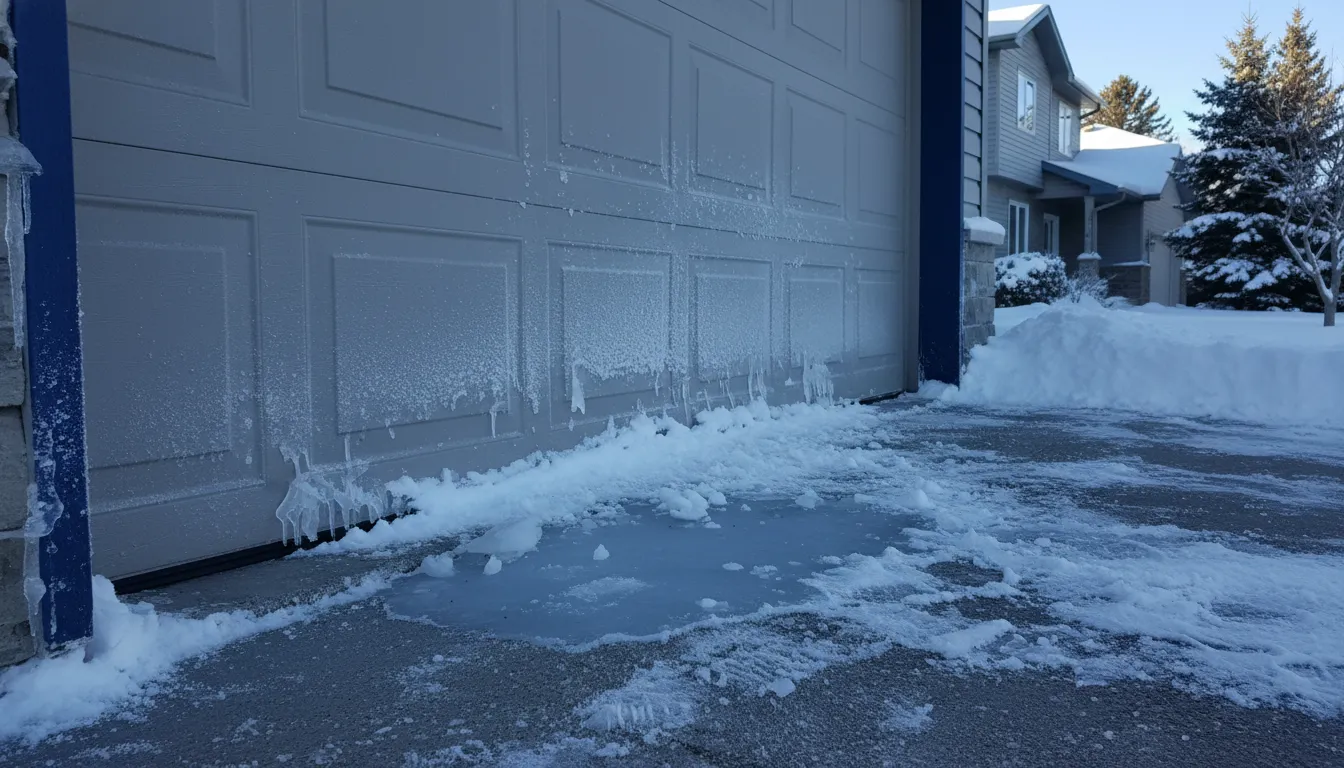
Common Winter Garage Door Problems
Frozen Weatherstripping
Symptoms:
Door won't open at all, motor strains and reverses, loud cracking sound when forced
Fix:
DON'T force it—this can tear the seal or damage the opener. Gently tap along the bottom with a rubber mallet to break the ice seal. Use a hair dryer or heat gun on low to warm the seal. Apply silicone spray after freeing to prevent re-freezing.
Slow/Sluggish Operation
Symptoms:
Door opens slower than usual, motor sounds strained, jerky movement
Fix:
Standard lubricant has thickened. Clean old lubricant off rollers, hinges, and springs. Apply cold-weather silicone-based lubricant rated to -40°C. For chain drives, use cold-weather chain lube.
Door Won't Close Completely
Symptoms:
Gap at bottom when closed, door stops short of floor, reverses near bottom
Fix:
Metal contracts in cold, affecting alignment. Check sensor alignment—frost can shift brackets. Slightly increase down travel limit on opener. If gap persists, spring tension may need seasonal adjustment.
Springs Break More Often
Symptoms:
Loud bang from garage, door very heavy, visible gap in spring
Fix:
Cold metal is brittle. Springs over 7 years old are more likely to break in winter. Have springs inspected in fall. Consider upgrading to high-cycle springs if you've had winter breaks. Pro repair: $160-$400.
Remote/Keypad Not Working
Symptoms:
Remote range reduced, keypad buttons don't respond, intermittent function
Fix:
Batteries lose power in cold. Replace with lithium batteries rated for cold weather. Keep a spare remote inside for emergencies. For keypads, cover with hand while entering code to warm it slightly.
Condensation & Ice Inside Garage
Symptoms:
Frost on tracks, ice on sensors, moisture on windows
Fix:
Temperature differential causes condensation. Improve ventilation, add a dehumidifier, or install a small garage heater. Wipe sensors clean and dry. Apply anti-freeze to tracks (NOT lubricant—use washer fluid).
Temperature Impact Guide
Here's what to expect at different temperatures and how to prepare:
| Temperature | What Happens | Action Needed |
|---|---|---|
| 0°C to -10°C | Minor slowdown, weatherstrip may stick briefly | Apply silicone spray, check lubricant |
| -10°C to -20°C | Standard lubricant thickens, remote range drops | Switch to cold-weather lube, replace batteries |
| -20°C to -30°C | Frozen seals likely, springs under stress, metal contracts | Keep garage above -10°C if possible, run door daily |
| Below -30°C | All lubricants fail, high spring break risk, opener may not start | Minimize use, manual operation may be needed |
Winter Prevention Tips
Fall Maintenance
Have door serviced in October before cold hits. Replace worn weatherstripping.
Cold-Weather Lube
Switch to silicone-based lubricant rated to -40°C. Apply to springs, rollers, hinges.
Daily Operation
Run the door once daily even if not used. This prevents ice buildup and keeps parts moving.
Clear Snow/Ice
Shovel snow away from door bottom. Salt the threshold to prevent freeze-bonding.
Lithium Batteries
Replace remote and keypad batteries with lithium cells rated for cold weather.
Garage Heat
Keep garage above -10°C with a heater if possible. Proper insulation helps maintain temperature.
Emergency: Door Stuck in Extreme Cold
If your garage door won't open in an emergency cold snap:
- Don't force the opener - you'll burn out the motor or strip gears
- Pull emergency release - disconnect from opener (red rope)
- Warm the seal - use hair dryer, heat gun, or even hot water along bottom
- Tap to break seal - rubber mallet along bottom edge, not too hard
- Lift manually - with seal broken, door should lift (if springs are good)
- Apply silicone spray - before closing again, spray bottom seal
- Reconnect opener - pull release back to lock position
If door still won't open: The issue may be more serious (frozen tracks, spring failure). Call for emergency service—attempting to force can cause expensive damage.
Frequently Asked Questions
Michael Thompson
IDEA Certified Garage Door Technician. 15+ years handling Toronto winter emergencies.