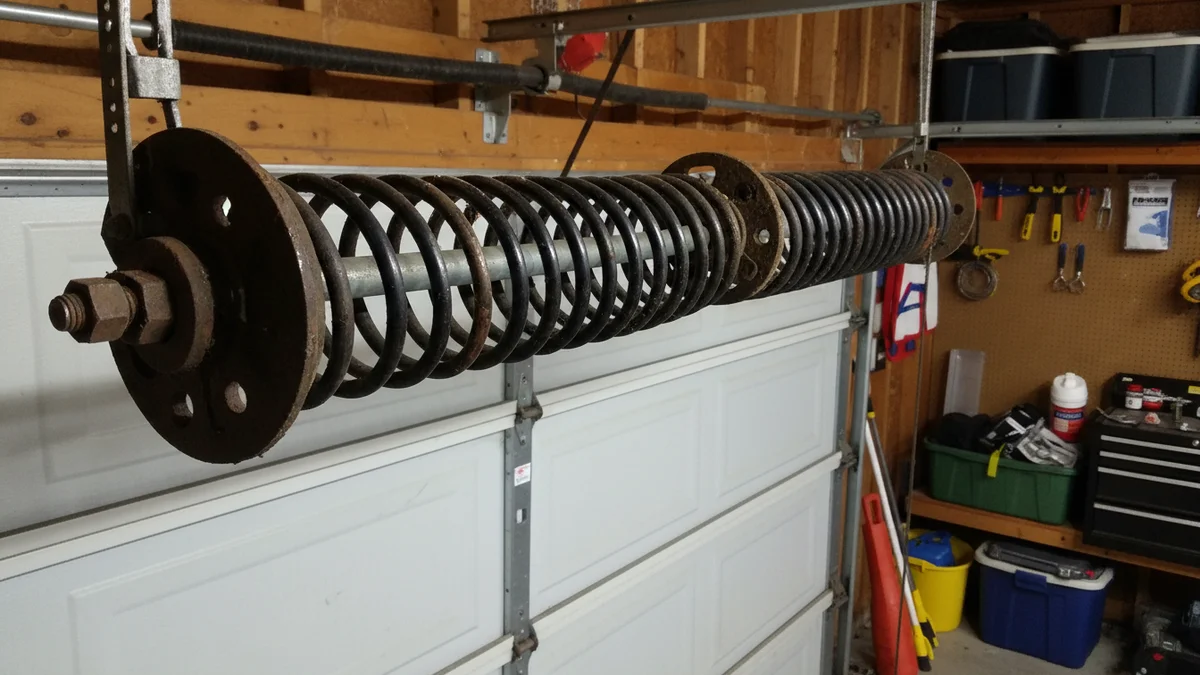
How long do garage door springs last? Standard garage door springs last 7-12 years or 10,000 cycles with average use. High-cycle springs (25,000-50,000 cycles) can last 15-20+ years. With proper maintenance - annual lubrication and balance checks - you can maximize spring life and avoid unexpected failure.
What is a Spring Cycle?
One cycle equals one complete garage door opening and closing. When the door goes up, that's half a cycle. When it comes back down, that completes one full cycle. Most residential springs are rated for 10,000 cycles from the factory.
Spring Lifespan by Type
Not all garage door springs are created equal. Here's how long different spring types typically last:
| Spring Type | Cycles | Years (Avg Use) | Cost Range |
|---|---|---|---|
| Standard Torsion | 10,000 | 7-9 years | $160-$240 |
| High-Cycle Torsion | 25,000-50,000 | 15-20+ years | $250-$400 |
| Extension Springs | 10,000 | 5-7 years | $100-$180 |
| Oil-Tempered Torsion | 15,000-20,000 | 10-14 years | $200-$320 |
Standard Springs
High-Cycle Springs
Understanding Cycle Life
Your spring's lifespan depends on how often you use your garage door. Here's how to calculate yours:
Spring Life Calculator
Calculate how long your springs will last based on your usage:
Example: 10,000 cycle spring with 4 opens/day:
10,000 / (4 x 365) = 10,000 / 1,460 = 6.8 years
Usage-Based Lifespan Chart
| Daily Use | Cycles/Year | 10K Spring | 25K Spring |
|---|---|---|---|
| 2 opens (light use) | 730 | 13.7 years | 34+ years |
| 4 opens (average) | 1,460 | 6.8 years | 17 years |
| 6 opens (moderate) | 2,190 | 4.6 years | 11.4 years |
| 8+ opens (heavy) | 2,920+ | 3.4 years | 8.6 years |
Pro Tip: Count Your Cycles - Think about how many times per day you open your garage door. Count entries and exits for each family member, plus deliveries. Many families underestimate - 4-6 cycles daily is common. If multiple cars use the garage, you may hit 8+ cycles daily.
Factors Affecting Spring Lifespan
Several factors determine whether your springs reach their full cycle life or fail early:
1. Spring Quality
Not all springs are manufactured to the same standards. Higher-quality oil-tempered steel lasts longer than basic zinc-galvanized springs. The wire quality, heat treatment, and coiling precision all affect durability.
2. Proper Installation
Incorrect spring size, improper winding, or mismatched springs cause premature failure. Springs must be matched to your door's weight and size. Over-wound springs fail faster; under-wound springs work harder.
3. Door Balance
An unbalanced door puts uneven stress on springs. If one side is heavier or the door doesn't stay in place when released halfway up, the springs are working overtime.
4. Maintenance
Regular lubrication reduces friction and prevents corrosion. Springs that operate dry wear faster. Annual tune-ups can add years to spring life.
5. Climate & Environment
Canadian winters are hard on springs. Temperature fluctuations cause metal to expand and contract. Salt air near coastlines and high humidity areas accelerate rust. Springs in heated garages last longer.
6. Door Weight
Heavier doors (insulated, wood, commercial) require stronger springs that cycle under more stress. Adding insulation or windows can shorten existing spring life.
Warning Signs of Worn Springs
Don't wait for a complete spring failure. Watch for these warning signs:
Gap in Spring Coils
Visible separation in the spring coils = the spring has snapped and needs immediate replacement
Door Falls Quickly
Door drops fast when closing instead of lowering smoothly - springs are failing
Squeaking/Groaning
Loud sounds when operating indicate lack of lubrication or metal fatigue
Door Feels Heavy
Manual operation requires more effort - springs are losing tension
Uneven Movement
Door tilts or moves crookedly - one spring may be weaker than the other
Door Won't Stay Open
Door drifts down when released at mid-height - springs need adjustment or replacement
DANGER: Never Attempt DIY Spring Repair
Garage door springs are under extreme tension (200+ pounds). A broken spring can cause serious injury or death. Always call a professional for spring inspection, adjustment, or replacement. This is NOT a DIY project.
How to Extend Spring Life
Proper maintenance can add years to your spring life. For complete care instructions, see our garage door maintenance guide. Here's how to maximize your investment:
Lubricate Springs Twice Yearly
Apply white lithium grease or silicone-based lubricant to springs in spring and fall. This reduces friction, prevents rust, and keeps coils operating smoothly.
Keep Door Balanced
Disconnect the opener and lift the door manually. It should stay in place at any height. If it falls or rises, the springs need professional adjustment.
Reduce Unnecessary Cycles
Keep the door closed when not in use. Don't let kids "play" with the opener. Each cycle counts against spring life.
Annual Professional Inspection
Have a technician inspect springs, cables, and hardware yearly. They can spot wear before failure and make adjustments to extend life.
Maintain Garage Temperature
Extreme cold stresses springs. If possible, maintain garage temperature above freezing in winter. Heated garages significantly extend spring life.
Toronto Winter & Spring Lifespan
Toronto's harsh winters have a significant impact on garage door spring lifespan. Understanding how cold affects your springs can help you plan maintenance and avoid unexpected failures.
Why Springs Break More in Winter
Cold weather creates the perfect conditions for spring failure. Steel becomes more brittle as temperatures drop, especially below -10 deg C. When your garage door opens on a frigid morning, the already stressed, cold metal spring can snap without warning. January and February see the highest spring failure rates in the GTA - up to 3 times more than summer months.
Temperature Effects on Spring Steel
Metal contracts in cold weather, which adds tension to an already wound spring. This thermal contraction, combined with the regular cycling stress, accelerates metal fatigue. Springs that have 80% of their cycle life remaining in October may fail by February due to cold-weather stress. Heated garages significantly reduce this risk by keeping springs at moderate temperatures year-round.
Pre-Winter Maintenance is Critical
The best protection against winter spring failure is a fall inspection and lubrication. Have springs professionally inspected in September or October. Technicians can identify wear that would lead to winter failure and replace springs before the cold hits. Proper lubrication also protects springs from the freeze-thaw cycles that accelerate corrosion and metal fatigue.
Emergency Repairs in Winter
When springs break in winter, you're often stuck with a car trapped in the garage. Emergency winter repairs are more expensive due to demand and working conditions. Proactive fall replacement costs less and prevents the inconvenience of a broken door on a -20 deg C morning when you need to get to work.
When to Replace Springs
Consider spring replacement in these situations:
- After 7+ years: Even if springs seem fine, proactive replacement prevents unexpected failure
- Visible wear: Rust, stretched coils, or gaps in the spring
- One spring breaks: Always replace both springs together - the second is equally worn
- Before selling your home: New springs add value and peace of mind for buyers
- Heavy use: If you operate the door 6+ times daily, replace earlier
Upgrade to High-Cycle Springs - When replacing springs, consider upgrading to 25,000+ cycle springs. For an extra $50-$100, you get springs that last 2-3 times longer. It's the best value for long-term ownership, especially for busy households.
Spring Replacement Pricing
| Service | Price Range (+ tax) | Includes |
|---|---|---|
| Standard Springs (10K cycles) | $160 - $220 | Single spring, labor, balance test |
| Double Spring Setup | $280 - $400 | Both springs, balancing, inspection |
| High-Cycle Springs (25K+) | $350 - $500 | Longer-lasting springs, warranty |
| Maintenance Tune-Up | $100 - $120 | Lubrication, inspection, adjustment |