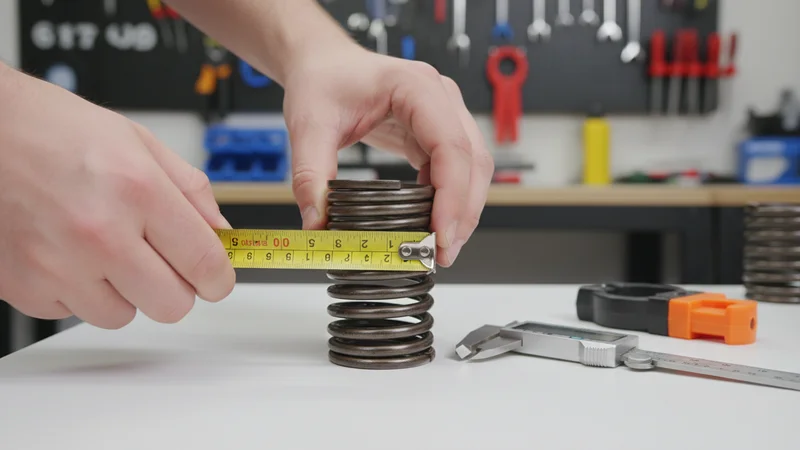
To identify your garage door spring size, measure four key dimensions: Wire gauge (diameter of wire - measure 10 coils and divide), Inside diameter (usually 1.75" or 2"), Overall length (end to end, excluding cones), and Wind direction (left or right wound). The colored paint stripe on springs also indicates wire gauge—gold (.243) and orange (.250) are most common for residential Toronto doors.
What Is Garage Door Spring Sizing?
Garage door spring sizing refers to identifying the correct spring specifications for your door. Key measurements include wire gauge (wire thickness), inside diameter (coil opening size), overall length (coil to coil), and wind direction (left or right). Incorrect sizing causes improper door balance and premature failure.
Ordering the wrong spring size means your garage door won't balance properly, putting stress on your opener and creating safety hazards. Whether gathering information for a repair quote or simply curious about your door's specifications, this guide will teach you exactly how to measure and identify your garage door springs.
⚠️ Important Safety Warning
- Never attempt to remove or replace springs yourself — they're under extreme tension (200+ lbs force)
- These measurements are for identification purposes only
- Measure springs while the door is closed (springs unwound)
- If springs are broken, measure both pieces and add together
- Always hire a licensed technician for spring replacement
The 4 Key Measurements You Need
Wire Gauge
Diameter of the wire
Inside Diameter
Opening size (ID)
Overall Length
End to end distance
Wind Direction
Left or right wound
Step-by-Step Measurement Guide
Measure Wire Gauge (Wire Size)
This is the most important measurement and requires precision. Use a tape measure or ruler:
- Count exactly 10 coils (or 20 for better accuracy)
- Push the coils tightly together
- Measure the total length of those coils in inches
- Divide total length by the number of coils
Example: 20 coils measuring 5 inches = 5 ÷ 20 = .250" wire gauge
Measure Inside Diameter (ID)
Measure the inside opening of the spring coil—the space the torsion tube passes through:
- 1.75" (1-3/4") — Standard for most residential doors
- 2" (2 inch) — Commercial or heavier residential doors
- 2.5" or larger — Heavy commercial applications
Measure Overall Length
Measure the total length of the spring from one end to the other, NOT including the winding cones or stationary cones:
- Measure only the coiled section
- For broken springs, measure both pieces and add together
- Round to the nearest half-inch
Common residential lengths: 24", 27", 30", 32", 36" (single springs) or 15"-22" each (double spring setups)
Determine Wind Direction
Standing inside the garage looking at the door, identify which way the coils wind. See the visual guide below for reference.
Right-Wound Spring
Coils angle up and to the RIGHT when viewed from end
Located on LEFT side of centerLeft-Wound Spring
Coils angle up and to the LEFT when viewed from end
Located on RIGHT side of centerRemember: In a double spring setup, you need one left-wound and one right-wound spring. Single spring setups are typically right-wound, mounted on the left side.
Spring Color Code Chart (Wire Gauge)
Manufacturers paint a stripe on springs to identify wire gauge. For help identifying other components, see our garage door parts diagram. This color chart speeds up identification without measuring:
⭐ Gold (.243) and Orange (.250) are most common for standard residential garage doors
Common Spring Sizes by Door Type
| High-Cycle Upgrade | Discontinued | Not offered |
Not Sure About Your Spring Size?
Send us a photo of your spring with a ruler next to it. Our technicians will identify your exact spring size and provide a free quote for replacement.
Get Free Spring Assessment