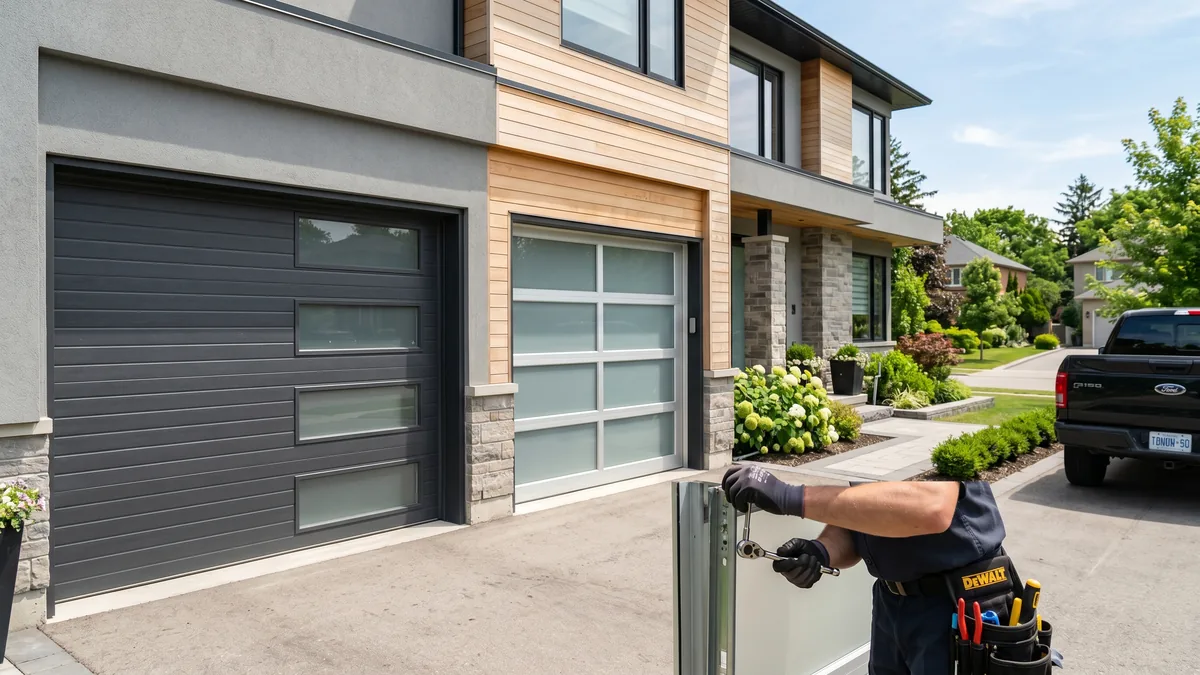
For most GTA homeowners, insulated steel garage doors are the better all-round choice — they cost less, dent less easily, insulate better, and handle Ontario winters well. Aluminum doors win when you want a large full-view glass design, a lightweight door on a very wide opening, or a finish that will never rust. Steel offers more strength and value per dollar; aluminum offers a modern look and rust immunity but dents more easily and usually costs more.
What Are Steel and Aluminum Garage Doors?
A steel garage door is built from one, two, or three layers of galvanized steel, often with a polystyrene or polyurethane foam core for insulation. An aluminum garage door uses lightweight aluminum frames and panels — commonly paired with large glass or acrylic sections to create the modern “full-view” look. Both are the most popular metal door materials sold across Toronto and the GTA, but they suit very different priorities.
Choosing between steel and aluminum is the single most important decision when buying a new garage door. As an IDEA Certified technician who has installed both across Mississauga, Toronto, and the wider GTA for over 15 years, I’ll break down exactly how they compare on durability, insulation, cost, rust, and curb appeal — and which one fits the way you actually use your garage.
Steel vs Aluminum at a Glance
Here is the head-to-head comparison most homeowners are looking for. The right answer depends on whether you prioritize value and insulation (steel) or weight and a glass-forward modern look (aluminum).
| Feature | Steel | Aluminum |
|---|---|---|
| Cost | Lower — best value | Higher, especially full-view glass |
| Insulation (R-value) | Excellent (R-12 to R-18 insulated) | Poor unless thermally broken / insulated glass |
| Dent resistance | Good (insulated), fair (single-layer) | Low — dents easily |
| Rust | Resists rust; can rust if deeply scratched | Never rusts (no iron) |
| Weight | Heavier | Lightweight |
| Best for | Cold climates, value, security | Wide openings, modern glass designs |
| Maintenance | Low | Low, occasional glass cleaning |
Durability and Dent Resistance
Durability is where steel pulls ahead for everyday family use. An insulated steel door — especially a three-layer steel-foam-steel sandwich — is remarkably rigid. The foam core bonds the two steel skins together, so the whole panel resists the bumps, hockey pucks, and bike handlebars that are part of GTA garage life.
How Steel Holds Up
Steel gauge matters. Lower gauge numbers mean thicker, stronger steel (24-gauge is heavier-duty than 27-gauge). Premium insulated steel doors use thicker skins that shrug off impacts, while budget single-layer steel doors can oil-can or dent if struck hard. The trade-off is that a deep gouge that exposes bare steel under the paint can eventually rust, so chips should be touched up.
How Aluminum Holds Up
Aluminum is the softest of the common door metals. A thin aluminum panel can dent from hail, a stray ball, or someone backing a car too close. On the plus side, some aluminum dents can be popped or massaged out, and the frame-and-glass construction of full-view doors uses heavier extruded frames that are quite sturdy. If impact resistance is your top concern — for example a busy household with kids and sports gear — steel is the safer bet. Either way, hardware like hinges and rollers wears over time; see our guide on garage door roller replacement to keep any door running smoothly.
Insulation and Ontario Winters
If your garage is attached, heated, used as a workshop, or sits below a bedroom, insulation is the deciding factor — and here steel wins decisively for most homes.
Steel Insulation Performance
Insulated steel doors are built with a foam core. Polyurethane-injected cores deliver the highest R-values, commonly in the R-12 to R-18 range, while polystyrene panel cores land lower. That insulation keeps your garage warmer in January, reduces drafts, and dampens street noise. For an attached garage in the GTA, an insulated steel door is one of the best comfort upgrades you can make. If you want to understand the numbers behind those ratings, our explainer on R-value vs U-factor for garage doors is worth a read.
Aluminum Insulation Performance
Bare aluminum is a strong heat conductor, so a non-insulated aluminum door or a single-pane full-view glass door performs poorly in cold weather. Manufacturers address this with thermally broken aluminum frames and double-pane insulated or low-E glass, which dramatically improves performance — but those upgrades raise the price. The Government of Canada’s energy efficiency guidance is a useful reference if heat loss through your garage is a concern for an attached home.
Cost Comparison in the GTA
Budget is often what settles the steel-vs-aluminum debate. Steel delivers the most door for the money, which is why it dominates residential sales across Toronto and the GTA.
| Door Type | Royal Garage Doors Price (Supply + Install) |
|---|---|
| Insulated steel, 8×7 single | From $1,350 + tax |
| Insulated steel, 9×7 single | From $1,500 + tax |
| Insulated steel, 16×7 double | From $2,300 + tax |
| Door only (delivery, no install) | From $850 + tax |
| Aluminum / full-view glass | Higher — quoted by size & glass |
Aluminum and full-view glass doors typically cost more than a comparable steel door because of the extruded frames, tempered glass, and the additional labour involved. The exact premium depends on door size, glass type (clear, frosted, tinted, or low-E), and finish. For a tailored quote on either material, see our full pricing page or use the door designer to visualize options on your own home. Note that an opener is sold separately, starting from $630.
Curb Appeal and Style
Both materials look great when chosen well, but they speak different design languages.
- Steel is the chameleon. It comes in traditional raised-panel, flush, carriage-house, and modern flat designs, in baked-on factory colours and realistic woodgrain finishes. For most homes — from century semis in Toronto to new builds in Brampton and Vaughan — steel offers the widest range of looks at the best price.
- Aluminum owns the contemporary, architectural look. Its lightweight frames make it the go-to choice for full-view glass doors that flood a garage, gym, or showroom with light. If you want a sleek modern facade or a glass door on a wide opening where steel would be too heavy, aluminum is purpose-built for it.
If your project involves replacing an older or damaged door, our garage door replacement service covers both materials, and if only one section is damaged you may only need panel replacement ($500–$1,000) rather than a full door.
Maintenance, Lifespan, and Repairs
Both steel and aluminum are low-maintenance compared with wood, which warps, swells, and needs repainting on a regular cycle. But the upkeep profiles differ in ways that matter over a 15-to-30-year ownership window.
Steel Maintenance
A quality insulated steel door needs little more than an annual wash, a quick inspection of the paint for chips, and lubrication of the moving hardware. The one thing to stay on top of in the GTA is the bottom panel, where road salt collects all winter. Rinse it off in spring and touch up any scratches that expose bare metal before they can rust. The galvanized substrate and baked-on polyester topcoat on modern steel doors are durable, and many manufacturers back the panel against rust-through perforation for the life of the door — the same lifetime panel warranty we provide on our steel installations.
Aluminum Maintenance
Aluminum never rusts, so the bottom-panel salt worry disappears. Maintenance is mostly cosmetic: washing the frames and, on full-view doors, keeping the glass clean. Over many years aluminum can develop a chalky white oxidation, but it stays structurally sound. The catch is that aluminum is more prone to dents, so the most common “repair” on an aluminum door is dealing with impact damage rather than corrosion.
What Wears Out on Both
Regardless of material, the parts that actually fail are the moving components, not the door skin. Torsion springs are the number-one wear item on any door — they are rated for a set number of cycles and eventually break. A heavier steel door puts slightly more demand on the spring system than a light aluminum door, which is one reason correct spring sizing matters. If you ever hear a loud bang from the garage or the door suddenly feels impossibly heavy, that is almost always a broken garage door spring rather than a problem with the panel itself. A single torsion spring replacement runs $280 + tax, and a double-spring setup $320–$460. Cables, rollers, and hinges are the other routine wear items on both materials.
Real-World GTA Scenarios
To make the choice concrete, here is how the steel-vs-aluminum decision typically plays out for the homes we serve:
- Family home with an attached garage in Mississauga or Brampton: Insulated steel, every time. You get warmth, quiet, dent resistance against kids’ sports gear, and the best price.
- Modern infill or custom build in midtown Toronto: Aluminum full-view glass to match the architecture, ideally with thermally broken frames and insulated glass so the look does not come at the cost of a freezing garage.
- Detached unheated garage or workshop: Steel for value and security; insulation is optional but recommended if you ever heat the space.
- Wide triple-car opening: Aluminum’s light weight is an advantage on very large doors, easing strain on the opener and springs — though heavy-duty steel is still viable with the right spring system.
Whichever way you lean, the standards behind these doors are worth knowing. The International Door Association (IDA), the body behind the IDEA technician certification our team holds, publishes guidance on door construction, installation, and safety that informs how reputable installers spec both steel and aluminum doors. Reputable manufacturers such as Clopay publish full construction and R-value details for each model so you can compare apples to apples.
Which Should You Choose?
After 15+ years of installs across the GTA, here is how I guide homeowners:
- Choose insulated steel if you want the best value, the highest insulation for cold Ontario winters, strong dent and security performance, and the widest selection of classic and modern styles. This covers the large majority of homes.
- Choose aluminum if you want a full-view glass door, a striking modern facade, a lightweight door on a very wide opening, or a finish in a salty environment that will never rust — and the higher price fits your budget.
The Verdict
For the typical Toronto and GTA home, insulated steel is the smarter buy: better insulation, better dent resistance, lower cost, and huge style range. Reserve aluminum for full-view glass statements and oversized openings where its light weight and rust immunity genuinely earn the premium.
Ready to Compare Steel and Aluminum on Your Home?
Not sure which material fits your garage, budget, and climate needs? Royal Garage Doors supplies and installs both steel and aluminum doors across Toronto & GTA, from $1,350 + tax, with a FREE service call on any installation.
Call 437-265-9995