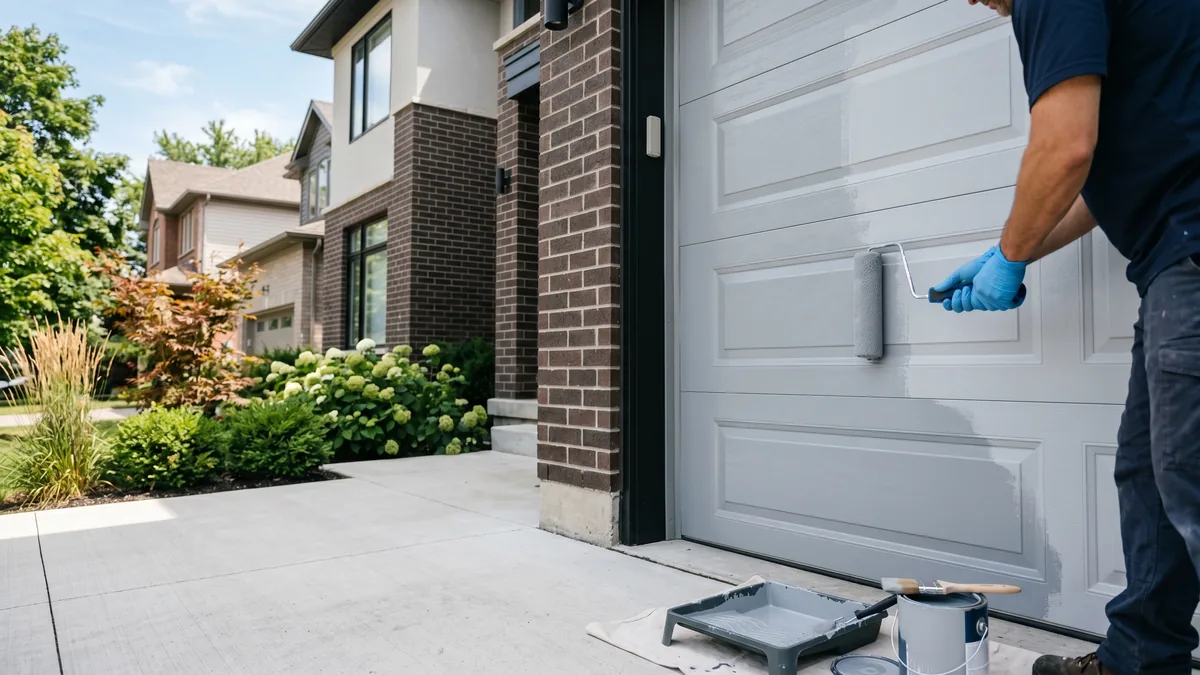
To paint a steel garage door, wash it clean, scuff-sand the surface with 220-grit, and spot-prime any bare metal or rust with a rust-inhibiting primer. Then brush and roll on two thin coats of 100% acrylic latex exterior paint, working one panel at a time. Paint on a dry, overcast day between 10°C and 25°C with no rain for 24 hours. Done right, the finish lasts 7–10 years in the GTA. The prep work — not the paint — is what makes it last.
What Does Painting a Steel Garage Door Involve?
Painting a steel garage door is a refinishing job, not just a colour change. The factory baked-on finish eventually fades, chalks, and rusts at the edges. A repaint means cleaning off that degraded layer, addressing any rust, priming exposed metal so corrosion can’t spread, and bonding a flexible exterior paint that moves with the steel through Toronto’s freeze-thaw cycles. Roughly 80% of a good result is surface preparation.
A faded, chalky garage door drags down the look of an entire house — and across Toronto and the GTA it’s one of the most common things homeowners want to refresh without spending on a full replacement. The good news: a steel garage door is one of the most paint-friendly surfaces on your home, and a careful DIY job can look factory-fresh for the better part of a decade. The catch is that steel punishes shortcuts. Skip the cleaning, skip the primer on rust, or paint on a hot sunny afternoon, and you’ll be peeling it off in a year. Here is exactly how to do it right.
Should You Paint or Replace Your Steel Garage Door?
Before you buy a single can of paint, be honest about the condition of the door. Paint hides cosmetic problems; it does not fix structural ones. Repainting is the right call when the door is mechanically sound and only the finish has aged.
| Door Condition | Best Move |
|---|---|
| Faded, chalking, or dull factory finish | Repaint |
| Light surface rust at seams or bottom edge | Repaint (sand & prime rust) |
| Peeling from a previous bad paint job | Repaint (strip & re-prep) |
| Single dented panel, door otherwise solid | Replace the panel, then paint |
| Rusted through, delaminated, or warped panels | Replace the door |
| Door over 20 years old and failing | Replace the door |
If only one section is damaged, a garage door panel replacement ($500–$1,000 + tax) can save the rest of the door — then you paint everything to match. But if the steel is rusted through or the door is at the end of its life, paint is money wasted; a fresh steel door replacement starts from $1,350 + tax supplied and installed. Our guide on how long a garage door lasts can help you judge where yours sits.
Tools & Materials You’ll Need
Gather everything before you start so you’re not running to the hardware store with a half-painted door. For a standard 8×7 or 16×7 steel door you’ll need:
- Cleaning: mild dish soap or a TSP substitute, a soft scrub brush, garden hose, and lint-free rags.
- Sanding: 220-grit sandpaper (and 120-grit for rust), a sanding block, and a wire brush for heavier rust.
- Primer: a quality rust-inhibiting metal/exterior primer for spot-priming bare steel.
- Paint: 100% acrylic latex exterior paint in satin or semi-gloss (about 1 gallon for a single door, 2 for a double).
- Application: a 2″–2.5″ angled sash brush plus a 4″ foam roller for smooth panels.
- Masking: painter’s tape, drop cloths, and plastic sheeting for windows and weatherstripping.
The Best Paint for a Steel Garage Door
The number one question I get on repaint jobs is which paint to buy. For a steel door exposed to GTA winters, the answer is almost always 100% acrylic latex exterior paint. Acrylic latex stays flexible, so it expands and contracts with the steel instead of cracking; it resists UV fading and chalking; and it cleans up with water. Oil-based enamel might look glossy on day one, but outdoors it grows brittle and cracks within a few seasons, so save it for indoor metal.
| Paint Type | Good For Steel Doors? | Notes |
|---|---|---|
| 100% acrylic latex (exterior) | Best choice | Flexible, UV-stable, water cleanup |
| Acrylic-urethane hybrid | Excellent (premium) | Hardest finish, costs more |
| Oil-based enamel | Avoid on full door | Goes brittle and cracks outdoors |
| Interior latex | No | Not UV- or weather-rated |
| Spray paint (rattle can) | Touch-ups only | Fine for small rust spots, not whole door |
Most major brands (Sherwin-Williams, Benjamin Moore, Behr) sell acrylic exterior lines that work well on metal. For technical guidance on door finishes and warranties, the Door & Access Systems Manufacturers Association (DASMA) publishes useful homeowner resources.
A Word on Dark Colours
Charcoal, black, and deep blue doors are stylish, but a very dark colour on a south- or west-facing steel door absorbs a lot of heat in summer. That heat can soften factory coatings, warp lightweight non-insulated panels, and in some cases void the door manufacturer’s warranty. Check your warranty for any colour or light-reflectance (LRV) restriction before committing to a dark shade, and choose a paint rated for heat-prone metal exteriors.
How to Paint a Steel Garage Door: 7 Steps
Plan for most of a day. The actual painting is quick; the cleaning, sanding, and drying time is where the hours go. Work with the door closed, from the outside.
Step 1 — Pick the Right Day
Weather makes or breaks the job. Choose a dry, overcast day between 10°C and 25°C with low humidity and no rain or heavy dew expected for 24 hours. Avoid direct sun, which flash-dries paint and leaves lap marks. In the GTA, late spring through early fall, mid-morning to early afternoon, is the sweet spot. Do not attempt an exterior repaint in cold or freezing weather — the paint won’t cure and will peel.
Step 2 — Clean the Door Thoroughly
Wash the entire door with mild dish soap and water or a TSP substitute, scrubbing off dirt, road grime, cobwebs, and the chalky residue from the old finish. Pay attention to the lower panels, where salt spray and slush collect over winter. Rinse with a hose (low pressure) and let it dry completely — at least a couple of hours.
Step 3 — Scuff-Sand and Remove Rust
Lightly sand the whole door with 220-grit paper to dull the gloss and give the new paint something to grip. Wherever you see rust, switch to a wire brush or 120-grit and take it down to bright bare metal, feathering the edges so there’s no ridge. Wipe away all sanding dust with a damp rag and let it dry.
Step 4 — Prime Bare Metal and Rust
Spot-prime every patch of bare or rusted steel with a rust-inhibiting metal primer. This is the most important step for longevity — primer is what stops rust from creeping back under your fresh paint. If the existing finish is sound and you only scuff-sanded it, a self-priming acrylic can go straight over it, but never skip primer on exposed metal. Let the primer cure per the label.
Step 5 — Mask Everything You’re Not Painting
Tape off the rubber weatherstripping, handles, locks, hinges, any windows, and the surrounding brick or trim. Lay a drop cloth along the bottom. A clean masking job is the difference between a tidy finish and paint smeared on your weather seals.
Step 6 — Apply Two Thin Coats
Work panel by panel, top to bottom, so wet edges blend. Roll the flat faces with the foam roller and cut in the grooves and edges with the brush before the roller paint sets. Two thin coats always beat one thick coat — thick paint sags, drips, and takes far longer to cure. Let the first coat dry the full time on the label (usually 2–4 hours for acrylic) before the second.
Step 7 — Remove Tape and Let It Cure
Peel the painter’s tape while the final coat is still slightly wet to get a crisp edge. Then leave the door alone. Acrylic latex is dry to the touch in a few hours but takes several days to fully cure — avoid pressure-washing or scrubbing it for at least a week.
Drying & Curing Times
Patience here protects all your prep work. These are typical acrylic latex windows in good GTA painting weather — always defer to the can:
| Stage | Typical Time |
|---|---|
| Dry to touch | 1–2 hours |
| Recoat (second coat) | 2–4 hours |
| Safe to operate door | 24 hours |
| Fully cured (hard) | 7–30 days |
You can usually open and close the door after a day, but be gentle — opening it too soon can stick freshly painted panel edges together. Higher humidity and cooler temperatures stretch every one of these times.
Common Mistakes That Ruin a Paint Job
Over 15 years I’ve seen the same handful of errors turn a fresh paint job into a peeling mess within a season. Avoid these:
- Skipping the cleaning. Paint won’t bond to chalk, dirt, or grease. A clean surface is non-negotiable.
- Not priming rust. Painting over rust just hides it — the rust keeps spreading and lifts the paint from below.
- Painting in direct sun or heat. The surface flash-dries, leaving lap marks and poor adhesion.
- One thick coat instead of two thin ones. Thick paint sags, drips, and never cures properly.
- Using interior or oil paint. Neither survives GTA UV and freeze-thaw on an exterior steel door.
- Painting the weatherstripping or tracks. Keep paint off seals, rollers, and tracks so the door keeps moving freely.
Cost: DIY vs. Hiring a Painter
Painting a steel garage door yourself is genuinely budget-friendly. The materials — primer, a gallon or two of quality acrylic, brushes, rollers, sandpaper, and tape — typically run $80–$200 depending on the paint you choose and door size. Hiring a professional painter in the GTA usually lands between $250 and $600 for a single door, more for a double or detailed carriage-style door.
Either way, paint is dramatically cheaper than replacement. For context, here’s where a repaint sits against related door work:
| Option | Typical Cost (CAD) |
|---|---|
| DIY repaint (materials) | $80–$200 |
| Professional repaint (single door) | $250–$600 |
| Panel replacement | $500–$1,000 + tax |
| New steel door (8×7, supply + install) | from $1,350 + tax |
| New steel door (16×7 double) | $2,300 + tax |
See current numbers for every service on our pricing page, and review the full breakdown in our garage door installation cost guide. New steel installs carry a 1-year labour, 5-year hardware, and lifetime panel warranty.
A GTA Note: Timing and Salt
Toronto and the GTA give you a real but limited painting window. Cold, damp shoulder-season days won’t cure paint, and our winters bury the lower panels in road salt and slush. If you’re planning a repaint, do it in summer, and make a habit of rinsing the bottom of the door a few times each winter to slow the salt-driven rust that targets the lowest panels first. Homeowners across Mississauga, Toronto, Brampton, and Hamilton deal with the same freeze-thaw stress — good prep and the right paint matter more here than in milder climates.
Door Too Far Gone to Paint?
If the panels are rusted through, dented, or warped, paint won’t save them. Royal Garage Doors supplies and installs new steel doors across Toronto & the GTA, with a FREE service call and same-day quotes available. Let’s look at whether yours is worth refinishing or replacing.
Call 437-265-9995